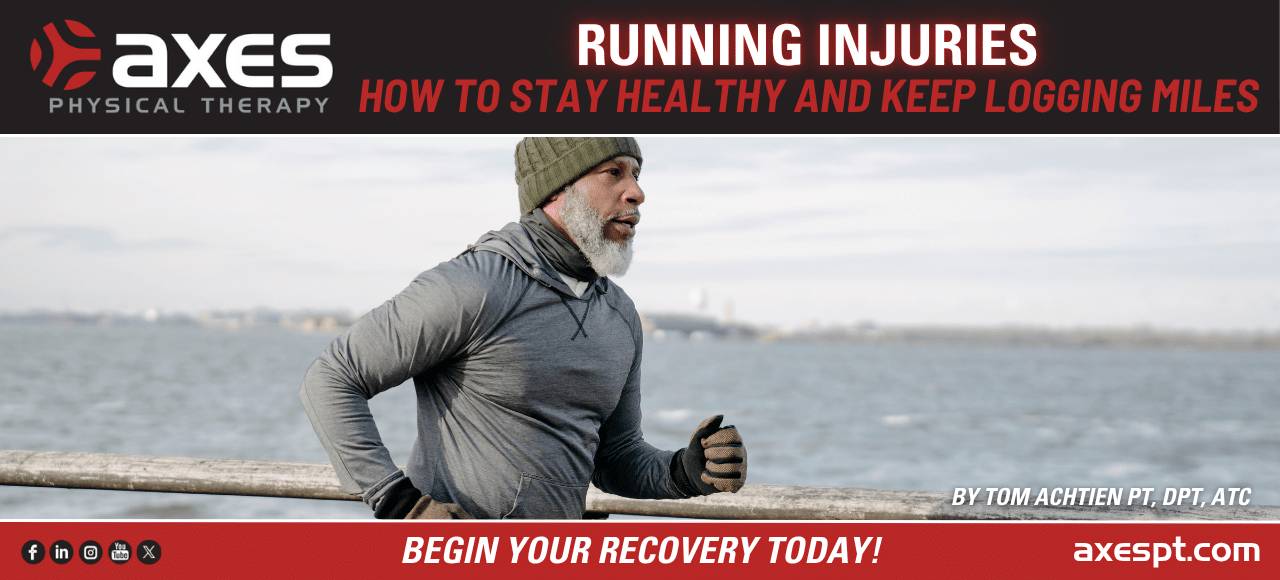
Running Injuries: How to Stay Healthy and Keep Logging Miles
The weather may be getting colder, but that doesn’t mean runners are ready to hang up their shoes. Whether you’re training for an upcoming race, logging miles on your favorite trail, or simply running to stay active, colder weather brings a few changes to consider.
The colder months can also be a great opportunity to give your body some extra recovery time. Taking a few weeks off isn’t always easy for a runner, but your future self may thank you. Even high-level athletes intentionally build recovery into their training to help their bodies handle the demands of their sport.
The real secret to running for the long haul isn’t simply logging more miles. It’s stringing together healthy, consistent months of training. Injuries are one of the biggest barriers to that consistency.
If you can stay healthy and train consistently for several months, chances are you’ll eventually be running faster, farther, or both.
Train Like a Runner, Not Just By Running
One thing we can learn from high-level athletes is that variety matters.
Running may be your favorite form of exercise, but running alone doesn’t address everything your body needs. Strength, flexibility, balance, and cardiovascular endurance all contribute to keeping you moving well.
Try incorporating strength training a couple of days each week along with activities such as yoga, mobility work, or other forms of cross-training.
Giving your body different challenges can help build the strength and mobility needed to support the miles you want to keep logging.
Cold Weather Changes Your Warm-Up
When temperatures drop, you may notice that your muscles and joints feel stiffer at the beginning of a run. Give your body a chance to get moving before asking it to perform.
Before heading out, spend five to eight minutes completing a dynamic warm-up. This could include:
- Walking lunges
- Squats
- Leg swings
- Light agility exercises
From there, gradually ease into your running pace rather than starting your run at full intensity.
And don’t forget about hydration. You may not feel as thirsty when it’s cold outside, but hydration still matters.
Pay Attention to How You Run
You don’t have to be a professional athlete to benefit from paying attention to your running mechanics.
The way you run influences how forces travel through your feet, ankles, knees, hips, and the rest of your body. Factors such as cadence, stride length, foot placement, trunk movement, and vertical movement can all play a role.
There isn’t one “perfect” running form that works for everyone, which is why an individualized assessment can be helpful.
At Axes Physical Therapy, a slow-motion video running gait analysis can give your physical therapist a closer look at how you move while running. This can help identify opportunities to make your running more comfortable and efficient based on your individual mechanics.
Strength Training Can Support Your Running
Running requires more than cardiovascular endurance. Your muscles also need to be prepared to repeatedly absorb and produce force mile after mile.
Adding strength training to your routine can help support the physical demands of running while giving your body a different challenge than another day of mileage.
A physical therapist can help identify areas where additional strength, mobility, or control may benefit your running and recommend exercises based on your individual needs.
Rather than simply adding more miles, think about how the rest of your training can help support the running you want to do.
Know When to Listen to Your Body
A little soreness after a difficult workout is one thing. Discomfort that continues to increase, changes the way you run, or isn’t improving after a week or two deserves more attention.
That may mean adjusting your training, adding recovery time, or having the problem evaluated before a small irritation becomes a bigger setback.
The same principle applies when you’re returning to running after an injury.
Being able to comfortably walk, climb stairs, and complete normal daily activities is an important starting point before progressing back to running. From there, your return should build gradually based on your symptoms and the injury you’re recovering from.
Sometimes the Best Training Is Recovery
For runners, taking time off can sometimes feel harder than the workout itself. But recovery is part of training.
The goal isn’t to squeeze in as many miles as possible. It’s to build the consistency that allows you to continue running for months and years to come.
Sometimes that means running. Sometimes it means strength training or cross-training. And sometimes it means giving yourself permission to rest.
How Physical Therapy Can Help Runners
You don’t have to wait until an injury completely sidelines you to see a physical therapist.
If pain is interfering with your running, your physical therapist can evaluate your movement, strength, mobility, and running mechanics to help determine what may be contributing to your symptoms.
Depending on your individual needs and goals, physical therapy may help you:
- Address strength or mobility limitations
- Improve balance and movement control
- Evaluate your running mechanics
- Modify training while recovering from an injury
- Develop a gradual return-to-running plan
- Build strength to support the demands of running
The goal isn’t simply to get you through your next run. It’s to help you build the strength, mobility, and confidence to keep doing what you enjoy.
Keep Running for the Long Haul
Whether you’re training for your next race, exploring a local trail, or simply enjoying a few miles around your neighborhood, taking care of your body can help you continue doing what you love.
If an ache is interfering with your miles or you’re curious about your running mechanics, Axes Physical Therapy can help.
With 25 convenient Axes Physical Therapy locations throughout Greater St. Louis, Southern Illinois, Mid-Missouri, and surrounding communities, expert care is close to home.
Want to learn more about your running mechanics or address pain that’s interfering with your training? Request an appointment with Axes Physical Therapy today. No physician referral is needed.