
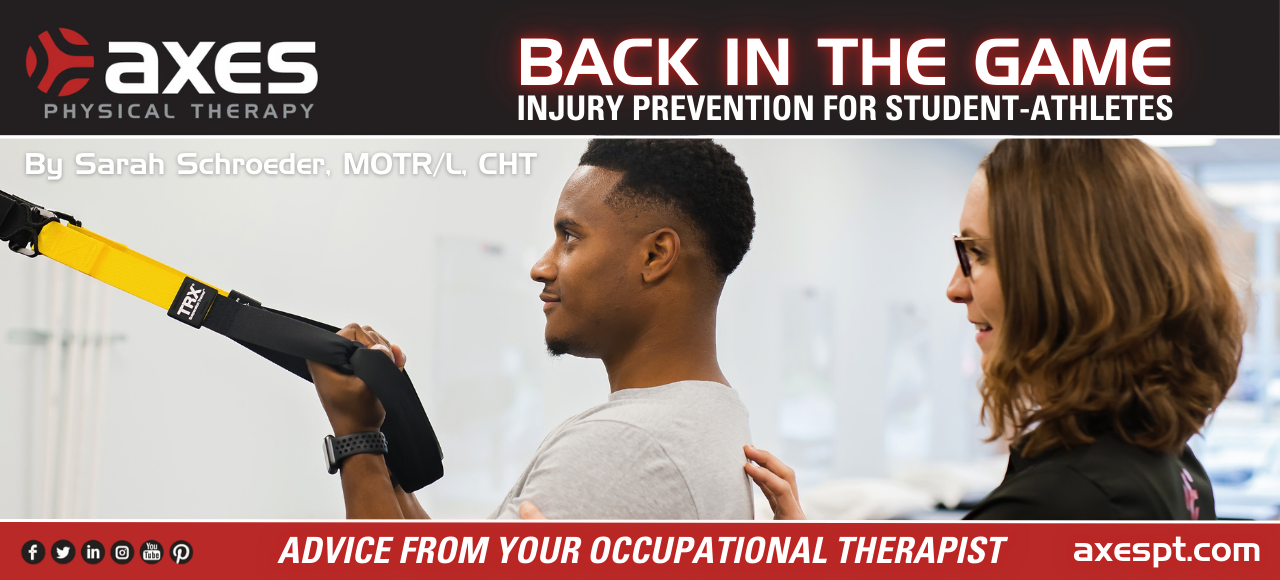
Back in the Game: Student-Athlete Injury Prevention in St. Louis
How parents, coaches, and athletes can work together to reduce injury risk and build healthy habits that last all season. By Sarah Schroeder, MOTR/L, CHT – Axes in Glen Carbon, IL
As a new school year begins, student-athletes across the St. Louis region are returning to the courts, fields, and tracks with excitement and ambition. But after a summer of rest or reduced activity, returning to intense training too quickly can increase the risk of injury, especially in growing bodies. Whether your child is a seasoned athlete or just starting their first season, focusing on injury prevention now can make all the difference.
Why Injuries Spike at the Start of the School Sports Season
Time away from structured training impacts more than just performance. Without regular conditioning, athletes may lose muscle strength, mobility, cardiovascular endurance, and motor control—all of which are key for safe movement during high-intensity play. The biggest risks when returning to sport include:
-
Overuse injuries (shin splints, tendinitis, stress fractures)
-
Sprains and strains (due to weak or tight muscles)
-
Joint injuries (particularly knees, ankles, and shoulders)
-
Reinjury (especially after a poorly healed previous injury)
Adolescents are especially vulnerable because their bodies are still growing. When growth plates are open, they’re more prone to stress and inflammation.
Smart Training = Injury Prevention
A gradual return to activity is essential. Ideally, a pre-season program should begin 2–4 weeks before official practices and focus on:
-
Mobility and flexibility
-
Cardiovascular conditioning
-
Sport-specific skills and agility
-
Functional strength and core stability
Progressive loading—slowly increasing the intensity and duration of training—gives muscles, joints, and connective tissues time to adapt. This reduces the risk of injury while building athletic endurance and performance.
If your athlete is recovering from an old injury or has a history of pain, working with a physical or occupational therapist before the season starts can help identify weaknesses or movement imbalances before they become a problem.
Build Healthy Habits Off the Field
Injury prevention doesn’t stop when practice ends. Consistent health routines support performance and recovery:
-
Nutrition: Prioritize complex carbs, lean protein, and anti-inflammatory foods to support muscle repair.
-
Hydration: Especially in hot Missouri and Illinois weather, dehydration can lead to fatigue and cramping.
-
Sleep: Athletes need 8–10 hours of sleep per night for muscle repair, immune function, and mental clarity.
-
Mental health: Acknowledge and support the emotional side of athletics—pressure, comparison, and burnout are real. Encourage open communication and balance.
Know the Warning Signs of Injury
Some soreness is normal when starting a new season—but pain is a signal. Encourage your student-athlete to speak up if they experience:
-
Sharp or localized pain
-
Swelling or bruising
-
Limping or limited motion
-
Clicking, locking, or joint instability
Early reporting and evaluation can prevent minor issues from becoming long-term setbacks. Our team at Axes is trained to assess these symptoms and offer fast, effective treatment that keeps kids safely in the game.
The Role of Physical and Occupational Therapy in Youth Sports
When injuries happen, getting the right care matters. Axes Physical Therapy offers:
-
Physical therapy: For sprains, strains, overuse injuries, and post-surgical recovery. We focus on restoring range of motion, strength, and function.
-
Occupational hand therapy: Ideal for athletes in sports that rely on fine motor control (e.g., baseball, gymnastics, tennis). We address grip, dexterity, and coordination.
-
Movement assessments: Identifying patterns that may contribute to poor performance or pain (e.g., improper landing mechanics, asymmetries).
-
Sport-specific return-to-play plans: We tailor rehab to each athlete’s sport, goals, and position—so they can return stronger, not just symptom-free.
A Strong Start Begins with Safety
Student-athletes deserve to play, compete, and grow without being sidelined by injury. By starting the season with smart training, daily healthy habits, and expert support when needed, families and coaches can set athletes up for success—on and off the field.
Need help evaluating your student-athlete’s readiness for the season? Want support recovering from a sports injury?
You don’t have to guess your way through recovery. Let’s do it right the first time. Visit one of our 21 Axes Physical Therapy locations across the Greater St. Louis Missouri and Illinois area.
Schedule an appointment or visit AxesPT.com to find your nearest clinic and get expert help today!
