
Sciatica Treatment in Creve Coeur, MO. Sciatica treatment is used to ease nerve-related back and leg pain while correcting movement patterns or muscle imbalances that may be contributing to symptoms. At Axes Physical Therapy serving Creve Coeur, MO, treatment plans focus on restoring movement, relieving nerve pain, and helping you safely get back to the activities you enjoy most.
Sciatica symptoms can appear suddenly or develop gradually over time, our Creve Coeur, MO physical therapists take a personalized approach to care, using evidence-based techniques focused on long-term improvement rather than short-term relief. By focusing on lasting recovery, we help patients get back to the activities that matter most, both on and off the field.
Contact the Axes Physical Therapy clinic closest to you, request an appointment online, or visit any Axes location for a free injury screening to begin care.
This page covers:
- What sciatica is and how the sciatic nerve causes back and leg pain
- Typical sciatica symptoms and the ways they can impact everyday life
- Common causes of sciatic nerve pain, such as disc-related issues and repetitive stress
- How physical therapy in Creve Coeur, MO can relieve sciatica and restore movement
- When to seek professional treatment and what to expect from care
- At-home strategies that may help manage sciatica symptoms before treatment begins
What Is Sciatica?
Sciatica is a condition that causes pain, numbness, or tingling that travels from the lower back through the hip or buttock and down one leg. The condition develops when the sciatic nerve is compressed, inflamed, or otherwise irritated.
Sciatica involves the sciatic nerve, which is the largest nerve in the body. It begins in the lower spine where several nerve roots come together, then travels through the pelvis and down the back of each leg. Since this nerve supplies sensation and muscle control to much of the leg, irritation may cause pain or weakness at various points along its course.
If the sciatic nerve becomes inflamed or compressed, symptoms may vary from mild discomfort to more intense, nerve-like pain. Sciatica commonly affects one side of the body, and symptoms may shift with changes in position or activity.
People with sciatica may experience a range of symptoms, including:
- Pain that radiates from the lower back into the buttock, hip, or leg
- A tingling sensation often described as pins and needles
- Numbness along the leg or foot
- Muscle weakness in the leg or foot
- Stiffness affecting the lower back, hips, or leg
- Discomfort during standing, walking, or weight-bearing activities
- Pain that increases after long periods of sitting or standing, or with specific movements
By targeting nerve irritation and underlying movement or strength issues, sciatica treatment in Creve Coeur, MO helps reduce symptoms and support lasting relief.
Common Reasons for Sciatic Nerve Pain
There are several possible causes of sciatic nerve pain, usually involving pressure or irritation along the nerve’s path from the lower back into the leg. The following outlines common causes of sciatica using straightforward, easy-to-understand explanations.
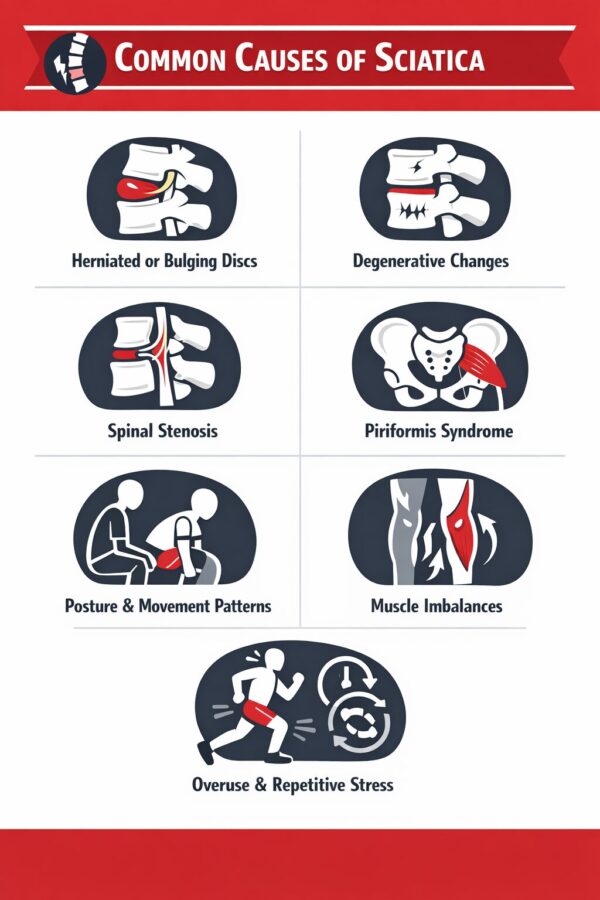
Some of the most common causes of sciatica include:
- Herniated or Bulging Discs: A bulge or herniation occurs when the inner disc material (nucleus pulposus) presses outward against the disc’s outer layer, potentially irritating nerve roots connected to the sciatic nerve.
- Degenerative Changes: Over time, normal wear and tear in the spine can narrow the spaces around nerves, increasing the risk of irritation that leads to sciatic pain.
- Spinal Stenosis: When spinal spaces become narrowed, nerve structures may have less room, which can lead to pressure on nerves associated with sciatica.
- Piriformis Syndrome: Piriformis syndrome occurs when tight hip muscles press against the sciatic nerve along its path through the pelvis, resulting in discomfort or pain.
- Posture and Movement Patterns: Everyday posture and movement habits, such as sitting for long periods or lifting incorrectly, can place ongoing strain on the lower back and irritate the sciatic nerve.
- Muscle Imbalances: When core or hip muscles lack strength, additional stress may be placed on the lower back and pelvis, affecting the sciatic nerve over time.
- Overuse or Repetitive Stress: Overuse from repetitive activity, sports, or physical labor can place continuous stress on the spine, raising the risk of disc-related issues and sciatic nerve pain.
Because sciatica can have multiple underlying causes, identifying the specific source of nerve irritation is an essential part of treatment, and evaluation by a doctor or physical therapist in Creve Coeur, MO helps guide effective care.
How Sciatica Can Disrupt Everyday Activities
Sciatic nerve pain can interfere with everyday life by making movement more difficult and reducing tolerance for common positions used at work or during daily routines.
People with sciatica often experience difficulty with:
- Extended periods of sitting, especially during desk work or driving
- Getting up from a seated position, often caused by irritation of the sciatic nerve
- Remaining on your feet for long periods, that may aggravate pain in the leg
- Repetitive bending, lifting, or twisting movements, commonly required during daily activities
- Sleeping without discomfort, due to pain radiating into the hip or leg
- Exercise or recreational activities, including sports or fitness routines
Over time, unaddressed limitations from sciatica may result in secondary problems such as:
- Decreased overall activity
- Stiffness and reduced muscle conditioning
- Weakness developing in the core or hip muscles
- Avoidance of movement because of reinjury concerns
Sciatica treatment through Creve Coeur, MO physical therapy focuses on restoring these functional abilities by:
- Building tolerance for everyday positions like sitting, standing, and walking
- Decreasing nerve irritation with controlled, guided movement
- Improving strength in the muscles that stabilize the spine and pelvis
- Helping patients learn safer ways to move during everyday activities
- Gradually reintroducing physical activity with confidence
By addressing how sciatica affects real-world movement—not just pain—treatment helps patients return to work, daily routines, and the activities they love with greater comfort and control.
How Axes Physical Therapy in Creve Coeur, MO Helps Sciatica Patients
Our team in Creve Coeur, MO helps sciatica patients by relieving sciatic nerve irritation and improving how the body moves, strengthens, and functions.
Rather than offering only temporary pain relief, Axes Physical Therapy takes a comprehensive approach to sciatica care. Our Creve Coeur, MO physical therapists take a holistic approach to care, collaborating with your doctor to assess how the spine, hips, and nervous system function together, and designing a customized treatment plan to match your body, daily demands, and recovery goals.
Physical therapy for sciatica may help by:
- Addressing pressure affecting the sciatic nerve
- Improving movement and mobility in the spine and hips
- Reinforcing muscles that help support the lower back
- Educating patients on movement strategies that lower the risk of recurrence
Focusing on the source of sciatica rather than pain alone allows physical therapy to help many people in Creve Coeur, MO reduce reliance on medications or injections while supporting a safe return to daily life.
Can Sciatica Go Away or Is Ongoing Treatment Needed?
When the root cause of sciatic nerve irritation is addressed, sciatica can often improve significantly and sometimes resolve completely.
Sciatica is often a short-term condition for many individuals. When symptoms are caused by issues such as a disc bulge, muscle tightness, or movement-related stress, reducing pressure on the sciatic nerve and restoring normal movement can lead to lasting relief.
In situations involving chronic or degenerative spinal changes, sciatica symptoms may return from time to time. Ongoing management in these cases focuses on reducing flare-ups, maintaining strength and mobility, and minimizing the risk of recurrence.
How to Manage Sciatica Symptoms at Home While Waiting for Treatment
Before beginning professional treatment, some at-home measures may help manage sciatica symptoms in the short term. The goal of these methods is to limit nerve irritation and keep the body moving carefully.
People often manage early sciatica symptoms at home by using strategies such as:
- Staying gently active: Remaining gently active with light movement may help reduce stiffness and nerve pressure.
- Limiting prolonged sitting: Avoiding long periods of sitting and adjusting posture may help manage symptoms.
- Using heat or ice: Heat can help relax tight muscles, while ice may reduce inflammation during painful flare-ups.
- Adjusting resting positions: Lying on your side with a pillow between your knees or adjusting sleep positions may reduce nerve pressure.
- Temporarily modifying activities: Avoiding activities that increase pain, including heavy lifting or repeated bending, may help keep symptoms from worsening.
While these strategies may provide temporary relief, they do not address the underlying cause of sciatica. Persistent or worsening symptoms may require professional assessment to determine the most effective treatment approach.
Sciatica Care Strategies at Axes Physical Therapy in Creve Coeur, MO
At Axes Physical Therapy in Creve Coeur, MO, sciatica treatment plans are built using evidence-based, individualized strategies designed for pain relief and lasting recovery.
Personalized Evaluation
Treatment for sciatica always starts with a thorough evaluation of how your body moves and functions as a whole. Your therapist assesses posture, joint mobility, muscle strength, nerve tension, and movement patterns to identify contributing factors.
This personalized approach ensures treatment is customized to your needs instead of relying on a generic plan.
Therapeutic Exercise Program
Targeted exercises are chosen to build strength, improve stability, and increase flexibility while minimizing stress on the sciatic nerve. Programs frequently emphasize the core, hips, and lower extremities to improve spinal support.
Over time, targeted exercise helps restore proper movement, reduce flare-ups, and build resilience for daily activities.
Manual Therapy & Hands-On Treatment
Manual therapy techniques, including soft tissue mobilization and joint mobilization, are sometimes used to support mobility, reduce muscle tension, and improve circulation. Such techniques are used to relieve discomfort and improve overall movement quality.
Manual therapy techniques are selected based on individual findings and comfort level.
Movement Education & Posture Coaching
Understanding how everyday movements may exacerbate symptoms can help reduce future flare-ups. Your physical therapist in Creve Coeur, MO offers education on posture, lifting technique, sitting habits, and activity adjustments to help reduce stress on the sciatic nerve.
Adjunct Therapies (When Appropriate)
Adjunct treatments like heat, ice, TENS, or dry needling may be used selectively to help manage pain and support tissue healing. These modalities are applied as part of a comprehensive care plan rather than used on their own.
Post-Surgical & Pre-Surgical Rehabilitation
When surgery is required, Axes Physical Therapy provides pre-surgical and post-surgical rehabilitation to help patients recover safely and effectively.
When Should You Seek Treatment for Sciatica in Creve Coeur, MO?
Being aware of when to seek care for sciatica can support earlier, more effective treatment. You may benefit from a professional evaluation if you experience:
- Sciatic pain that continues for several weeks
- Symptoms that worsen with sitting, standing, or movement
- Leg or foot numbness, tingling, or weakness
- Pain that does not improve with rest or over-the-counter measures
Prompt evaluation can lead to more efficient treatment and help promote a smoother recovery experience.
Why St. Louis Patients Choose Axes Physical Therapy for Sciatica
Selecting the right physical therapy provider for sciatica can significantly impact recovery and comfort. As a locally focused practice, Axes Physical Therapy serves St. Louis communities with:
- Licensed physical therapists with extensive experience
- Individualized, patient-centered treatment
- Treatment strategies supported by evidence-based care
- Direct access to physical therapy in many cases
- Multiple convenient locations with flexible scheduling
We strive to offer a supportive care environment that helps patients feel comfortable, informed, and confident throughout the recovery process.
Call Axes Physical Therapy for Your Sciatica Treatment in St. Louis
Taking the first step toward sciatica relief should feel easy and manageable. If sciatica is limiting your daily activities, Axes Physical Therapy is ready to help you get back to the things you enjoy most. To begin care, you can:
- Contact the Axes Physical Therapy clinic closest to you
- Schedule an appointment online at a time that works for you
- Come to any Axes location for a free injury screening
We’re here to support improved movement, renewed confidence, and a safe return to the activities you love.
Frequently Asked Questions About Sciatica Treatment
Is physical therapy effective for sciatica?
Yes. Physical therapy is commonly recommended as a non-invasive approach for sciatica, especially when symptoms involve movement, posture, or muscle imbalances.
How long does physical therapy for sciatica last?
The length of treatment depends on the severity of symptoms, underlying cause, and individual needs. While many people improve within several weeks, others may need additional time to fully recover.
Do I need a doctor referral?
In many cases, a referral is not required to begin physical therapy. Direct access allows you to start treatment sooner when appropriate.
What if the pain is severe?
If sciatica pain becomes severe or is accompanied by weakness or bowel or bladder changes, a medical evaluation is advised. After serious conditions are ruled out, physical therapy is often included as part of a coordinated care plan.