Sciatica Treatment in St. Charles, MO. Sciatica treatment helps relieve pain that often begins in the lower back and travels down the leg by addressing irritation of the sciatic nerve and the movement or muscle issues behind it. At Axes Physical Therapy in St. Charles, MO, treatment plans focus on restoring movement, relieving nerve pain, and helping you safely get back to the activities you enjoy most.
Some people experience sciatica without warning, while others notice symptoms that build over months, our St. Charles, MO physical therapists deliver customized physical therapy programs using evidence-based techniques focused on long-term improvement rather than short-term relief. By focusing on lasting recovery, we help patients get back to the activities that matter most, both on and off the field.
Call the Axes Physical Therapy location nearest you, schedule an appointment online, or visit any Axes location for a free injury screening to begin care.
On this page, you’ll learn about:
- An overview of sciatica and how the sciatic nerve contributes to back and leg pain
- Typical sciatica symptoms and the ways they can impact everyday life
- The most common causes of sciatic nerve pain, including disc issues and overuse
- How physical therapy in St. Charles, MO helps reduce sciatic pain and improve mobility
- When to seek professional treatment and what to expect from care
- At-home strategies that may help manage sciatica symptoms before treatment begins
What Is Sciatica?
Sciatica refers to nerve-related pain that often begins in the lower back and radiates through the hip or buttock into one leg. The condition develops when the sciatic nerve is compressed, inflamed, or otherwise irritated.
The sciatic nerve is the largest nerve in the body. This nerve starts in the lower spine as multiple nerve roots join together and then runs through the pelvis into the back of the leg. Because the sciatic nerve plays a major role in leg sensation and movement, pressure on the nerve can cause symptoms throughout the leg.
When pressure or inflammation affects the sciatic nerve, symptoms may range from mild discomfort to sharp, burning, or electric-like pain. Sciatica commonly affects one side of the body, and symptoms may shift with changes in position or activity.
Sciatica often causes symptoms such as:
- Radiating pain felt from the lower back down into the hip or leg
- Pins-and-needles or tingling sensations felt in the leg
- Reduced sensation or numbness in the leg or foot
- A feeling of weakness in the muscles of the leg or foot
- Tightness or stiffness felt in the lower back, hips, or leg
- Difficulty standing, walking, or placing weight on the affected leg
- Symptoms that worsen with prolonged positions or certain movements
Effective sciatica treatment in St. Charles, MO focuses on reducing irritation of the sciatic nerve while addressing movement, posture, and strength-related factors that contribute to symptoms.
Common Causes of Sciatic Nerve Pain
Sciatic nerve pain can develop for several reasons, most often when pressure or irritation affects the nerve as it leaves the lower spine or travels through the hip and leg. This section explains the most common causes of sciatica in a clear, non-alarming way.
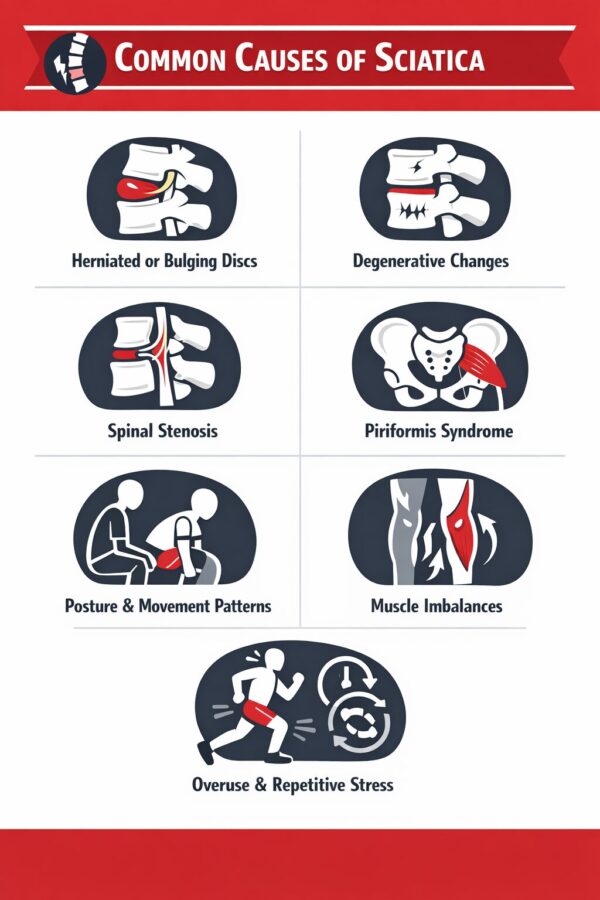
Common causes of sciatica include:
- Herniated or Bulging Discs: When the soft tissue of a spinal disc (nucleus pulposus) pushes outward through its outer, harder shell, it can place pressure on nearby nerve roots and irritate the sciatic nerve.
- Degenerative Changes: As the spine naturally ages, discs and joints may lose flexibility or height, which can reduce space for nearby nerves and contribute to sciatic nerve irritation.
- Spinal Stenosis: Spinal stenosis occurs when the spinal canal narrows over time, leaving less space for nerve structures and increasing the chance of nerve irritation.
- Piriformis Syndrome: Piriformis syndrome occurs when tight hip muscles press against the sciatic nerve along its path through the pelvis, resulting in discomfort or pain.
- Posture and Movement Patterns: Extended periods of sitting, improper lifting mechanics, or repeated movements may place added stress on the lower back, increasing irritation of the sciatic nerve.
- Muscle Imbalances: Imbalances caused by weak core or hip muscles may increase strain on the lower back and pelvis, contributing to sciatic nerve irritation.
- Overuse or Repetitive Stress: Ongoing physical stress from athletics, demanding work, or repetitive activity can overload the spine and increase the likelihood of disc and sciatic nerve irritation.
Identifying the specific cause of sciatica is an important part of treatment, which is why individualized evaluation by a doctor or physical therapist in St. Charles, MO plays a key role in developing an effective care plan.
How Sciatica Can Disrupt Everyday Activities
Living with sciatica often disrupts daily activities by restricting movement and making certain positions or tasks uncomfortable.
People with sciatica often experience difficulty with:
- Sitting for long periods, especially during desk work or driving
- Getting up from a seated position, due to nerve irritation or weakness
- Remaining on your feet for long periods, often leading to increased leg symptoms
- Bending, lifting, and twisting, as part of routine daily tasks
- Sleeping without discomfort, because pain may travel into the hip or leg
- Sports or recreational activities, which may include fitness or sports-related activities
Without proper treatment, these limitations can lead to other concerns, including:
- Lower levels of physical activity
- Loss of flexibility and muscle conditioning
- Loss of strength in the hips or core
- Greater fear of movement or reinjury
Treatment through St. Charles, MO physical therapy works to restore function by:
- Building tolerance for everyday positions like sitting, standing, and walking
- Relieving nerve irritation through structured movement
- Reinforcing the muscles that support the spine and pelvic region
- Educating patients on safe movement strategies for daily life
- Safely reintroducing physical activity over time
By addressing how sciatica affects real-world movement—not just pain—treatment helps patients return to work, daily routines, and the activities they love with greater comfort and control.
How Axes Physical Therapy Helps Treat Sciatica in St. Charles, MO
Sciatica care at Axes Physical Therapy in St. Charles, MO centers on reducing nerve irritation and improving strength, mobility, and functional movement.
At Axes Physical Therapy, we do more than provide temporary pain relief. Our physical therapists in St. Charles, MO evaluate the body as a whole, collaborating with your doctor to assess how the spine, hips, and nervous system function together, before creating a personalized treatment plan based on your body, lifestyle, and goals.
Physical therapy for sciatica may help by:
- Helping decrease pressure placed on the sciatic nerve
- Improving spinal and hip mobility
- Building strength in muscles that support the lower back
- Providing movement strategies to help reduce future flare-ups
By treating the underlying contributors to sciatica rather than symptoms alone, physical therapy supports long-term recovery and helps patients in St. Charles, MO return safely to everyday activities without relying on medications or invasive procedures.
Does Sciatica Require Long-Term Treatment?
Sciatica can often improve significantly—and in many cases resolve completely—when the underlying cause of nerve irritation is properly addressed.
Sciatica is often a short-term condition for many individuals. In cases where disc changes, muscle tension, or movement stress play a role, reducing nerve irritation and improving movement patterns often leads to sustained relief.
For some individuals, especially when sciatica is associated with degenerative or long-term spinal changes, symptoms may recur periodically. Treatment in these situations typically emphasizes symptom management, strength and mobility improvements, and prevention of future episodes.
At-Home Ways to Manage Sciatica Symptoms Before Treatment Begins
When sciatica symptoms first appear, some at-home approaches may help ease discomfort before starting professional care. The goal of these methods is to limit nerve irritation and keep the body moving carefully.
Common ways to manage sciatica symptoms at home include:
- Maintaining gentle activity: Light movement such as short walks can help prevent stiffness and reduce prolonged pressure on the sciatic nerve.
- Reducing long periods of sitting: Taking breaks from sitting and using supportive seating may help ease discomfort.
- Heat and ice application: Heat may ease muscle tightness, and ice can be helpful during periods of increased pain.
- Finding supportive positions: Side-lying with a pillow between the knees or changing sleep positions may help relieve nerve pressure.
- Modifying activities: Temporarily avoiding movements that worsen pain, such as heavy lifting or repeated bending, can help prevent symptom escalation.
Although these at-home approaches may help ease symptoms, they do not treat the underlying cause of sciatica. If symptoms persist, worsen, or interfere with daily activities, professional evaluation can help determine the most effective course of treatment.
How Axes Physical Therapy Treats Sciatica in St. Charles, MO
Our St. Charles, MO physical therapists build your treatment plan around targeted, patient-specific strategies backed by science to support both pain relief and long-term recovery.
Comprehensive Evaluation
Every sciatica treatment plan begins with a comprehensive evaluation that looks at how your body moves as a whole. Your therapist assesses posture, joint mobility, muscle strength, nerve tension, and movement patterns to identify contributing factors.
This individualized approach allows treatment to be tailored specifically to your symptoms rather than following a one-size-fits-all protocol.
Targeted Therapeutic Exercises
Therapeutic exercises are selected to improve strength, stability, and flexibility while reducing stress on the sciatic nerve. Programs frequently emphasize the core, hips, and lower extremities to improve spinal support.
As strength and mobility improve, exercise therapy supports better movement patterns and reduced symptom flare-ups.
Hands-On Manual Therapy
Manual physical therapy techniques such as soft tissue mobilization and joint mobilization may be used to improve mobility, decrease muscle tension, and promote circulation. These techniques can help relieve discomfort while supporting improved movement quality.
Hands-on care is provided according to each patient’s tolerance and clinical presentation.
Movement Education & Posture Coaching
Understanding how everyday movements may exacerbate symptoms can help reduce future flare-ups. Your St. Charles, MO physical therapist provides guidance on posture, lifting mechanics, sitting strategies, and activity modification to reduce strain on the sciatic nerve.
Supportive Treatment Modalities
When appropriate, adjunct therapies such as heat, ice, electrical stimulation (TENS), or dry needling may be used to support pain management and tissue recovery. Adjunct therapies support the overall plan of care and are not used as stand-alone treatments.
Post-Surgical & Pre-Surgical Rehabilitation
For patients who require surgery, Axes offers both pre-surgical and post-surgical rehab programs to support a smooth and safe recovery.
When to Consider Professional Care for Sciatica in St. Charles, MO
Knowing when to seek treatment for sciatica can help prevent symptoms from becoming more persistent or disruptive. You may benefit from a professional evaluation if you experience:
- Sciatic pain that continues for several weeks
- Symptoms that increase with sitting, standing, or movement
- Numbness, tingling, or weakness in the leg or foot
- Pain that does not improve with rest or over-the-counter measures
Seeking care early may help support more effective conservative treatment and a smoother recovery.
Why Axes Physical Therapy Is a Trusted Choice for Sciatica in St. Louis
Finding the right provider for sciatica care can play an important role in recovery. Axes Physical Therapy is a locally focused practice serving communities throughout St. Louis with:
- Highly trained and licensed physical therapists
- Individualized, patient-centered treatment
- Evidence-based treatment strategies
- Direct access to physical therapy in many cases
- Convenient locations and flexible scheduling
Our team is committed to creating a supportive atmosphere that helps you feel confident and informed at every stage of recovery.
Call Axes Physical Therapy for Your Sciatica Treatment in St. Louis
Getting started with sciatica treatment should be a straightforward, stress-free process. If sciatic nerve pain is interfering with your daily life, Axes is here to help you get back to the activities you love and cherish most. Getting started is easy:
- Call the Axes Physical Therapy location nearest you
- Book an appointment online at a time that works for you
- Visit any of our locations for a free injury screening
Our team is here to help you move more comfortably, regain confidence in your body, and get back to the activities you love.
Sciatica Treatment Questions & Answers
Can physical therapy relieve sciatica symptoms?
Yes. Physical therapy is commonly recommended as a non-invasive approach for sciatica, especially when symptoms involve movement, posture, or muscle imbalances.
What is the typical timeline for sciatica treatment?
Each recovery timeline is different and depends on the underlying cause and individual response to treatment. Many people notice improvement within a few weeks, while others may require a longer course of care.
Is a referral required to start physical therapy?
Many patients can begin physical therapy without a referral. Direct access allows you to start treatment sooner when appropriate.
What should I do if sciatica pain is severe?
If pain is intense, worsening, or accompanied by significant weakness or changes in bowel or bladder function, medical evaluation is recommended. Once serious issues are excluded, physical therapy is commonly used as part of comprehensive sciatica care.