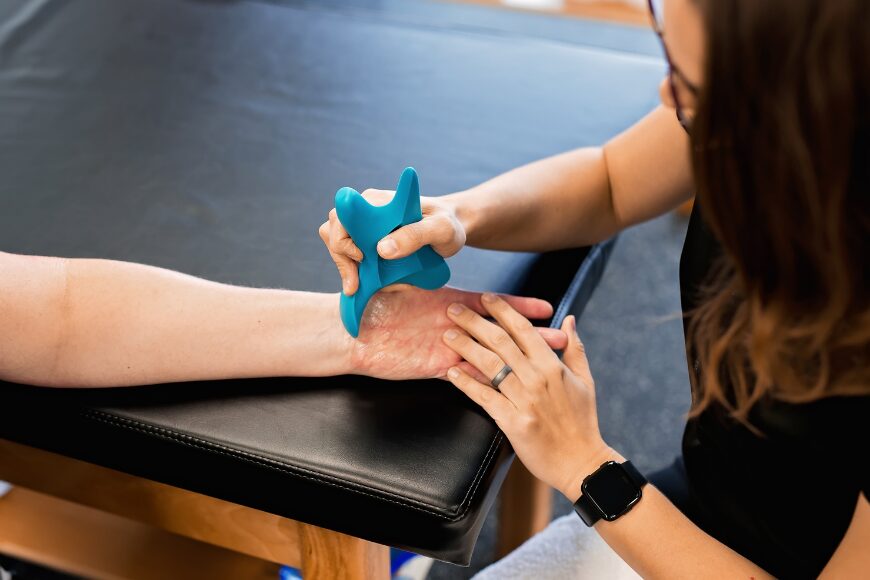
ACL Rehabilitation in Byrnes Mill, MO. Coping with an ACL injury may be overwhelming and challenging, but the right ACL rehabilitation program is essential in your recovery journey. At Axes Physical Therapy, we understand how hard it is to have your ability to be active restricted. Our goal is to help you regain your muscle strength, movement, and self-confidence, so you can return to the activities you love, whether that means playing sports again or playing with your grandkids again without pain.
With locations throughout the Greater St. Louis area, our team of certified physical and occupational therapists in Byrnes Mill, MO on average boasts more than 15 years of experience. We are dedicated to providing individualized therapy services designed to meet your particular needs. Employing state-of-the-art treatment techniques, we collaborate with you and your doctor to ensure the best possible outcomes for your recovery.
Ready to start your ACL rehabilitation journey? Contact Axes Physical Therapy, schedule an appointment, or call the closest Axes location and initiate your recovery process. Let us assist you in returning to the activities you love with confidence and strength.
About ACL Injuries
Common Causes and Risk Factors
An ACL (Anterior Cruciate Ligament) tear is a frequent knee-related injury frequent among athletes and active individuals, commonly due to certain movements or injuries. During an ACL tear, the anterior cruciate ligament, joining the femur (thigh bone) to the tibia (shin bone), becomes overstretched and tears. The ligament fibers tear either partially or completely, resulting in knee instability and reduced function. Understanding the usual causes and risk factors can help in the prevention and management of these injuries.
- Quick Deceleration and Changes in Direction: One of the most prevalent causes of ACL tears involves fast deceleration combined with a sudden shift in direction. These movements exert considerable pressure on the knee, making the ACL susceptible to tearing.
- Direct Trauma: Direct knee trauma, particularly from the side, can cause ACL injuries. This is often seen with contact sports injuries in sports such as football and soccer.
- Higher Incidence in Females: Women are at a higher risk for ACL injuries due to anatomical differences such as a wider pelvis, increased ligament laxity, and differences in muscle strength and coordination.
- Risky Sports: Participation in sports that entail frequent and quick deceleration, changes of direction, and jumping, such as basketball, soccer, and skiing, raises the chances of ACL injuries.
- Previous ACL Injuries: Having a previous ACL tear raises the chances of re-injury, especially if the initial injury did not fully heal or the rehabilitation process was incomplete.
- Weak Musculature: Weakness in the muscles around the knee, particularly the quadriceps and hamstrings, heightens the likelihood of an ACL tear. Robust muscles help stabilize the knee joint.
- Improper Footwear: Wearing shoes that do not provide adequate cushioning or traction can contribute to slips and awkward movements that may result in an ACL injury.
Understanding these usual causes and risk factors, you can take proactive steps to protect your knees, such as engaging in targeted strength training, improving flexibility, and practicing proper techniques during sports and physical activities in Byrnes Mill, MO.

Symptoms
Knowing the symptoms of an ACL tear is crucial for quick diagnosis and appropriate treatment:
- Popping Sensation: Many individuals report hearing or feeling a “pop” in their knee at the moment of injury.
- Pain: Immediate and severe pain often comes with an ACL injury, preventing further activity.
- Swelling: Swelling usually occurs within the first few hours after the injury as the knee joint accumulates blood.
- Loss of Range of Motion: The injured knee may experience a reduced range of motion, restricting movement in bending or straightening the leg.
- Instability: The knee may feel unstable or give way, particularly during weight-bearing activities, due to the lack of support from the damaged ligament.
- Tenderness: The knee may be tender to the touch, especially along the joint line.
- Inability to Bear Weight: Severe pain and instability often make it difficult or impossible to bear weight the affected leg.
- Muscle Weakness: Weakness in the muscles around the knee, especially those in the thigh, may develop due to inactivity and soreness.
Diagnosis
Accurate diagnosis of an ACL injury often includes a combination of clinical evaluation and imaging techniques in Byrnes Mill, MO:
- Clinical Assessment: A physical examination by a healthcare provider involves tests like the Lachman test, anterior drawer test, and pivot shift test to evaluate the integrity of the ACL. You can visit Axes for a no-cost injury screening (and begin your ACL rehab with us via Direct Access Physical Therapy.).
- MRI (Magnetic Resonance Imaging): An MRI scan offers detailed views of the soft tissues in the knee, verifying the presence and extent of an ACL tear.
- Ultrasound: This imaging technique can be used to see the ligament and assess any damage.
- X-ray: While x-rays do not show soft tissues like ligaments, they are used to rule out any associated bone fractures that might have occurred during the injury.
Early and accurate diagnosis is crucial for developing an effective treatment plan and securing optimal recovery in your ACL rehabilitation in Byrnes Mill, MO.
Phases of ACL Rehabilitation in Byrnes Mill, MO
Recovering from an ACL injury or surgery with rehabilitation is a structured process that aims to restore function, strength, and stability to the knee. This process is typically divided into several phases, including preoperative and postoperative rehabilitation, each with specific goals and activities designed to gradually improve recovery. Here are the key phases of ACL rehabilitation in Byrnes Mill, MO:
1. Pre-surgery Preparation (Prehabilitation)
Goals:
- Minimize swelling and inflammation.
- Achieve full range of motion, particularly knee extension.
- Build strength in the muscles around the knee.
- Enhance proprioception and balance.
Activities:
- Mild range of motion activities (e.g., heel slides, wall slides).
- Strengthening exercises (e.g., quadriceps sets, straight leg raises).
- Electrical muscle stimulation to improve muscle strength.
- Low-impact cardiovascular activities, such as swimming and cycling.
2. Immediate Post-surgery Recovery (0-2 weeks)
Goals:
- Control pain and alleviate swelling.
- Preserve the surgical repair.
- Start early mobility and muscle activation.
Activities:
- Utilizing ice, compression, and elevation to reduce swelling (POLICE principle: Protect, Optimal Loading, Ice, Compression, Elevation).
- Light passive and active range of motion exercises.
- Bearing weight as tolerated, using crutches if needed.
- Ankle pumps, quad sets, and heel slides.
3. Early Rehabilitation (2-6 weeks)
Goals:
- Restore complete range of motion.
- Start building strength and stability.
- Restore normal walking pattern.
Activities:
- Gradual increase in range of motion exercises.
- Incorporation of closed kinetic chain activities like mini squats and step-ups.
- Balance training exercises.
- Use of stationary bike for gentle cycling.
4. Intermediate Rehabilitation (6-12 weeks)
Goals:
- Increase muscle strength and endurance.
- Improve proprioception and dynamic stability.
- Commence low-impact cardiovascular workouts.
Activities:
- Strengthening exercises for quadriceps, hamstrings, glutes (e.g., leg press, lunges, hamstring curls).
- Proprioception exercises (e.g., single-leg balance, balance board exercises).
- Gentle aerobic activities (e.g., elliptical, swimming).
- Water therapy can benefit certain patients.
5. Advanced Rehabilitation (3-6 months)
Goals:
- Enhance strength, power, and agility.
- Get ready for resuming sports or intense activities.
Activities:
- Explosive movement exercises (e.g., jump training).
- Sports drills (e.g., agility ladder, cone drills).
- Gradual return to running program, starting with jogging and progressing to sprints.
- Training to mimic sport-specific actions.
6. Return to Activity (6-12 months)
Goals:
- Resume sports or activities without risk.
- Preserve muscle strength and prevent re-injury.
Activities:
- Maintaining advanced strengthening and explosive exercises.
- Complete involvement in sport-specific training.
- Ongoing proprioceptive and balance training.
- Periodic visits to your Byrnes Mill, MO physical therapist to review progress and modify the program.
Each phase of ACL rehabilitation in Byrnes Mill, MO, from pre- and post-surgical rehabilitation to a return to activities, is crucial for achieving a full recovery and avoiding future injuries. Following a structured rehabilitation program under the guidance of skilled physical therapists ensures that patients can return to their activities with confidence and strength. For custom ACL rehab plans in Byrnes Mill, MO, contact Axes today.
Role of Byrnes Mill, MO Physical Therapy in ACL Rehabilitation
Personalized Rehabilitation Plans
Physical therapy is crucial for ACL rehabilitation by offering customized rehabilitation programs that meet the unique needs of each individual. Every ACL injury is unique, and rehab programs need to be tailored for the best outcomes. Experienced Byrnes Mill, MO physical therapists assess your condition, determine practical goals, and design a step-by-step program that includes physical activities, manual physical therapy, and treatment techniques to support healing and regain function.
Early Mobilization and Pain Management
In the initial stages in ACL rehabilitation, physical therapy focuses on reducing pain and swelling while promoting early mobilization. Techniques such as ice therapy, compression, elevation, and mild range of motion exercises assist in controlling pain and decreasing inflammation. Early activity is crucial for preventing joint stiffness and encouraging blood flow to the affected area, which aids in the healing process.
Strengthening and Stability
As you progress through the ACL rehabilitation phases in Byrnes Mill, MO, the focus changes to building strength in the muscles around the knee, particularly the quadriceps, hamstrings, and glutes. Strengthening these muscles is vital for stabilizing the knee joint and preventing future injuries. Physical therapists use a variety of exercises, including closed kinetic chain exercises like squats and lunges, to increase strength and stabilize the knee joint.
Proprioception and Balance Training
Regaining proprioception—the body’s ability to detect movement and positioning—is a critical aspect of ACL rehabilitation. Byrnes Mill, MO physical therapists integrate balance and coordination exercises to boost proprioception and lower the risk of re-injury. These exercises may consist of balance boards, single-leg stands, and dynamic exercises that test the patient’s stability in a safe setting.
Advanced Functional Training
In the later stages of ACL rehabilitation, Byrnes Mill, MO physical therapists focus on advanced functional training to prepare patients for a return to sports or daily activities. This includes sports-related drills, agility training, and plyometric exercises that replicate the motions and stresses of the patient’s chosen sport or activity. Functional training helps ensure that the knee can handle the stresses and strains of real-life movements.
Ongoing Support and Education
Byrnes Mill, MO physical therapists deliver ongoing educational support throughout ACL rehabilitation. We’ll teach you about proper techniques, injury prevention strategies, and the importance of adhering to your rehabilitation program. Knowledge enables patients to engage in their recovery and preserve knee health beyond formal therapy.
With the help of a skilled physical therapist in Byrnes Mill, MO, patients can more effectively handle the challenges of ACL rehab, reaching full recovery and resuming their favorite activities. For personalized ACL rehabilitation plans and expert care, visit Axes Physical Therapy.
Call Axes for Your ACL Rehabilitation in Byrnes Mill, MO Today
An ACL injury recovery can seem daunting, but with the right ACL rehabilitation program in Byrnes Mill, MO, it is entirely possible to regain full function and return to the activities you love. At Axes Physical Therapy, we are focused on delivering individualized, specialized care throughout every phase of your recovery. Our experienced Byrnes Mill, MO physical therapists use advanced techniques and tailored programs to ensure the best outcomes for your specific injury, goals, and lifestyle. By focusing on building strength, enhancing stability, and functional training, we help you build a solid foundation for lasting knee health.
Prepared to begin your ACL rehab in Byrnes Mill, MO? Contact Axes Physical Therapy today to set up an appointment or call the nearest Axes location. Allow us to assist you in achieving your recovery goals and remaining active with confidence and strength.