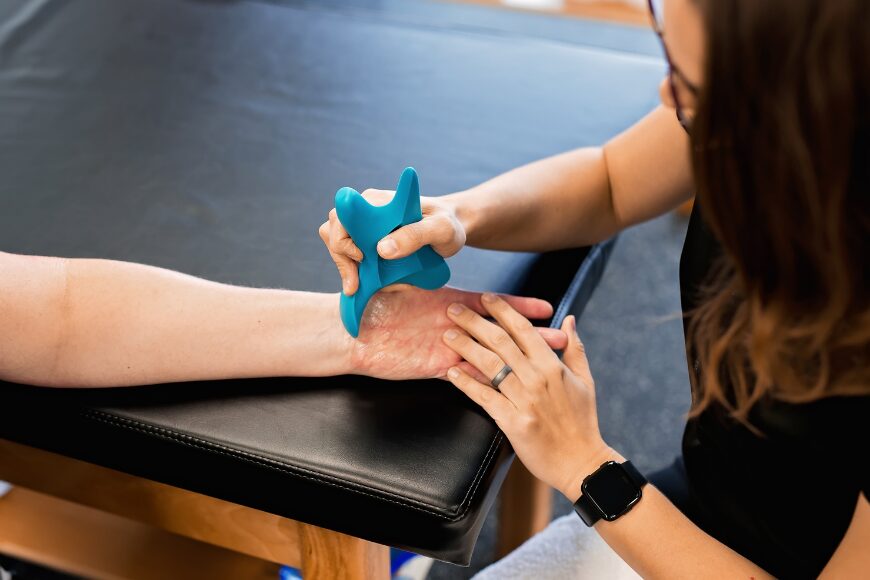
Hand Pain Physical Therapy House Springs, MO. Hand therapy with House Springs, MO physical therapists helps relieve pain, restore movement and strength, and get you back to the activities you love.
When your hands hurt, everyday life gets difficult—from work and family tasks to hobbies and rest. At Axes Physical Therapy, our House Springs, MO hand specialists combine compassion and clinical expertise to create a plan that fits your goals and lifestyle.
No matter if your hand pain began with a sudden injury or built up from repetitive stress, our licensed House Springs, MO therapists create individualized plans that relieve pain and restore function.
To begin your recovery, request an appointment online, contact the Axes clinic closest to you, or visit any of our offices for a free injury screening.
What you’ll learn on this page
- Common causes of hand pain and why it lingers.
- How PT helps rebuild strength, motion, and function in your hands.
- The most common hand injuries and disorders treated by Axes.
- Evidence-based treatments your plan may include.
- How to know it’s time to schedule with a hand therapist.
- Why patients throughout House Springs, MO rely on Axes for expert care.
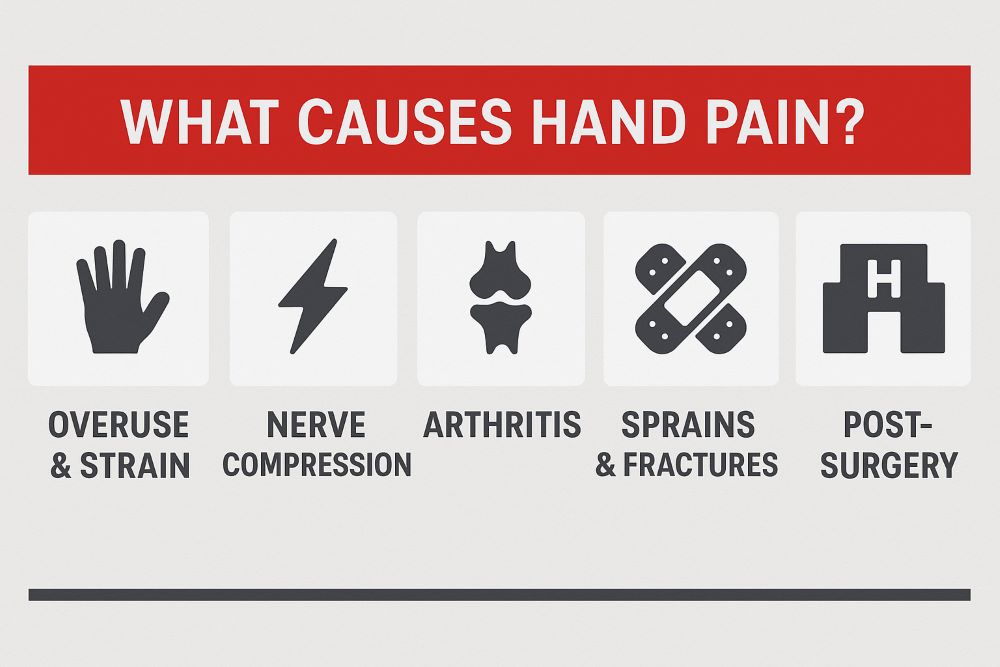
What Causes Hand Pain?
Pain in your hand may result from irritated tendons, swollen joints, nerve compression, or tight, inflexible tissue.
Your pain may come from a sudden incident, such as an injury or surgery, but more often it develops slowly from repetitive motion, poor posture, or arthritis. Knowing the cause helps our House Springs, MO therapists design the right plan for you.
- Overuse and repetitive strain: repeated gripping, typing, or tool work can inflame tendons and soft tissue, especially with excess phone use.
- Nerve compression: when the median or ulnar nerve is pinched, it can lead to tingling, weakness, or sharp pain.
- Arthritis and joint stiffness: inflammation and cartilage loss can make gripping or pinching painful and difficult.
- Sprains, strains, and fractures: soft tissue or bone injuries often cause swelling and loss of strength.
- Post-surgical limitations: therapy after surgery helps rebuild motion, reduce pain, and restore grip strength.
Your House Springs, MO Axes therapist reviews your motion, strength, and how you use your hands each day to identify the root cause. From that assessment, we build a personalized plan that targets your pain and supports your daily routine.
How Does House Springs, MO Physical Therapy Help Hand Pain?
Physical therapy targets the root causes of discomfort—enhancing mobility, strength, and control while helping you move more efficiently. The goals are simple and measurable: less pain, better motion, stronger grip and pinch, and easier daily activities at home, work, and play.
- Reduce pain and inflammation: manual therapy and targeted modalities calm irritated tissues.
- Restore mobility: your therapist applies soft-tissue mobilization and guided stretching to loosen tight areas and restore flexibility.
- Build strength and endurance: customized strengthening routines develop lasting hand, wrist, and arm stability.
- Improve function: your therapy includes practical movements—gripping, typing, or lifting—to rebuild comfort and coordination.
- Prevent recurrence: your therapist teaches lasting habits—proper ergonomics, pacing, and simple home care—to protect your progress.
Common Hand Pain Conditions Our House Springs, MO Physical Therapists Treat
- Carpal tunnel syndrome—pressure on the median nerve in the wrist that leads to pain, tingling, or hand weakness.
- Tendonitis and tenosynovitis—including De Quervain’s—involve inflammation that limits motion and causes pain.
- Trigger finger—a condition where tendons in the finger catch or lock during movement.
- Dupuytren’s Contracture—thickened tissue in the palm that bends fingers toward the hand over time.
- Thumb (CMC) arthritis and wrist osteoarthritis cause stiffness and pain during gripping or twisting motions.
- Sprains and strains often result from athletic activity, impact, or heavy lifting.
- Fractures and stiffness can leave lasting weakness or limited mobility if untreated.
- Post-surgical rehab helps patients regain motion and strength safely after surgical procedures.
- Ulnar nerve irritation and other nerve compressions cause numbness and coordination loss in the hand.
If your symptoms aren’t on this list, our House Springs, MO hand therapists will still evaluate you with a free injury screening. Many hand issues respond well to the same evidence-based principles: reduce irritation, restore motion, retrain movement, and strengthen for your real-world needs.
Hand Pain Treatment Options in House Springs, MO
Your plan will match your diagnosis, goals, schedule, and comfort level. We explain every step, adjust as you improve, and measure progress along the way.
- Manual therapy: gentle joint mobilization and soft tissue techniques to reduce stiffness, improve glide, and relieve pain.
- Nerve and tendon gliding exercises: restore mobility of nerves and tendons to relieve pressure and improve function.
- Therapeutic exercise: strengthening and coordination drills rebuild hand and wrist stability for long-term results.
- Splinting and bracing: designed to support injured areas, reduce pain, and promote safe movement.
- Modalities: as appropriate, options may include heat or cold, ultrasound, and electrical stimulation to manage pain and promote healing.
- Dry needling: when clinically appropriate, to address myofascial trigger points and reduce pain in the forearm and hand musculature.
- Edema management: techniques and compression strategies to reduce swelling and improve motion.
- Ergonomics and activity modification: adjust your environment and habits to prevent strain and promote comfort.
- Home exercise program: simple routines designed to extend your progress outside the clinic.
Each treatment plan includes one-on-one education. Our House Springs, MO physical therapists help you understand why something hurts, making recovery faster and allowing you to feel more confident.
When Should I See a Hand Therapist in House Springs, MO?
You should consider scheduling an evaluation if you notice any of the following:
- You’ve had pain, stiffness, or swelling that persists or frequently comes back.
- You experience tingling, numbness, or burning sensations—especially at night.
- Your grip or pinch feels weaker over time.
- Everyday activities like typing, buttoning clothes, or lifting objects are becoming difficult.
- You’re recovering from a fracture, sprain, or hand surgery.
Addressing problems early prevents ongoing irritation and strain in nearby muscles and joints. When additional tests or referrals are required, our team will handle coordination with your physician.
What Does a Typical Hand Therapy Session Look Like?
Once your evaluation is complete, each session blends manual therapy, mobility work, and strength training for recovery. You’ll work through movements specific to your goals and get an easy home program to continue progress. When pain fades and mobility improves, your plan evolves to lock in your progress.
Read our guide on what happens at an Axes hand therapy appointment.
How Long Does Recovery Take?
The timeline for recovery depends on your injury, your health, and your consistency with therapy. Most patients start feeling better after just a handful of sessions.
Our goal is steady, sustainable progress, with regular check-ins and clear milestones so you know exactly how you’re doing.
Will I Need a Brace or Splint?
Occasionally, short-term bracing is recommended to calm irritation and promote healing. If a brace or splint is appropriate, we’ll ensure it fits your hand and task demands, and we’ll show you how and when to use it so you don’t lose motion or strength.
Can Physical Therapy Help if I’ve Had Hand Pain for Months?
Yes—chronic hand pain usually stems from stiffness, nerve sensitivity, or weak support muscles that can be retrained. A targeted plan helps desensitize tissues and rebuild strength, even when other treatments haven’t worked. We’ll meet you where you are and move forward step by step.
How to Prevent Hand Pain From Coming Back
- Use neutral wrist positions for typing, mousing, and tool work.
- Pause for brief movement breaks when performing repetitive motions.
- Strengthen hand, forearm, and shoulder support muscles.
- Prepare your hands before demanding activity and stretch afterward.
- Continue your home exercises regularly to prevent symptoms from returning.
Small habits add up. We’ll help you pick the few that deliver the biggest payoff for your lifestyle.
Why Choose Axes Physical Therapy for Your House Springs, MO Hand Treatment?
- Local, patient-first care: friendly clinics across Greater St. Louis with convenient scheduling.
- Expert clinicians: experienced House Springs, MO physical therapists with advanced training in hand and upper extremity care.
- Evidence-based approach: your care is guided by the latest science and real patient results.
- Real-life results: we focus on what matters to you—typing without pain, lifting confidently, playing your instrument, or holding your grandchild.
- Clear communication: our therapists keep you informed, confident, and involved throughout your recovery.
Start Your Hand Pain Recovery With Our House Springs, MO Physical Therapists Today
Your hands play a vital role in everything you do—work, family, and recreation—and we’re here when pain holds you back. At Axes Physical Therapy, our House Springs, MO specialists provide personalized care that relieves pain, restores motion, and promotes lasting results.
Get started by booking online, calling your closest Axes location, or dropping by for a free injury screening.
We’re ready to help your hands heal so you can return to the activities that bring you joy.