Hand Pain Physical Therapy Scotsdale, MO. Hand therapy from Scotsdale, MO physical therapists helps you recover motion, rebuild strength, and return to doing what you enjoy most.
Hand pain affects everything: writing, typing, cooking, caring for kids or aging parents, lifting at work, playing your favorite sports, or even sleeping comfortably. At Axes Physical Therapy, our Scotsdale, MO team delivers science-backed care designed around your needs and daily activities.
No matter if your hand pain began with a sudden injury or built up from repetitive stress, our licensed Scotsdale, MO therapists create individualized plans that relieve pain and restore function.
To begin your recovery, request an appointment online, contact the Axes clinic closest to you, or visit any of our offices for a free injury screening.
What you’ll learn on this page
- Common causes of hand pain and why it lingers.
- The ways physical therapy relieves pain and improves hand movement.
- The most common hand injuries and disorders treated by Axes.
- Evidence-based treatments your plan may include.
- When to see a hand therapist.
- Why people in Scotsdale, MO trust Axes.
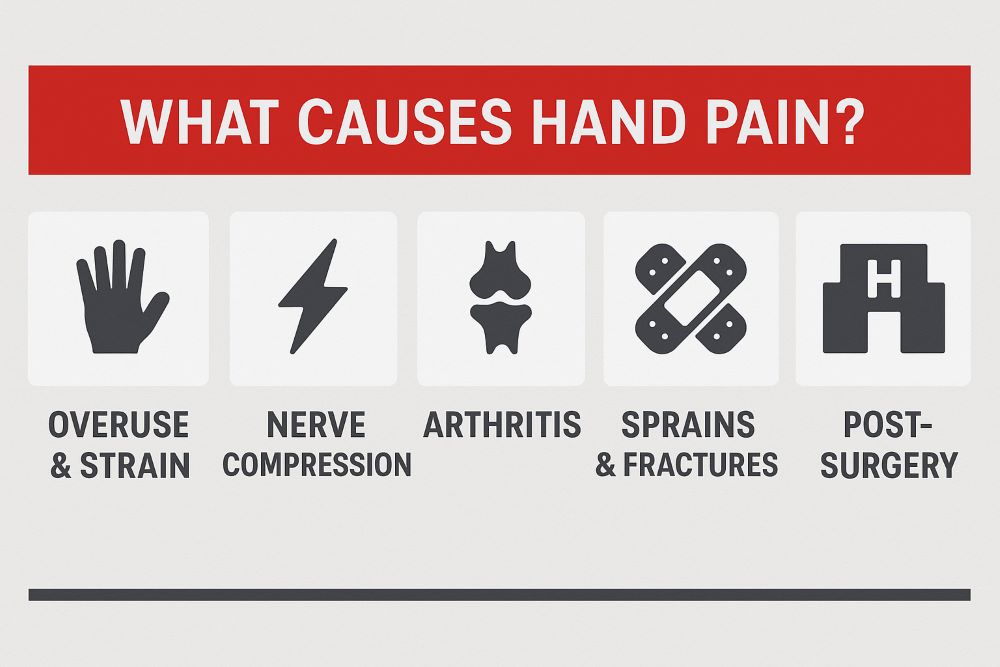
What Causes Hand Pain?
Hand pain can come from irritated tendons, inflamed joints, compressed nerves, stiff scar tissue, or irritated soft tissue.
Sometimes hand pain begins after an accident or procedure, but it’s often the result of ongoing strain, awkward positions, or conditions like arthritis. Our Scotsdale, MO hand specialists identify the cause to build the most effective treatment plan.
- Overuse and repetitive strain: constant movement—typing, playing instruments, or using tools—can overload tendons and cause pain.
- Nerve compression: pressure on the median or ulnar nerve can cause pain, numbness, tingling, or weakness.
- Arthritis and joint stiffness: inflammation and cartilage loss can make gripping or pinching painful and difficult.
- Sprains, strains, and fractures: soft tissue or bone injuries often cause swelling and loss of strength.
- Post-surgical limitations: guided rehab following hand or wrist surgery is essential to regain flexibility and function.
At Axes Physical Therapy in Scotsdale, MO, your therapist thoroughly assesses your range of motion, grip, and movement patterns. From that assessment, we build a personalized plan that targets your pain and supports your daily routine.
How Does Scotsdale, MO Physical Therapy Help Hand Pain?
Physical therapy addresses painful tissue, improves joint and tendon glide, restores strength and dexterity, and teaches you how to move with less strain. The main goals are straightforward—reduce pain, improve motion, and restore the ability to use your hands comfortably in daily life.
- Reduce pain and inflammation: focused hands-on treatment and precise modalities help soothe irritated tissues and decrease discomfort.
- Restore mobility: by combining soft-tissue work with progressive stretching, we help joints and tendons move more freely.
- Build strength and endurance: progressive exercises target intrinsic hand muscles, forearm support, and shoulder stability for durable results.
- Improve function: practice real tasks like opening jars, typing, lifting, and fine motor control so improvements show up in your day-to-day life.
- Prevent recurrence: your therapist teaches lasting habits—proper ergonomics, pacing, and simple home care—to protect your progress.
Common Hand Pain Conditions Our Scotsdale, MO Physical Therapists Treat
- Carpal tunnel syndrome results from median nerve compression, causing numbness and reduced grip strength.
- Tendonitis and tenosynovitis—including De Quervain’s—involve inflammation that limits motion and causes pain.
- Trigger finger—a condition where tendons in the finger catch or lock during movement.
- Dupuytren’s Contracture (gradual tightening of tissue in the palm that can pull fingers into a bent position)
- Thumb (CMC) arthritis and other hand/wrist osteoarthritis.
- Sprains and strains can occur after sudden twists, falls, or repetitive stress at work.
- Fractures and stiffness following a cast or splint often require therapy to restore motion.
- Post-surgical rehab helps patients regain motion and strength safely after surgical procedures.
- Ulnar nerve irritation—pain, tingling, or weakness from nerve compression in the elbow or wrist.
If your symptoms aren’t on this list, our Scotsdale, MO hand therapists will still evaluate you with a free injury screening. Many hand issues respond well to the same evidence-based principles: reduce irritation, restore motion, retrain movement, and strengthen for your real-world needs.
Hand Pain Treatment Options in Scotsdale, MO
Each treatment plan is customized around your condition, goals, and comfort level. We track your progress and fine-tune your plan as your movement and comfort improve.
- Manual therapy: hands-on techniques that restore motion, reduce tightness, and ease discomfort.
- Nerve and tendon gliding exercises: promote healthy movement of tissues to reduce tingling, numbness, or tightness.
- Therapeutic exercise: targeted strengthening for grip, pinch, wrist stability, and fine motor control; progressive loading for lasting change.
- Splinting and bracing: custom or prefabricated support to rest irritated tissue, protect healing structures, or improve function during tasks.
- Modalities: such as heat, ice, ultrasound, or e-stim can reduce pain and support tissue recovery.
- Dry needling: a precise treatment used to release tight spots and ease pain in the forearm and hand.
- Edema management: therapy strategies that minimize swelling and restore hand mobility.
- Ergonomics and activity modification: adjust your environment and habits to prevent strain and promote comfort.
- Home exercise program: clear, time-efficient exercises you can do at home to reinforce clinic gains.
Every plan includes education. Our Scotsdale, MO team explains the “why” behind your pain, helping you heal smarter and stay confident.
When Should I See a Hand Therapist in Scotsdale, MO?
It may be time to see a hand therapist if any of these signs sound familiar:
- Pain, stiffness, or swelling lasts longer than a few days or keeps returning.
- Tingling, numbness, or pain that worsens during rest or nighttime hours.
- You’re losing hand strength or struggling to hold objects securely.
- Everyday activities like typing, buttoning clothes, or lifting objects are becoming difficult.
- You’re in recovery after a recent hand injury or surgical procedure.
Getting care early helps you avoid long-term pain and movement issues in your arm or shoulder. If diagnostic imaging or follow-up care is necessary, we’ll work directly with your healthcare provider.
What Does a Typical Hand Therapy Session Look Like?
After your first visit, your sessions usually combine hands-on therapy, movement training, and strengthening exercises. You’ll work through movements specific to your goals and get an easy home program to continue progress. As your pain decreases and motion improves, we progress your plan so gains stick.
Learn more about what to expect during your hand therapy sessions.
How Long Does Recovery Take?
It depends on the diagnosis, how long symptoms have been present, your general health, and how consistently you can follow your plan. Noticeable progress often happens within the first few visits.
Your therapist focuses on steady progress with clear goals and ongoing feedback so you can see your success.
Will I Need a Brace or Splint?
In some cases, a brace or splint helps reduce stress and protect healing tissue after injury or surgery. If one is needed, your therapist will fit it properly and teach you safe wear schedules to maintain strength and motion.
Can Physical Therapy Help if I’ve Had Hand Pain for Months?
Yes. Long-standing pain often involves stiff joints, sensitive nerves, weak support muscles, and movement habits that keep tissues irritated. With the right progression, physical therapy can reduce chronic irritation and help you regain full use. We’ll meet you where you are and move forward step by step.
How to Prevent Hand Pain From Coming Back
- Use neutral wrist positions for typing, mousing, and tool work.
- Take short movement breaks during repetitive tasks.
- Regularly strengthen your hand, arm, and shoulder muscles to improve endurance.
- Warm up before high-demand tasks; cool down with gentle stretching.
- Follow your home exercise plan, even after symptoms improve.
Small habits add up. We’ll help you pick the few that deliver the biggest payoff for your lifestyle.
Why Choose Axes Physical Therapy for Your Scotsdale, MO Hand Treatment?
- Local, patient-first care: friendly clinics across Greater St. Louis with convenient scheduling.
- Expert clinicians: our Scotsdale, MO therapists have advanced knowledge in treating complex hand and arm conditions.
- Evidence-based approach: your care is guided by the latest science and real patient results.
- Real-life results: therapy that helps you return to meaningful activities—whether it’s work, hobbies, or family time.
- Clear communication: you’ll understand your diagnosis, plan, and progress at every visit.
Start Your Hand Pain Recovery With Our Scotsdale, MO Physical Therapists Today
When pain limits your ability to use your hands, our Scotsdale, MO therapists are ready to help you recover. Axes Physical Therapy delivers compassionate, research-backed treatment in Scotsdale, MO to restore comfort, confidence, and movement.
You can schedule an appointment online, contact the nearest Axes clinic, or stop in for a free injury screening today.
We’re ready to help your hands heal so you can return to the activities that bring you joy.