
Runner’s Knee Pain Treatment Fulton, MO. Runner’s knee, often called patellofemoral pain syndrome (PFPS), can turn a normal run into a question mark. You’ve cut a run short, taken a few days off, and tried again, but your knee still hurts. When running is part of your routine, it’s frustrating to keep wondering if another mile will make things worse or if you should stay home altogether. Even everyday tasks like walking up stairs, getting out of a chair, or bending down to pick something up at work can become uncomfortable.
Axes Physical Therapy can be a great place to start for many people in Fulton, MO suffering from knee pain. We’ll listen to what you’ve been experiencing, examine how your knee and the rest of your leg move, and look at how your symptoms respond to the demands of running. From there, we’ll build an evidence-backed treatment plan to help you return to your usual running routine.
You may be able to start physical therapy without adding another appointment to your calendar first. Many Fulton, MO patients can use Direct Access Physical Therapy to begin without a physician referral, and Axes can usually schedule an initial visit within 24–48 hours. If your knee pain needs a doctor’s attention before therapy, we can help you find someone in our network.
You can take the next step by contacting your nearest Axes location, requesting an appointment online, or coming in for a free injury screening.
If your knee pain follows a sudden injury, causes severe swelling or visible deformity, or makes it difficult to move your knee or bear weight, seek medical evaluation promptly. A knee that locks or repeatedly gives way also needs evaluation. Seek urgent care if your knee is hot and red and you have a fever.
Here, you’ll learn about:
- Common runner’s knee symptoms and factors that may contribute to them
- How physical therapy can address strength, movement, mobility, and running mechanics
- What you can work on outside your appointments
- What to expect as you work toward running again
What Is Runner’s Knee?
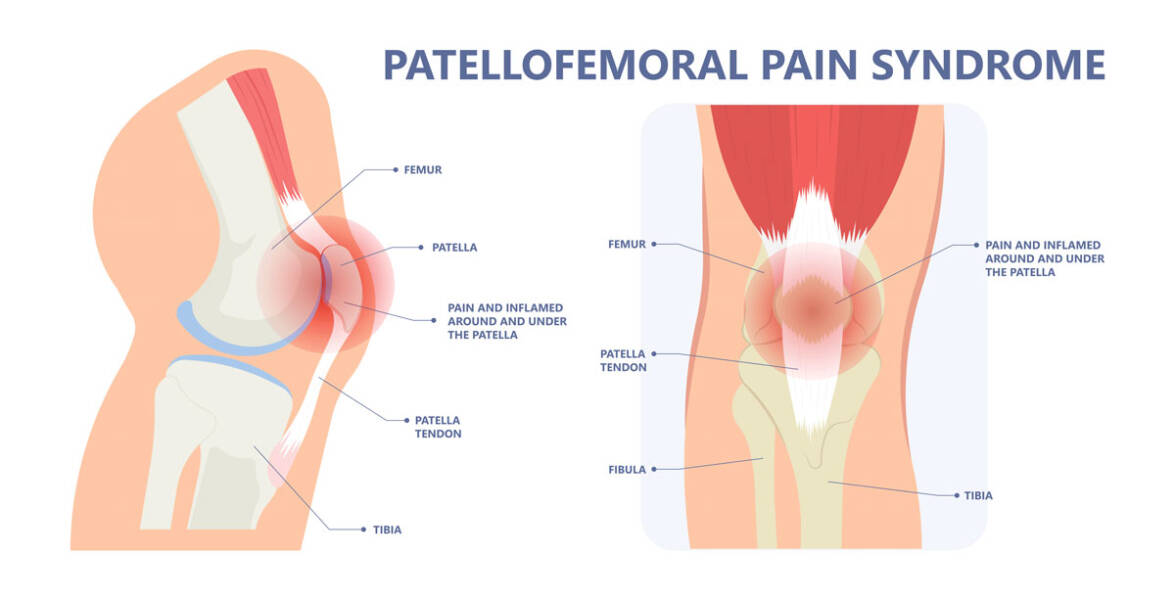
The clinical term for runner’s knee is patellofemoral pain syndrome. It refers to pain around or behind the patella (kneecap), where it interacts with the femur (thighbone). Activities that repeatedly bend and load the knee, such as running, using stairs, or squatting, can make the area more painful.
Symptoms can begin when the amount of stress being placed on the knee outpaces what it is currently prepared to handle. A change in training, reduced strength, or the way your hip, knee, and leg move together can all contribute.
Living in Fulton, MO and never logging a mile does not rule out runner’s knee. Repeated bending under load, whether that happens during stairs, workouts, work tasks, or everyday movement, can still irritate the area around the kneecap. An evaluation helps determine what is contributing to the pain before you spend weeks trying fixes that may not address it.
Common Symptoms of Runner’s Knee
At first, runner’s knee may be easy to brush off. Your knee might bother you during the last mile of a run, settle down afterward, and seem fine again the next morning. Over time, the discomfort can become more noticeable and begin affecting other parts of your day.
You may notice:
- An ache around or behind the kneecap
- Pain during activities such as running, using stairs, walking downhill, or squatting
- Aching after sitting for a while with the knee bent
- A kneecap that feels tender to the touch
- Grinding or popping sensations when you bend or straighten your knee
What Causes Runner’s Knee Pain?
Sometimes runner’s knee begins after a jump in mileage, pace, hills, or overall training load. Other factors, including muscle strength, mobility, and movement patterns, can affect how your knee handles that added demand.
Possible contributors include:
- A sudden increase in activity. Repeated running and jumping place ongoing demands on the knee, especially when you add more distance, faster workouts, or hill training before your body has adapted.
- Too little recovery. Back-to-back hard workouts may not leave enough time to recover, particularly when you’re also increasing your training.
- Muscle weakness or poor control. Strong hip and quadriceps muscles help guide and support your leg. When that support is lacking, running can place greater demands on the knee.
- Restricted mobility. When your hips, hamstrings, calves, or ankles do not move as freely as they should, your body may compensate elsewhere. That can change how force travels through the knee. Learn more about mobility.
- Foot movement and footwear. The way your foot contacts the ground and moves through each step can influence the rest of your leg. Flat feet, excessive inward rolling, or certain shoes may be part of the picture, along with your running mechanics.
- How your leg is aligned. The relationship between your hip, knee, kneecap, and foot can affect how pressure is distributed through the joint.
- Past knee problems. If you have previously dislocated your kneecap, injured cartilage, or had certain types of knee surgery, you may have a greater risk of developing patellofemoral pain.
How Physical Therapy in Fulton, MO Can Help With Runner’s Knee
At your first appointment, your Fulton, MO physical therapist will start by learning more about your knee pain, your health history, and the activities you want to get back to. We’ll want to know when the pain started, whether you change the way you run because of it, and how the knee feels after activity or the next day. If you’re training for a race or working toward a specific date, let us know that too.
Part of the evaluation involves watching you move. Your Fulton, MO physical therapist will test strength and flexibility and may ask you to squat, balance on one leg, step down, or perform similar movements. These tasks can show us where you are moving well and where your knee may need more support.
Then we’ll walk through the plan together. You should leave knowing what to work on, what to change for now, and what to watch for between visits. We’ll also coordinate with your Fulton, MO doctor when appropriate and help arrange further evaluation if your symptoms call for it.
Building Hip and Thigh Strength
Your hips and quadriceps do a lot of the work required to keep your leg controlled during running and everyday movement. Improving strength in these muscles is often an important part of reducing stress around the knee.
Depending on your evaluation, your program may use:
- Side-lying leg raises, lateral band walks, or similar exercises for the muscles along the outside of your hip
- Bridges to strengthen your gluteal muscles
- Sit-to-stands or squats to practice controlling your body weight while the knee bends
- Step-ups and step-downs to build strength and control on one leg
- Exercises that straighten the knee against resistance to build strength in the quadriceps
Each exercise has to fit what you can do now. If a full squat hurts, we may start with a shallower bend. If a step-down is too difficult, a lower step may give you a manageable starting point.
Progress does not mean doing the exact same routine forever. As you improve, our Fulton, MO physical therapists may increase the load, volume, or complexity of your exercises. We’ll also give you guidance on what sensations are expected and what should prompt you to stop or modify the movement.
Stretching and Mobility Exercises
Your physical therapist in Fulton, MO will look at how freely your hips, thighs, calves, and ankles move. If certain areas are tight or restricted, that can help us decide which stretches and mobility exercises make sense for you.
We’ll guide you through stretches that target the areas that need attention while avoiding positions that unnecessarily aggravate your knee. In some cases, manual physical therapy techniques may also be used alongside your exercises to address stiffness.
Improving the Way You Run and Move
Small changes in movement can sometimes reduce the strain you feel during running or other activities. Your Fulton, MO physical therapist may observe your running form directly or use video motion analysis to examine your mechanics in more detail.
If your movement assessment points to something worth changing, we may experiment with your stride length, cadence, or other aspects of your running form and see whether your knee feels different. We can also practice better control during everyday tasks like stairs, squatting, or lowering yourself onto one leg.
Movement changes usually work better when they are introduced gradually. We’ll give you a manageable place to start, help you practice it, and add more speed, distance, or complexity only when you are ready.
Taping, Footwear, and Orthotic Support
Sometimes a temporary support can make activity more manageable while you work on the underlying problem. Your therapist may try patellar taping or a shoe insert, then compare how your knee feels during a movement that normally causes pain.
Your running shoes are worth discussing, particularly if your symptoms began soon after switching to a different pair. We can look at how the shoes fit, how they feel when you run, and whether they may be affecting your movement. Having runner’s knee does not automatically mean you need to replace your shoes or buy custom orthotics.
When taping or an insert improves comfort, it can be used as one part of your treatment while you continue building strength and gradually returning to activity.
Adjusting Your Training and Returning to Running
Cutting back can be frustrating, especially if running is part of how you manage stress or structure your week. We’ll help you figure out what activity still makes sense and what should be modified for now. That could mean reducing mileage, choosing flatter routes, pausing speed sessions, or using another form of exercise while your knee calms down.
Once your knee is ready for more, we can help you choose a manageable starting point and build from there. That might mean a short continuous run or alternating periods of running and walking. We’ll pay attention not only to how you feel during the workout, but also to how your knee responds hours later and the next day.
The first successful run back does not need to match your old mileage. Give your knee time to handle shorter runs consistently before asking it to take on more.
How Can You Manage Runner’s Knee at Home in Fulton, MO?
To help manage symptoms between appointments:
- Scale back activities that aggravate your knee. You may need to reduce your running temporarily or avoid the workouts that consistently flare your symptoms. If it feels comfortable, swimming or another lower-impact activity can help you keep moving.
- Use ice if it helps with short-term comfort. Place a towel between your skin and the cold pack and leave it on for about 15–20 minutes at a time.
- Talk with your provider about compression and elevation. These strategies may help control swelling or improve comfort, but noticeable or unexplained swelling deserves medical attention.
- Check before taking pain medication. Your doctor or pharmacist can help you choose an appropriate option based on your health and other medications.
You may get some symptom relief from rest, ice, compression, or elevation. At the same time, keep up with the exercises and activity changes your Fulton, MO physical therapist has recommended. Temporary relief does not necessarily mean the knee is ready to take on more training.
Your home exercises should fit into your day. If the plan doesn’t fit your schedule, you don’t have the equipment, or an exercise keeps hurting, tell us. We can work through those problems with you.
What Is the Recovery Timeline for Runner’s Knee?
One of the first questions many runners have is how long it will take before they feel normal again. Your therapist can give you more specific guidance after evaluating your knee, but recovery varies from person to person and cannot be reduced to one set schedule.
Pain may begin to ease after you change your activity, while getting back to regular running takes longer. Symptoms that have been around for months may also take months of consistent rehabilitation to improve.
Progress is not measured only by whether you can complete your old running distance. We may look for things like easier stair use, better control during an exercise that was difficult at first, or a short run that does not leave your knee feeling worse later. Those improvements help guide the next step.
Not every knee follows the same recovery path. If you are staying consistent but your symptoms are not changing, we can adjust the treatment plan and coordinate with your Fulton, MO doctor if your knee needs a closer look. Before discharge, we’ll also talk through the exercises and training habits that may help you keep progressing.
Runner’s Knee Pain Treatment FAQs for Fulton, MO
Can You Still Run With Runner’s Knee?
Maybe. Some people in Fulton, MO are able to keep running if they reduce the distance, pace, or intensity, while others need to step away from running for a while. If your pain is getting worse, you are changing the way you walk or run, or your knee feels worse after activity, it is time to scale back. Your therapist can help you find a level of activity your knee can tolerate.
Can Rest Fix Runner’s Knee?
Rest can help the pain settle, but it may return when you start running again. If you keep repeating that cycle, an evaluation can help identify what else needs attention, such as strength, movement, or your training volume.
What Exercises Should I Avoid With Runner’s Knee?
The main thing to avoid is repeatedly pushing through exercises that clearly make your knee worse. For some people, that may include deep squats, jumping, lunging, or repeated stair work. Those movements do not have to be permanently removed; your therapist can help reduce the difficulty and reintroduce them gradually.
Do I Need a Referral to Start Physical Therapy for Runner’s Knee?
In many cases, people in Fulton, MO can start physical therapy for runner’s knee through Direct Access without first obtaining a referral. If you are unsure what your insurance requires, call Axes. We can help you sort out the details and determine the quickest appropriate way to get started.
Get Help for Runner’s Knee Pain in Fulton, MO at Axes Physical Therapy
When knee pain keeps interrupting your runs or everyday activity, getting evaluated can help you stop guessing about what to do next. We’ll listen to your concerns, look at what may be contributing to the problem, and work with you and your doctor toward the activities that matter to you.
You may not have to wait long to find out what your next step should be. Axes can typically schedule your first visit within 24–48 hours, and if physical therapy is not the right place to start, we can help connect you with a provider in our network.
Take the next step by contacting your nearest Axes location, requesting an appointment online, or coming in for a free injury screening.