Runner’s Knee Pain Treatment Catawissa, MO. Runner’s knee, also known as patellofemoral pain syndrome (PFPS), can make it hard to know when to keep running and when to back off. Maybe you’ve rested for a few days, tested your knee again, and found that the pain is still there. It can be especially frustrating when running is part of your normal routine and you’re not sure whether pushing farther will aggravate it. You may even start noticing your knee during ordinary activities like taking the stairs, standing up after sitting, or squatting down.
For many people dealing with knee pain in Catawissa, MO, Axes Physical Therapy is a practical place to begin. Your therapist will take time to understand what you’re feeling, assess the way your knee, hip, ankle, and leg work together, and look at what happens when you place running-related demands on the knee. That evaluation helps us build an evidence-backed plan around the activities and running routine you want to return to.
You may be able to start physical therapy without adding another appointment to your calendar first. Many Catawissa, MO patients can use Direct Access Physical Therapy to begin without a physician referral, and Axes can usually schedule an initial visit within 24–48 hours. If your knee pain needs a doctor’s attention before therapy, we can help you find someone in our network.
You can take the next step by contacting your nearest Axes location, requesting an appointment online, or coming in for a free injury screening.
Knee pain associated with a sudden injury, significant swelling, visible deformity, difficulty moving the knee, or trouble bearing weight should be medically evaluated promptly. You should also have the knee evaluated if it locks or repeatedly gives way. A hot, red knee accompanied by fever requires urgent care.
On this page:
- Common runner’s knee symptoms and factors that may contribute to them
- How physical therapy can address strength, movement, mobility, and running mechanics
- Steps you can take between physical therapy visits
- What to expect as you work toward running again
Understanding Runner’s Knee
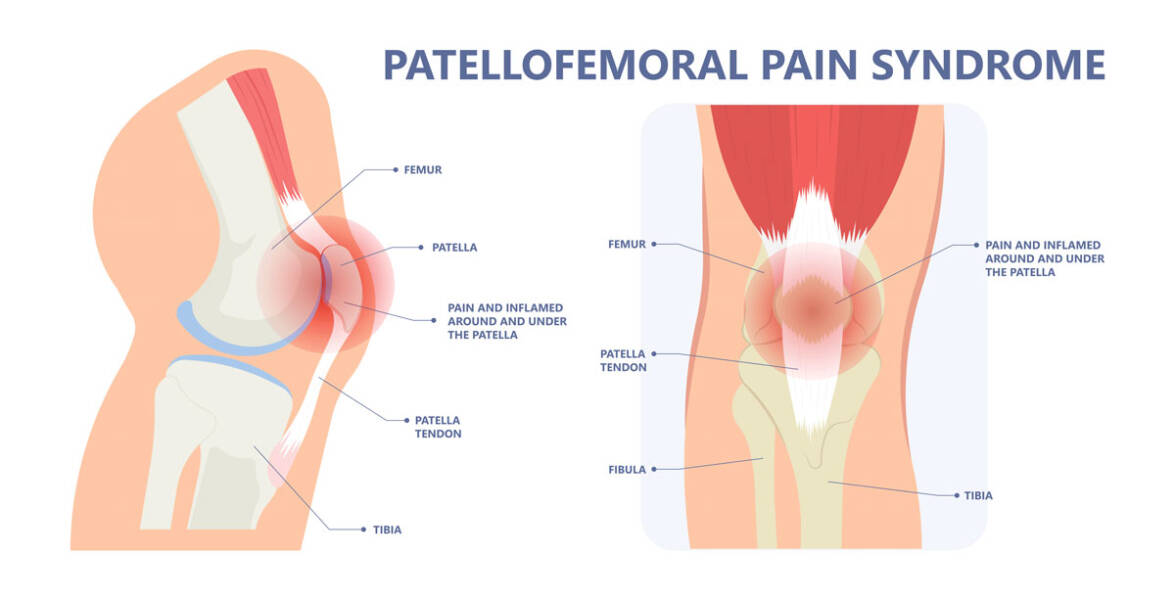
Runner’s knee is the common name for patellofemoral pain syndrome, which affects the area around or behind the patella (kneecap) where it meets the femur (thighbone). Because running, stair climbing, squatting, and similar movements repeatedly load this part of the knee, they can bring on or aggravate the pain.
Sometimes the issue is simply that the knee is being asked to handle more than it has adapted to. Increasing your training, changes in strength, and the mechanics of how your leg moves can each influence how much stress reaches the area around the kneecap.
The name can be misleading: runner’s knee is not limited to runners in Catawissa, MO. You may notice the same type of pain while taking the stairs, lowering into a squat, getting up from a low seat, or doing other activities that repeatedly bend and load the knee. Getting the knee evaluated can help you focus on the right problem from the start.
Common Symptoms of Runner’s Knee
Runner’s knee does not always begin with constant pain. You might notice an ache late in a run that fades once you stop, only for it to return the next time you train. As symptoms progress, the pain may start sooner or show up during movements that used to feel completely normal.
Common symptoms include:
- An ache around or behind the kneecap
- Pain during activities such as running, using stairs, walking downhill, or squatting
- Discomfort after sitting with your knees bent
- Sensitivity or soreness when you press around the kneecap
- A grinding or popping feeling during knee movement
Why Does Runner’s Knee Develop?
Sometimes runner’s knee begins after a jump in mileage, pace, hills, or overall training load. Other factors, including muscle strength, mobility, and movement patterns, can affect how your knee handles that added demand.
Possible contributors include:
- A sudden increase in activity. Repeated running and jumping place ongoing demands on the knee, especially when you add more distance, faster workouts, or hill training before your body has adapted.
- Limited recovery between workouts. If you are increasing your training while also stacking difficult sessions close together, your knee may not get enough time to recover.
- Muscle weakness or poor control. Strong hip and quadriceps muscles help guide and support your leg. When that support is lacking, running can place greater demands on the knee.
- Tight muscles. Limited mobility in your calves, hamstrings, or hips can change how you move and distribute stress through your leg.
- Foot mechanics and support. Flat feet, excessive inward rolling of the foot, or unsuitable footwear may contribute to symptoms for some people. Your therapist can consider these alongside your running mechanics.
- How your leg is aligned. The relationship between your hip, knee, kneecap, and foot can affect how pressure is distributed through the joint.
- Past knee problems. If you have previously dislocated your kneecap, injured cartilage, or had certain types of knee surgery, you may have a greater risk of developing patellofemoral pain.
How Catawissa, MO Physical Therapy Treats Runner’s Knee Pain
At your first appointment, your Catawissa, MO physical therapist will start by learning more about your knee pain, your health history, and the activities you want to get back to. We’ll want to know when the pain started, whether you change the way you run because of it, and how the knee feels after activity or the next day. If you’re training for a race or working toward a specific date, let us know that too.
Your Catawissa, MO physical therapist will examine your strength, flexibility, and movement. You may be asked to squat, balance on one leg, or step down so we can see which movements are difficult and where you need support.
From there, we’ll build the plan with you rather than simply handing you a list of exercises. We’ll explain what to focus on, what may need to be modified for now, and how to judge how your knee is responding between visits. If your symptoms suggest you need another type of evaluation, we can work with your Catawissa, MO doctor and help you take that next step.
Strengthening the Hips and Quadriceps
Running places repeated demands on the muscles that stabilize your hip and control your knee. When those muscles are stronger, your leg may be better able to absorb and manage force during landing, push-off, and weight-bearing activity.
Depending on your evaluation, your program may use:
- Side-lying leg raises, lateral band walks, or similar exercises for the muscles along the outside of your hip
- Bridges and similar exercises to build strength through your glutes
- Squatting variations or repeated sit-to-stands to build strength through a controlled knee bend
- Step-ups and step-downs to build strength and control on one leg
- Knee extensions to strengthen the quadriceps at the front of your thigh
We’ll start with a version of each exercise that matches what your knee can tolerate. That might mean using a smaller squat range, choosing a shorter step, or reducing the load until you can move with better control.
As you get stronger, our Catawissa, MO physical therapists will adjust the resistance, repetitions, or difficulty. We’ll also explain how the exercise should feel so you know when to keep going and when to ask for an adjustment.
Stretching and Mobility Exercises
Your physical therapist in Catawissa, MO will check for tightness in your calves, thighs, and hips, along with any limits in ankle movement. These findings help determine which stretches belong in your treatment plan.
We’ll guide you through stretches that target the areas that need attention while avoiding positions that unnecessarily aggravate your knee. In some cases, manual physical therapy techniques may also be used alongside your exercises to address stiffness.
Running Mechanics and Movement Retraining
Small changes in movement can sometimes reduce the strain you feel during running or other activities. Your Catawissa, MO physical therapist may observe your running form directly or use video motion analysis to examine your mechanics in more detail.
Sometimes the most useful change is small. We may try adjusting how long your stride is or how quickly your feet turn over, then compare how your knee responds. Movement retraining can also include everyday tasks, from descending stairs to controlling a single-leg squat.
You do not need to overhaul the way you run overnight. We’ll work on one useful change at a time, make sure it feels manageable, and build from there as your comfort and control improve.
Taping, Shoes, and Orthotic Support
Patellar taping or shoe inserts may help make exercise more comfortable for some people. Your therapist can test whether a support changes how your knee feels during a movement that usually hurts.
If you recently changed running shoes, make sure to mention it during your evaluation. Your therapist can talk with you about fit, comfort, support, and whether the change lines up with when your symptoms began. In many cases, runner’s knee can be treated without immediately investing in new footwear or custom inserts.
Any support that helps is used as a tool, not the whole treatment plan. We can pair it with strengthening, movement work, and a gradual return to activity.
Adjusting Your Training and Returning to Running
If running is your time to clear your head, being told to cut back can be hard to hear. We’ll talk with you about what you can keep doing and what needs to change temporarily. That might mean shorter runs on flatter routes, a break from speed work, or another form of exercise while your knee settles down.
Returning to running usually works best when the workload increases in stages. We may start with a shorter distance, a slower pace, or a walk-run format and then see how your knee responds afterward. Your symptoms later that day and the next morning can help us decide whether to progress or hold steady.
A good short run is progress. Give yourself time to build on it before testing your old long-run distance.
At-Home Care for Runner’s Knee Pain in Catawissa, MO
Between physical therapy visits, a few simple steps may help you manage symptoms:
- Give your knee a break from the activities that consistently make it worse. You do not necessarily have to stop all exercise, but you may need to cut back on running or choose a lower-impact option while symptoms settle.
- Cold therapy may help calm symptoms temporarily. Use a towel or other barrier between your skin and the ice pack and limit each session to about 15–20 minutes.
- Talk with your provider about compression and elevation. These strategies may help control swelling or improve comfort, but noticeable or unexplained swelling deserves medical attention.
- Ask before using medication for the pain. Your doctor or pharmacist can help you decide what is appropriate based on your health history and any other medications you take.
Rest, ice, compression, and elevation may ease symptoms. Continue the rehabilitation plan your Catawissa, MO physical therapist has recommended, too. Feeling better after icing doesn’t necessarily mean your knee is ready for a harder workout.
Do not struggle through a home program that is not working for you. If time, equipment, discomfort, or anything else is getting in the way, bring it up with us. We can modify the exercises so the plan better fits your day and your current abilities.
How Long Does Runner’s Knee Take to Improve?
One of the first questions many runners have is how long it will take before they feel normal again. Your therapist can give you more specific guidance after evaluating your knee, but recovery varies from person to person and cannot be reduced to one set schedule.
Reducing the load on your knee may help calm the pain before you are actually ready to resume your previous running routine. The longer symptoms have been present, the more time it may take to rebuild strength, movement tolerance, and confidence through consistent rehabilitation.
Small changes can tell us a lot about how your knee is responding. Maybe stairs are easier, you can perform an exercise that gave you trouble a few weeks ago, or you finish a short run without a flare-up afterward. Those are useful signs that your knee may be ready for more.
If your knee is not responding the way we expect despite consistent effort, we’ll reassess what we are doing and involve your Catawissa, MO doctor when additional evaluation makes sense. As therapy winds down, we’ll also help you decide which exercises to keep and how to increase future training without jumping ahead too quickly.
Catawissa, MO Runner’s Knee Pain Treatment FAQs
Can I Keep Running With Runner’s Knee?
Whether you should keep running depends on how your knee responds. Some people in Catawissa, MO can stay active with shorter, lower-intensity runs, while others benefit from taking a temporary break. Increasing pain, limping, or feeling noticeably worse afterward are signs that your routine needs to change.
Will Runner’s Knee Go Away With Rest Alone?
Rest can help the pain settle, but it may return when you start running again. If you keep repeating that cycle, an evaluation can help identify what else needs attention, such as strength, movement, or your training volume.
What Exercises Should I Avoid With Runner’s Knee?
You may need to temporarily change exercises that consistently increase your symptoms. Deep knee bends, jumping, or repeated stair climbing can be difficult for some people with runner’s knee. That does not mean you can never do them again. We can help you find a more manageable version and build back up over time.
Do I Need a Referral to Start Physical Therapy for Runner’s Knee?
You may be able to start physical therapy in Catawissa, MO through Direct Access without a referral. Call Axes, and we’ll help you understand the requirements and insurance considerations that apply to you. Starting with us can save you from waiting for a separate appointment just to find out your next step.
Start Physical Therapy for Runner’s Knee in Catawissa, MO
When knee pain keeps interrupting your runs or everyday activity, getting evaluated can help you stop guessing about what to do next. We’ll listen to your concerns, look at what may be contributing to the problem, and work with you and your doctor toward the activities that matter to you.
You can often get started quickly. Axes can usually schedule an initial appointment within 24–48 hours after you reach out, and if your knee needs another type of evaluation first, we can help connect you with an appropriate provider in our network.
Take the next step by contacting your nearest Axes location, requesting an appointment online, or coming in for a free injury screening.