Runner’s Knee Pain Treatment Marthasville, MO. Runner’s knee, also known as patellofemoral pain syndrome (PFPS), can make it hard to know when to keep running and when to back off. Maybe you’ve rested for a few days, tested your knee again, and found that the pain is still there. It can be especially frustrating when running is part of your normal routine and you’re not sure whether pushing farther will aggravate it. You may even start noticing your knee during ordinary activities like taking the stairs, standing up after sitting, or squatting down.
For many people dealing with knee pain in Marthasville, MO, Axes Physical Therapy is a practical place to begin. Your therapist will take time to understand what you’re feeling, assess the way your knee, hip, ankle, and leg work together, and look at what happens when you place running-related demands on the knee. That evaluation helps us build an evidence-backed plan around the activities and running routine you want to return to.
In many cases, you can begin addressing your knee pain quickly. Direct Access Physical Therapy allows many people in Marthasville, MO to see a physical therapist without waiting for a physician referral, and Axes can typically see new patients within 24–48 hours of reaching out. If your knee pain calls for medical evaluation first, we’ll help point you toward an appropriate provider in our network.
To get started, call the location nearest you, request an appointment online, or visit us for a free injury screening.
If your knee pain follows a sudden injury, causes severe swelling or visible deformity, or makes it difficult to move your knee or bear weight, seek medical evaluation promptly. A knee that locks or repeatedly gives way also needs evaluation. Seek urgent care if your knee is hot and red and you have a fever.
Here, you’ll learn about:
- Common runner’s knee symptoms and factors that may contribute to them
- Ways physical therapy may help improve strength, mobility, and the way you move while running
- What you can work on outside your appointments
- What the process of returning to running may look like
Understanding Runner’s Knee
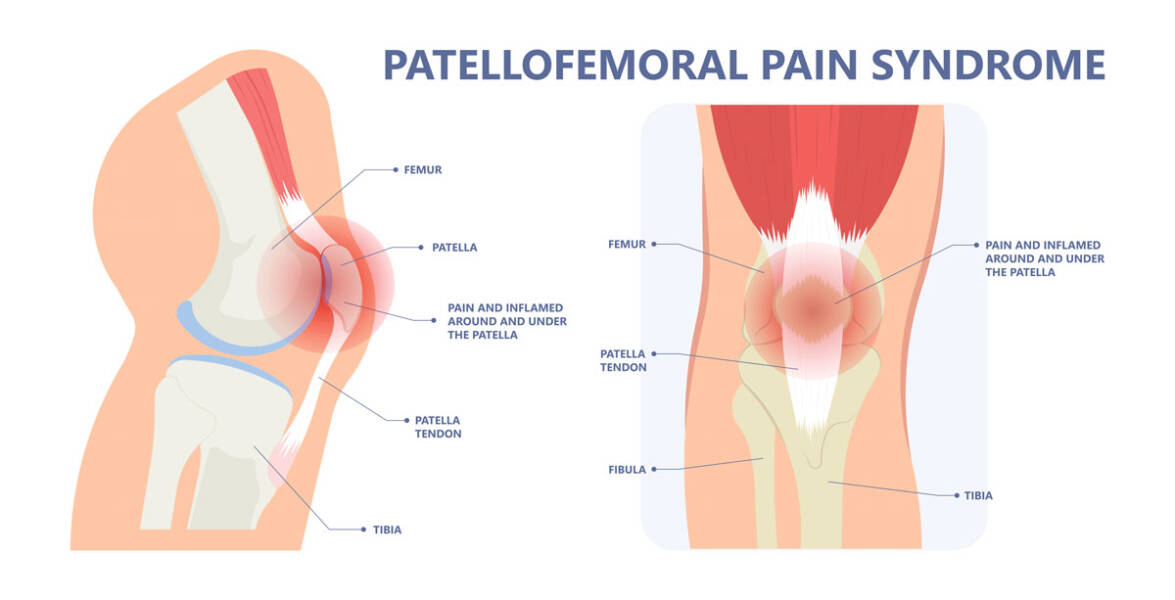
The clinical term for runner’s knee is patellofemoral pain syndrome. It refers to pain around or behind the patella (kneecap), where it interacts with the femur (thighbone). Activities that repeatedly bend and load the knee, such as running, using stairs, or squatting, can make the area more painful.
Runner’s knee does not always come from one single problem. It may develop after a change in how much or how hard you are training, or when strength and movement patterns affect how your knee handles repeated activity.
You can develop runner’s knee even if you rarely, or never, run in Marthasville, MO. Activities like using stairs, kneeling, squatting, or repeatedly getting up and down can place similar demands on the knee. An evaluation can help clarify what is actually causing your symptoms instead of leaving you to guess.
What Runner’s Knee Can Feel Like
At first, runner’s knee may be easy to brush off. Your knee might bother you during the last mile of a run, settle down afterward, and seem fine again the next morning. Over time, the discomfort can become more noticeable and begin affecting other parts of your day.
Symptoms can include:
- An ache around or behind the kneecap
- Pain during activities such as running, using stairs, walking downhill, or squatting
- Aching after sitting for a while with the knee bent
- A kneecap that feels tender to the touch
- Grinding, popping, or similar sensations as the knee bends and straightens
What Causes Runner’s Knee Pain?
Runner’s knee can develop when you increase your running distance or intensity faster than your body can adapt. Muscle strength, flexibility, and the way your leg moves can also affect the pressure around your kneecap.
Possible contributors include:
- Overuse or sudden training changes. Repeated running and jumping stress the knee. Increasing distance, speed, and hills at the same time can be especially demanding.
- Back-to-back hard training. Running hard day after day without enough recovery can increase the demands on your knee and make symptoms more likely to appear.
- Strength deficits. The muscles around your hips and quadriceps play an important role in controlling your leg when you run, land, and push off. Weakness can change how those repeated forces are managed.
- Tight muscles. Limited mobility in your calves, hamstrings, or hips can change how you move and distribute stress through your leg.
- Foot mechanics and support. Flat feet, excessive inward rolling of the foot, or unsuitable footwear may contribute to symptoms for some people. Your therapist can consider these alongside your running mechanics.
- How your leg is aligned. The relationship between your hip, knee, kneecap, and foot can affect how pressure is distributed through the joint.
- Previous injury or surgery. A past kneecap dislocation, cartilage injury, or certain knee surgeries may increase your risk of patellofemoral pain.
How Marthasville, MO Physical Therapy Treats Runner’s Knee Pain
At your first appointment, your Marthasville, MO physical therapist will start by learning more about your knee pain, your health history, and the activities you want to get back to. We’ll want to know when the pain started, whether you change the way you run because of it, and how the knee feels after activity or the next day. If you’re training for a race or working toward a specific date, let us know that too.
Your Marthasville, MO physical therapist will examine your strength, flexibility, and movement. You may be asked to squat, balance on one leg, or step down so we can see which movements are difficult and where you need support.
From there, we’ll build the plan with you rather than simply handing you a list of exercises. We’ll explain what to focus on, what may need to be modified for now, and how to judge how your knee is responding between visits. If your symptoms suggest you need another type of evaluation, we can work with your Marthasville, MO doctor and help you take that next step.
Hip and Quadriceps Strengthening
The muscles around your hips and thighs help guide your leg every time you land, push off, or support yourself on one side. Strengthening these areas can improve how your leg handles the repeated demands that contribute to runner’s knee.
Depending on your evaluation, your program may use:
- Side-lying leg raises, lateral band walks, or similar exercises for the muscles along the outside of your hip
- Bridges to strengthen your gluteal muscles
- Sit-to-stands or squats to practice controlling your body weight while the knee bends
- Step-ups and step-downs to build strength and control on one leg
- Knee extension exercises to target the quadriceps
Your starting point should be challenging without being unnecessarily aggravating. We can make exercises easier by changing the depth, resistance, height, or amount of support, then progress them as your knee becomes more capable.
Progress does not mean doing the exact same routine forever. As you improve, our Marthasville, MO physical therapists may increase the load, volume, or complexity of your exercises. We’ll also give you guidance on what sensations are expected and what should prompt you to stop or modify the movement.
Improving Flexibility and Mobility
Your physical therapist in Marthasville, MO will check for tightness in your calves, thighs, and hips, along with any limits in ankle movement. These findings help determine which stretches belong in your treatment plan.
We’ll show you how to perform each stretch without forcing your knee into a painful position. We may also use hands-on techniques to help with stiffness alongside your exercises.
Running Mechanics and Movement Retraining
Part of treatment may involve looking at the way your body handles each step. Your Marthasville, MO physical therapist can assess your running form and may use video motion analysis to identify patterns that are difficult to see in real time.
Depending on what we find, we may suggest adjusting your stride length or step rate to see how your knee responds. We may also work on control during everyday movements, such as stepping down from a stair.
We are not going to hand you five running-form changes and expect you to remember them all on your next mile. We’ll focus on the adjustments that make the most sense, give you time to practice them, and gradually increase the challenge as they become more natural.
Using Taping, Footwear, or Inserts
Sometimes a temporary support can make activity more manageable while you work on the underlying problem. Your therapist may try patellar taping or a shoe insert, then compare how your knee feels during a movement that normally causes pain.
Your running shoes are worth discussing, particularly if your symptoms began soon after switching to a different pair. We can look at how the shoes fit, how they feel when you run, and whether they may be affecting your movement. Having runner’s knee does not automatically mean you need to replace your shoes or buy custom orthotics.
If a support makes movement more comfortable, we may use it temporarily while you work through your exercise program and build back toward your usual activities.
Building Back to Running Gradually
When running is a regular part of your life, being told to back off can feel like a bigger deal than it sounds. We’ll work with you to keep you as active as your knee allows while temporarily reducing the things that aggravate it. That may involve scaling back long runs, avoiding hills or speed work, or mixing in another type of exercise.
Returning to running usually works best when the workload increases in stages. We may start with a shorter distance, a slower pace, or a walk-run format and then see how your knee responds afterward. Your symptoms later that day and the next morning can help us decide whether to progress or hold steady.
Getting through a shorter run without a setback is a useful step forward. Build on that gradually instead of immediately testing the longest distance you used to run.
How Can You Manage Runner’s Knee at Home in Marthasville, MO?
To help manage symptoms between appointments:
- Scale back activities that aggravate your knee. You may need to reduce your running temporarily or avoid the workouts that consistently flare your symptoms. If it feels comfortable, swimming or another lower-impact activity can help you keep moving.
- Use ice if it helps with short-term comfort. Place a towel between your skin and the cold pack and leave it on for about 15–20 minutes at a time.
- Compression or elevating the leg may be useful in some cases. Ask whether either approach is appropriate for you, especially if swelling is part of your symptoms. Significant or unexplained swelling should be evaluated.
- Do not assume every over-the-counter pain reliever is right for you. Your doctor or pharmacist can help you choose an option that fits your health history and current medications.
Measures such as rest, ice, compression, and elevation may help make your knee more comfortable, but they are only part of the picture. Keep following the rehabilitation plan from your Marthasville, MO physical therapist as well. A knee that feels better after icing is not automatically ready for a longer or harder run.
Your home program needs to be realistic enough that you can actually follow it. If you are short on time, missing equipment, or repeatedly having pain with an exercise, let us know so we can adjust the plan.
What Is the Recovery Timeline for Runner’s Knee?
Wanting to know when you can get back to your normal running routine makes sense. After evaluating your knee, we can give you a better idea of what recovery may look like, but there is no single timeline that applies to everyone.
Your knee may start feeling better once you reduce or modify the activities that aggravate it, but returning to your usual mileage and training often takes more time. If the pain has been present for months, improvement may also require months of steady rehabilitation.
Progress is not measured only by whether you can complete your old running distance. We may look for things like easier stair use, better control during an exercise that was difficult at first, or a short run that does not leave your knee feeling worse later. Those improvements help guide the next step.
If your knee is not responding the way we expect despite consistent effort, we’ll reassess what we are doing and involve your Marthasville, MO doctor when additional evaluation makes sense. As therapy winds down, we’ll also help you decide which exercises to keep and how to increase future training without jumping ahead too quickly.
Frequently Asked Questions About Runner’s Knee in Marthasville, MO
Can I Keep Running With Runner’s Knee?
Maybe. Some people in Marthasville, MO are able to keep running if they reduce the distance, pace, or intensity, while others need to step away from running for a while. If your pain is getting worse, you are changing the way you walk or run, or your knee feels worse after activity, it is time to scale back. Your therapist can help you find a level of activity your knee can tolerate.
Will Runner’s Knee Go Away With Rest Alone?
Rest may give an irritated knee time to settle, but the same symptoms can come back when you resume your usual activity. If you are stuck in a pattern of resting, feeling better, and hurting again, it may be worth looking at strength, mechanics, or how quickly your training is progressing.
What Exercises Should I Avoid With Runner’s Knee?
Rather than creating a permanent list of forbidden exercises, we look at which movements your knee can tolerate right now. If deep squats, jumping, or repeated stair work aggravate your symptoms, those activities may need to be modified for a while. Your therapist can help you work toward them again as your knee improves.
Do I Need a Referral to Start Physical Therapy for Runner’s Knee?
You may not need to wait for a doctor’s appointment before beginning physical therapy in Marthasville, MO. Direct Access allows many patients to start without a referral, although insurance requirements can vary. Contact Axes and we’ll help you figure out what applies to you.
Start Physical Therapy for Runner’s Knee in Marthasville, MO
If you’re tired of taking time off only to have your knee hurt again, let’s see what’s going on. We’ll listen to your concerns and work with you and your doctor on a plan that fits your needs and the activities you want to return to.
In many cases, Axes can see you for your first appointment within 24–48 hours of contacting us. If your symptoms suggest that another provider should evaluate your knee before physical therapy begins, we can help point you in the right direction.
Contact the Axes location nearest you, request an appointment online, or visit us for a free injury screening.