Runner’s Knee Pain Treatment St. Peters, MO. When runner’s knee, or patellofemoral pain syndrome (PFPS), starts interfering with your runs, figuring out what to do next is not always easy. You may shorten a workout, give your knee some time to settle down, then head back out only to feel the same pain again. The uncertainty can be just as frustrating as the pain itself, especially when you’re used to running regularly. And it may not stop when the run does; climbing steps, getting up from your desk, kneeling, or crouching can become uncomfortable too.
Axes Physical Therapy can be a great place to start for many people in St. Peters, MO suffering from knee pain. We’ll listen to what you’ve been experiencing, examine how your knee and the rest of your leg move, and look at how your symptoms respond to the demands of running. From there, we’ll build an evidence-backed treatment plan to help you return to your usual running routine.
You may be able to start physical therapy without adding another appointment to your calendar first. Many St. Peters, MO patients can use Direct Access Physical Therapy to begin without a physician referral, and Axes can usually schedule an initial visit within 24–48 hours. If your knee pain needs a doctor’s attention before therapy, we can help you find someone in our network.
To get started, call the location nearest you, request an appointment online, or visit us for a free injury screening.
If your knee pain follows a sudden injury, causes severe swelling or visible deformity, or makes it difficult to move your knee or bear weight, seek medical evaluation promptly. A knee that locks or repeatedly gives way also needs evaluation. Seek urgent care if your knee is hot and red and you have a fever.
This page covers:
- Common runner’s knee symptoms and factors that may contribute to them
- How physical therapy can address strength, movement, mobility, and running mechanics
- What you can work on outside your appointments
- What to expect as you work toward running again
What Is Runner’s Knee?
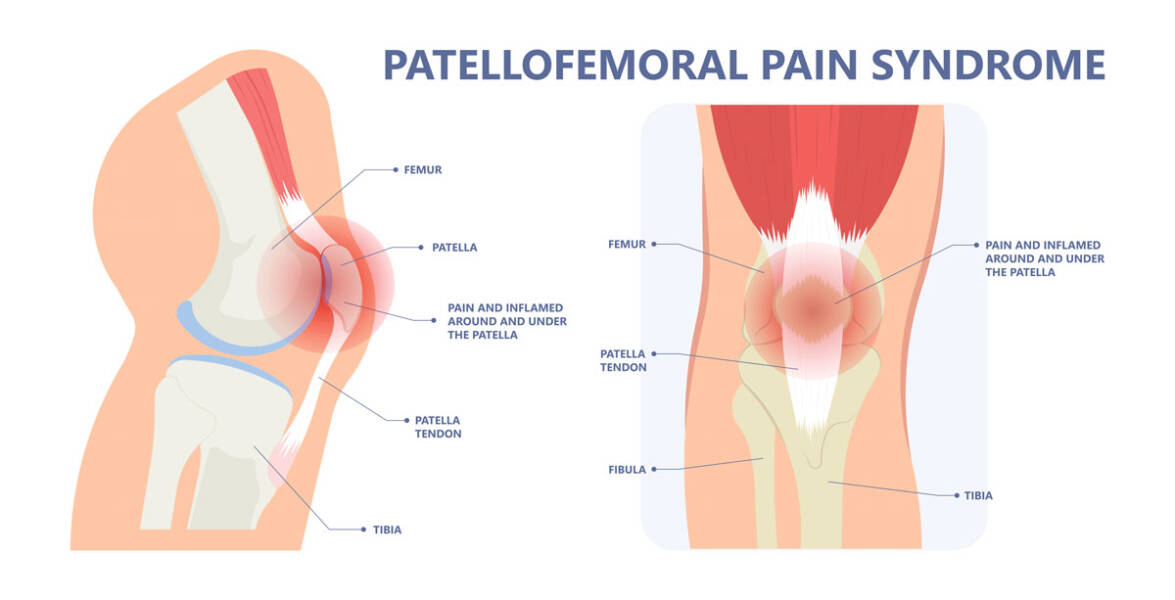
Runner’s knee is the common name for patellofemoral pain syndrome, which affects the area around or behind the patella (kneecap) where it meets the femur (thighbone). Because running, stair climbing, squatting, and similar movements repeatedly load this part of the knee, they can bring on or aggravate the pain.
Runner’s knee does not always come from one single problem. It may develop after a change in how much or how hard you are training, or when strength and movement patterns affect how your knee handles repeated activity.
The name can be misleading: runner’s knee is not limited to runners in St. Peters, MO. You may notice the same type of pain while taking the stairs, lowering into a squat, getting up from a low seat, or doing other activities that repeatedly bend and load the knee. Getting the knee evaluated can help you focus on the right problem from the start.
Common Symptoms of Runner’s Knee
Symptoms of runner’s knee can be inconsistent in the beginning. One day you may only feel discomfort after a longer run, while another day your knee may start aching sooner or during activities outside of running. That change in pattern is often what prompts people to have the knee evaluated.
Symptoms can include:
- Aching or soreness around the kneecap
- Discomfort when the knee is loaded during running, stair climbing, downhill walking, or squatting
- Pain or stiffness after spending time seated with your knees bent
- Sensitivity or soreness when you press around the kneecap
- Grinding, popping, or similar sensations as the knee bends and straightens
Why Does Runner’s Knee Develop?
Sometimes runner’s knee begins after a jump in mileage, pace, hills, or overall training load. Other factors, including muscle strength, mobility, and movement patterns, can affect how your knee handles that added demand.
Factors that may contribute include:
- A sudden increase in activity. Repeated running and jumping place ongoing demands on the knee, especially when you add more distance, faster workouts, or hill training before your body has adapted.
- Too little recovery. Back-to-back hard workouts may not leave enough time to recover, particularly when you’re also increasing your training.
- Strength deficits. The muscles around your hips and quadriceps play an important role in controlling your leg when you run, land, and push off. Weakness can change how those repeated forces are managed.
- Limited flexibility or mobility. Tightness in the calves, hamstrings, hips, or nearby joints can affect the way your body moves and where stress is distributed through the leg. See more about mobility.
- Foot mechanics or shoe support. Some runners may be affected by flat feet, inward rolling of the foot, or footwear that changes how forces move through the leg. These factors can be evaluated alongside your running mechanics.
- Individual anatomy. Differences in the position of your kneecap or the alignment of your hip, knee, and foot may influence how the joint handles repeated movement.
- Past knee problems. If you have previously dislocated your kneecap, injured cartilage, or had certain types of knee surgery, you may have a greater risk of developing patellofemoral pain.
How Physical Therapy in St. Peters, MO Can Help With Runner’s Knee
At your first appointment, your St. Peters, MO physical therapist will start by learning more about your knee pain, your health history, and the activities you want to get back to. We’ll want to know when the pain started, whether you change the way you run because of it, and how the knee feels after activity or the next day. If you’re training for a race or working toward a specific date, let us know that too.
Part of the evaluation involves watching you move. Your St. Peters, MO physical therapist will test strength and flexibility and may ask you to squat, balance on one leg, step down, or perform similar movements. These tasks can show us where you are moving well and where your knee may need more support.
Then we’ll walk through the plan together. You should leave knowing what to work on, what to change for now, and what to watch for between visits. We’ll also coordinate with your St. Peters, MO doctor when appropriate and help arrange further evaluation if your symptoms call for it.
Building Hip and Thigh Strength
Running places repeated demands on the muscles that stabilize your hip and control your knee. When those muscles are stronger, your leg may be better able to absorb and manage force during landing, push-off, and weight-bearing activity.
Exercises may include:
- Side-lying leg raises, lateral band walks, or similar exercises for the muscles along the outside of your hip
- Bridges to strengthen your gluteal muscles
- Sit-to-stands or squats to practice controlling your body weight while the knee bends
- Controlled stepping exercises that challenge your ability to support and lower your body on one leg
- Knee extensions to strengthen the quadriceps at the front of your thigh
Your starting point should be challenging without being unnecessarily aggravating. We can make exercises easier by changing the depth, resistance, height, or amount of support, then progress them as your knee becomes more capable.
As you get stronger, our St. Peters, MO physical therapists will adjust the resistance, repetitions, or difficulty. We’ll also explain how the exercise should feel so you know when to keep going and when to ask for an adjustment.
Improving Flexibility and Mobility
Your physical therapist in St. Peters, MO may find that stiffness in your calves, thighs, hips, or ankles is changing the way you move. Those findings help us choose stretches and mobility work that address your specific limitations rather than giving everyone the same routine.
We’ll guide you through stretches that target the areas that need attention while avoiding positions that unnecessarily aggravate your knee. In some cases, manual physical therapy techniques may also be used alongside your exercises to address stiffness.
Running Mechanics and Movement Retraining
Part of treatment may involve looking at the way your body handles each step. Your St. Peters, MO physical therapist can assess your running form and may use video motion analysis to identify patterns that are difficult to see in real time.
Depending on what we find, we may suggest adjusting your stride length or step rate to see how your knee responds. We may also work on control during everyday movements, such as stepping down from a stair.
We are not going to hand you five running-form changes and expect you to remember them all on your next mile. We’ll focus on the adjustments that make the most sense, give you time to practice them, and gradually increase the challenge as they become more natural.
Taping, Shoes, and Orthotic Support
Patellar taping or shoe inserts may help make exercise more comfortable for some people. Your therapist can test whether a support changes how your knee feels during a movement that usually hurts.
Shoes can be one piece of the puzzle, but they are rarely the only thing we look at. If you switched models, changed support levels, or simply feel uncomfortable in your current pair, tell us. We can consider that information without assuming that new shoes or custom orthotics are necessary.
If a support makes movement more comfortable, we may use it temporarily while you work through your exercise program and build back toward your usual activities.
Training Adjustments and a Gradual Return to Running
Cutting back can be frustrating, especially if running is part of how you manage stress or structure your week. We’ll help you figure out what activity still makes sense and what should be modified for now. That could mean reducing mileage, choosing flatter routes, pausing speed sessions, or using another form of exercise while your knee calms down.
When you’re ready to build back up, we can help you choose a starting distance or a plan that alternates walking and running. We’ll also ask how you feel later that day and the next morning before deciding whether to increase your distance or duration.
A comfortable short run still counts as progress. Let your knee adapt to that workload before trying to jump back to your previous distance.
How Can You Manage Runner’s Knee at Home in St. Peters, MO?
To help manage symptoms between appointments:
- Scale back activities that aggravate your knee. You may need to reduce your running temporarily or avoid the workouts that consistently flare your symptoms. If it feels comfortable, swimming or another lower-impact activity can help you keep moving.
- Consider icing the knee for temporary symptom relief. A wrapped cold pack can be applied for 15–20 minutes, but avoid placing ice directly on your skin.
- Compression or elevating the leg may be useful in some cases. Ask whether either approach is appropriate for you, especially if swelling is part of your symptoms. Significant or unexplained swelling should be evaluated.
- Do not assume every over-the-counter pain reliever is right for you. Your doctor or pharmacist can help you choose an option that fits your health history and current medications.
Rest, ice, compression, and elevation may ease symptoms. Continue the rehabilitation plan your St. Peters, MO physical therapist has recommended, too. Feeling better after icing doesn’t necessarily mean your knee is ready for a harder workout.
Your home program needs to be realistic enough that you can actually follow it. If you are short on time, missing equipment, or repeatedly having pain with an exercise, let us know so we can adjust the plan.
How Long Does It Take Runner’s Knee to Get Better?
One of the first questions many runners have is how long it will take before they feel normal again. Your therapist can give you more specific guidance after evaluating your knee, but recovery varies from person to person and cannot be reduced to one set schedule.
Some people notice their symptoms settle relatively quickly after adjusting their training, even though rebuilding tolerance for regular running takes longer. Longer-standing runner’s knee may need a more gradual rehabilitation process over several months.
We’ll track improvements that show up in everyday life and in your training. Walking downstairs with less discomfort, handling a more challenging exercise, or recovering well after a short run can all help us decide when it makes sense to increase the demands on your knee.
If your knee is not responding the way we expect despite consistent effort, we’ll reassess what we are doing and involve your St. Peters, MO doctor when additional evaluation makes sense. As therapy winds down, we’ll also help you decide which exercises to keep and how to increase future training without jumping ahead too quickly.
Runner’s Knee Pain Treatment FAQs for St. Peters, MO
Can I Keep Running With Runner’s Knee?
Whether you should keep running depends on how your knee responds. Some people in St. Peters, MO can stay active with shorter, lower-intensity runs, while others benefit from taking a temporary break. Increasing pain, limping, or feeling noticeably worse afterward are signs that your routine needs to change.
Can Rest Fix Runner’s Knee?
Taking time off may calm your symptoms, but that does not always address why the pain started. If your knee feels better during rest and then hurts again once you return to running, an evaluation can help look at factors like strength, movement patterns, and training load.
What Activities Can Aggravate Runner’s Knee?
The main thing to avoid is repeatedly pushing through exercises that clearly make your knee worse. For some people, that may include deep squats, jumping, lunging, or repeated stair work. Those movements do not have to be permanently removed; your therapist can help reduce the difficulty and reintroduce them gradually.
Do I Need to See a Doctor Before Starting Physical Therapy?
You may not need to wait for a doctor’s appointment before beginning physical therapy in St. Peters, MO. Direct Access allows many patients to start without a referral, although insurance requirements can vary. Contact Axes and we’ll help you figure out what applies to you.
Start Physical Therapy for Runner’s Knee in St. Peters, MO
If you’re tired of taking time off only to have your knee hurt again, let’s see what’s going on. We’ll listen to your concerns and work with you and your doctor on a plan that fits your needs and the activities you want to return to.
In many cases, Axes can see you for your first appointment within 24–48 hours of contacting us. If your symptoms suggest that another provider should evaluate your knee before physical therapy begins, we can help point you in the right direction.
Ready to get started? Call the Axes location nearest you, request an appointment online, or stop by for a free injury screening.