Runner’s Knee Pain Treatment Bridgeton, MO. Runner’s knee, also known as patellofemoral pain syndrome (PFPS), can make it hard to know when to keep running and when to back off. Maybe you’ve rested for a few days, tested your knee again, and found that the pain is still there. It can be especially frustrating when running is part of your normal routine and you’re not sure whether pushing farther will aggravate it. You may even start noticing your knee during ordinary activities like taking the stairs, standing up after sitting, or squatting down.
You don’t have to figure out persistent knee pain on your own. At Axes Physical Therapy, we help people in Bridgeton, MO understand what may be contributing to their symptoms and what they can do about it. We’ll evaluate your movement, strength, and the way your knee responds to running-related activity, then develop an evidence-backed treatment plan built around helping you get back to running comfortably.
In many cases, you can begin addressing your knee pain quickly. Direct Access Physical Therapy allows many people in Bridgeton, MO to see a physical therapist without waiting for a physician referral, and Axes can typically see new patients within 24–48 hours of reaching out. If your knee pain calls for medical evaluation first, we’ll help point you toward an appropriate provider in our network.
You can take the next step by contacting your nearest Axes location, requesting an appointment online, or coming in for a free injury screening.
If your knee pain follows a sudden injury, causes severe swelling or visible deformity, or makes it difficult to move your knee or bear weight, seek medical evaluation promptly. A knee that locks or repeatedly gives way also needs evaluation. Seek urgent care if your knee is hot and red and you have a fever.
Here, you’ll learn about:
- How runner’s knee may feel and why it can develop
- Ways physical therapy may help improve strength, mobility, and the way you move while running
- Steps you can take between physical therapy visits
- How you may progress toward running again
What Does Runner’s Knee Mean?
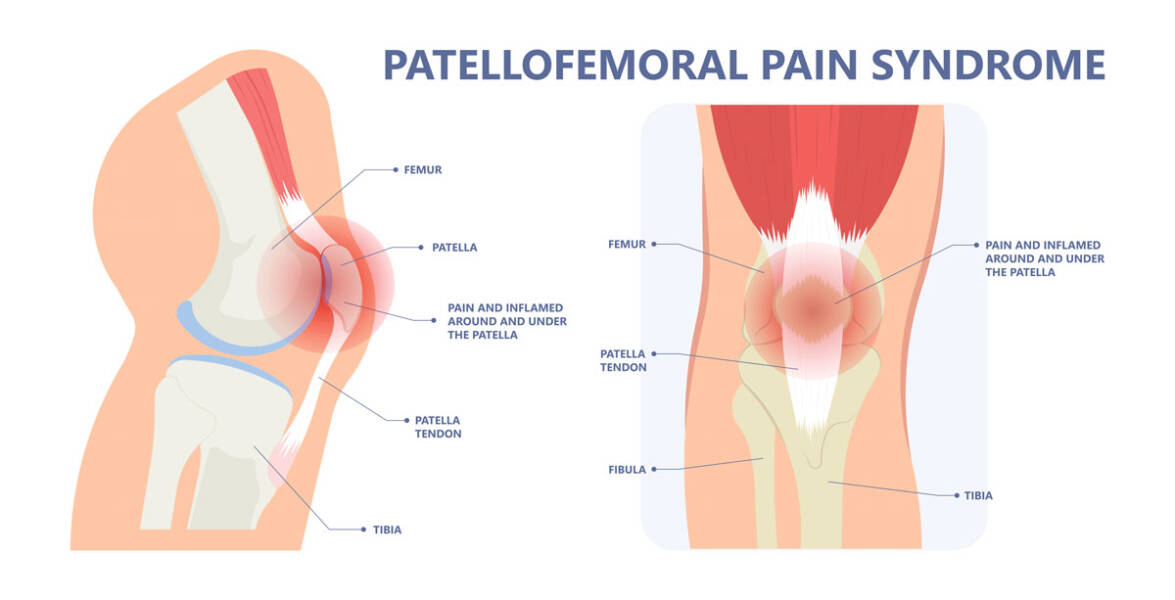
Runner’s knee is the common name for patellofemoral pain syndrome, which affects the area around or behind the patella (kneecap) where it meets the femur (thighbone). Because running, stair climbing, squatting, and similar movements repeatedly load this part of the knee, they can bring on or aggravate the pain.
Symptoms can begin when the amount of stress being placed on the knee outpaces what it is currently prepared to handle. A change in training, reduced strength, or the way your hip, knee, and leg move together can all contribute.
Despite the name, you don’t have to be a runner in Bridgeton, MO to develop runner’s knee. Climbing stairs, squatting, and other activities that repeatedly load a bent knee can bring on symptoms. Getting evaluated helps you avoid spending weeks treating the wrong problem.
What Runner’s Knee Can Feel Like
Runner’s knee does not always begin with constant pain. You might notice an ache late in a run that fades once you stop, only for it to return the next time you train. As symptoms progress, the pain may start sooner or show up during movements that used to feel completely normal.
You may notice:
- An ache around or behind the kneecap
- Discomfort when the knee is loaded during running, stair climbing, downhill walking, or squatting
- Aching after sitting for a while with the knee bent
- Tenderness around the kneecap
- Grinding or popping sensations when you bend or straighten your knee
Why Does Runner’s Knee Develop?
Runner’s knee often develops when the demands of training increase faster than your knee is ready to handle. Changes in strength, flexibility, and the way your leg moves can also influence how much stress reaches the area around the kneecap.
Runner’s knee may be influenced by:
- Overuse or sudden training changes. Repeated running and jumping stress the knee. Increasing distance, speed, and hills at the same time can be especially demanding.
- Too little recovery. Back-to-back hard workouts may not leave enough time to recover, particularly when you’re also increasing your training.
- Strength deficits. The muscles around your hips and quadriceps play an important role in controlling your leg when you run, land, and push off. Weakness can change how those repeated forces are managed.
- Tight muscles. Limited mobility in your calves, hamstrings, or hips can change how you move and distribute stress through your leg.
- Foot movement and footwear. The way your foot contacts the ground and moves through each step can influence the rest of your leg. Flat feet, excessive inward rolling, or certain shoes may be part of the picture, along with your running mechanics.
- Anatomy and alignment. The position of your kneecap and the alignment of your hip, knee, and foot can influence pressure within the joint.
- Previous injury or surgery. A past kneecap dislocation, cartilage injury, or certain knee surgeries may increase your risk of patellofemoral pain.
How Physical Therapy in Bridgeton, MO Can Help With Runner’s Knee
The first step is understanding what has been happening with your knee. Your Bridgeton, MO physical therapist will ask about your symptoms, medical history, training, and day-to-day activity. Be ready to talk about when the pain shows up, whether it affects your stride, and what your knee feels like several hours after a run or the morning after. Upcoming races or training goals are useful context as well.
Your Bridgeton, MO physical therapist will examine your strength, flexibility, and movement. You may be asked to squat, balance on one leg, or step down so we can see which movements are difficult and where you need support.
From there, we’ll build the plan with you rather than simply handing you a list of exercises. We’ll explain what to focus on, what may need to be modified for now, and how to judge how your knee is responding between visits. If your symptoms suggest you need another type of evaluation, we can work with your Bridgeton, MO doctor and help you take that next step.
Building Hip and Thigh Strength
The muscles around your hips and thighs help guide your leg every time you land, push off, or support yourself on one side. Strengthening these areas can improve how your leg handles the repeated demands that contribute to runner’s knee.
Exercises may include:
- Banded side steps or side-lying leg lifts to target the muscles that help stabilize your hip
- Bridges and similar exercises to build strength through your glutes
- Squats or sit-to-stands to practice supporting your weight as your knees bend
- Controlled stepping exercises that challenge your ability to support and lower your body on one leg
- Knee extensions to strengthen the quadriceps at the front of your thigh
We’ll start with a version of each exercise that matches what your knee can tolerate. That might mean using a smaller squat range, choosing a shorter step, or reducing the load until you can move with better control.
As your knee tolerates more, our Bridgeton, MO physical therapists can gradually raise the difficulty by changing resistance, repetitions, range of motion, or the exercise itself. Just as important, we’ll teach you how to tell the difference between productive effort and a sign that something needs to be adjusted.
Improving Flexibility and Mobility
Your physical therapist in Bridgeton, MO may find that stiffness in your calves, thighs, hips, or ankles is changing the way you move. Those findings help us choose stretches and mobility work that address your specific limitations rather than giving everyone the same routine.
We’ll show you how to perform each stretch without forcing your knee into a painful position. We may also use hands-on techniques to help with stiffness alongside your exercises.
Improving the Way You Run and Move
Small changes in movement can sometimes reduce the strain you feel during running or other activities. Your Bridgeton, MO physical therapist may observe your running form directly or use video motion analysis to examine your mechanics in more detail.
Sometimes the most useful change is small. We may try adjusting how long your stride is or how quickly your feet turn over, then compare how your knee responds. Movement retraining can also include everyday tasks, from descending stairs to controlling a single-leg squat.
You do not need to overhaul the way you run overnight. We’ll work on one useful change at a time, make sure it feels manageable, and build from there as your comfort and control improve.
Using Taping, Footwear, or Inserts
Sometimes a temporary support can make activity more manageable while you work on the underlying problem. Your therapist may try patellar taping or a shoe insert, then compare how your knee feels during a movement that normally causes pain.
Bring up any questions about your running shoes, especially if you changed pairs shortly before the pain started. We can discuss fit, comfort, and whether your footwear seems to be contributing. You do not automatically need new shoes or custom inserts because you have runner’s knee.
If a support makes movement more comfortable, we may use it temporarily while you work through your exercise program and build back toward your usual activities.
Building Back to Running Gradually
You may not need to stop all activity, but you may need to change how you train for a while. We’ll look at what your knee is tolerating and help you adjust things like distance, pace, terrain, or workout type. For some people, that means shorter runs or flatter routes; for others, it may mean temporarily swapping a run for a lower-impact activity.
As your knee improves, we can help you ease back into running with a distance and pace that make sense for where you are now. You might begin with shorter runs or intervals that alternate walking and running. How your knee feels later in the day and the following morning can help guide when it is time to add more.
The first successful run back does not need to match your old mileage. Give your knee time to handle shorter runs consistently before asking it to take on more.
At-Home Care for Runner’s Knee Pain in Bridgeton, MO
To help manage symptoms between appointments:
- Modify what is bothering your knee. That could mean shorter runs, fewer running days, or taking a break from certain workouts for now. Lower-impact options such as swimming may let you stay active without placing the same demands on your knee.
- Use ice if it helps with short-term comfort. Place a towel between your skin and the cold pack and leave it on for about 15–20 minutes at a time.
- Ask whether compression or elevation would help. These measures may improve comfort or reduce swelling. Significant or unexplained swelling needs evaluation.
- Check before taking pain medication. Your doctor or pharmacist can help you choose an appropriate option based on your health and other medications.
Rest, icing, compression, and elevation can sometimes help settle symptoms between visits. Continue working through the rehabilitation program from your Bridgeton, MO physical therapist, too. If icing makes the knee feel better for a few hours, that alone is not a reason to immediately increase your workout.
A home exercise program is only useful if it works in real life. If an exercise does not fit your schedule, requires equipment you do not have, or continues to aggravate your knee, tell your therapist so we can find another way to approach it.
What Is the Recovery Timeline for Runner’s Knee?
Wanting to know when you can get back to your normal running routine makes sense. After evaluating your knee, we can give you a better idea of what recovery may look like, but there is no single timeline that applies to everyone.
Reducing the load on your knee may help calm the pain before you are actually ready to resume your previous running routine. The longer symptoms have been present, the more time it may take to rebuild strength, movement tolerance, and confidence through consistent rehabilitation.
Small changes can tell us a lot about how your knee is responding. Maybe stairs are easier, you can perform an exercise that gave you trouble a few weeks ago, or you finish a short run without a flare-up afterward. Those are useful signs that your knee may be ready for more.
If you’re putting in the work and not improving, we’ll revisit the plan and involve your Bridgeton, MO doctor if further evaluation is needed. Before you finish therapy, we’ll also discuss which exercises to continue and how to approach future increases in training.
Frequently Asked Questions About Runner’s Knee in Bridgeton, MO
Can I Keep Running With Runner’s Knee?
Whether you should keep running depends on how your knee responds. Some people in Bridgeton, MO can stay active with shorter, lower-intensity runs, while others benefit from taking a temporary break. Increasing pain, limping, or feeling noticeably worse afterward are signs that your routine needs to change.
Is Rest Enough for Runner’s Knee?
Taking time off may calm your symptoms, but that does not always address why the pain started. If your knee feels better during rest and then hurts again once you return to running, an evaluation can help look at factors like strength, movement patterns, and training load.
Are There Exercises I Should Avoid With Runner’s Knee?
The main thing to avoid is repeatedly pushing through exercises that clearly make your knee worse. For some people, that may include deep squats, jumping, lunging, or repeated stair work. Those movements do not have to be permanently removed; your therapist can help reduce the difficulty and reintroduce them gradually.
Can I Start Physical Therapy for Runner’s Knee Without a Referral?
Many patients in Bridgeton, MO may be able to begin physical therapy through Direct Access without first getting a physician referral. Axes can help you understand the rules and insurance requirements that apply to your situation so you know what steps, if any, need to happen first.
Runner’s Knee Pain Treatment in Bridgeton, MO at Axes Physical Therapy
If your knee keeps feeling better with rest only to flare up again when you return to activity, it may be time to get a clearer picture of what is going on. We’ll listen to what you’ve been experiencing and work with you and your doctor on a plan built around your goals and the activities you want to get back to.
Axes can usually schedule your first appointment within 24–48 hours of contacting us. If you need a different type of care first, we can help connect you with an appropriate provider in our network.
Take the next step by contacting your nearest Axes location, requesting an appointment online, or coming in for a free injury screening.