Runner’s Knee Pain Treatment Weldon Spring Heights, MO. When runner’s knee, or patellofemoral pain syndrome (PFPS), starts interfering with your runs, figuring out what to do next is not always easy. You may shorten a workout, give your knee some time to settle down, then head back out only to feel the same pain again. The uncertainty can be just as frustrating as the pain itself, especially when you’re used to running regularly. And it may not stop when the run does; climbing steps, getting up from your desk, kneeling, or crouching can become uncomfortable too.
Axes Physical Therapy can be a great place to start for many people in Weldon Spring Heights, MO suffering from knee pain. We’ll listen to what you’ve been experiencing, examine how your knee and the rest of your leg move, and look at how your symptoms respond to the demands of running. From there, we’ll build an evidence-backed treatment plan to help you return to your usual running routine.
In many cases, you can begin addressing your knee pain quickly. Direct Access Physical Therapy allows many people in Weldon Spring Heights, MO to see a physical therapist without waiting for a physician referral, and Axes can typically see new patients within 24–48 hours of reaching out. If your knee pain calls for medical evaluation first, we’ll help point you toward an appropriate provider in our network.
You can take the next step by contacting your nearest Axes location, requesting an appointment online, or coming in for a free injury screening.
If your knee pain follows a sudden injury, causes severe swelling or visible deformity, or makes it difficult to move your knee or bear weight, seek medical evaluation promptly. A knee that locks or repeatedly gives way also needs evaluation. Seek urgent care if your knee is hot and red and you have a fever.
This page covers:
- Common runner’s knee symptoms and factors that may contribute to them
- How physical therapy can address strength, movement, mobility, and running mechanics
- Steps you can take between physical therapy visits
- How you may progress toward running again
What Is Runner’s Knee?
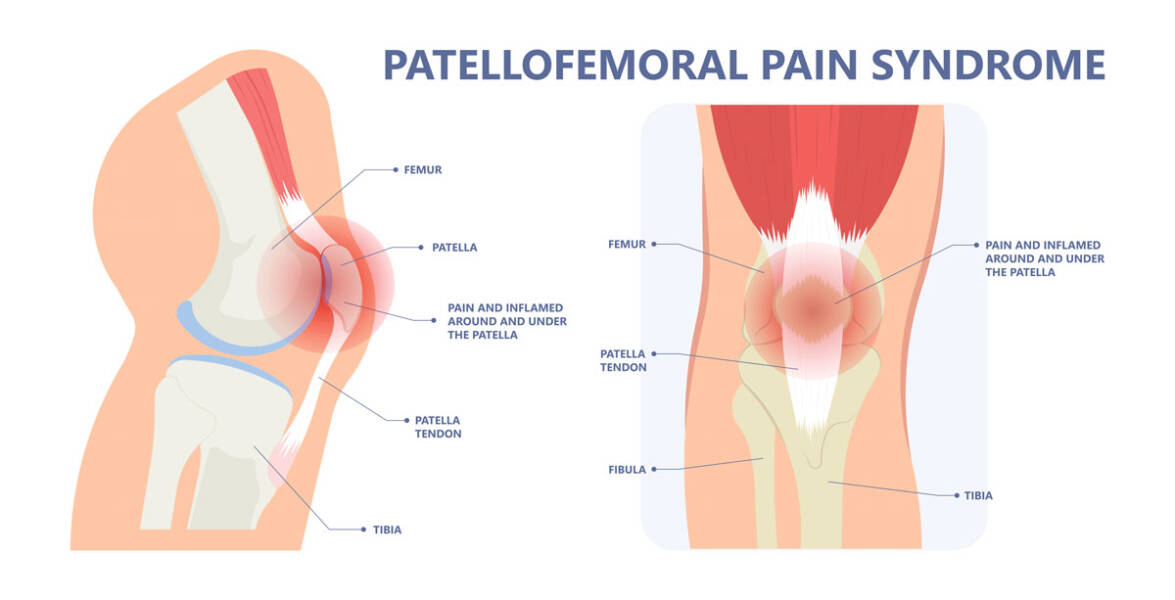
Runner’s knee, also called patellofemoral pain syndrome, causes pain around or behind your patella (kneecap) where it meets your femur (thighbone). Running, squatting, and climbing stairs put pressure on this area and can make it hurt.
Sometimes the issue is simply that the knee is being asked to handle more than it has adapted to. Increasing your training, changes in strength, and the mechanics of how your leg moves can each influence how much stress reaches the area around the kneecap.
You can develop runner’s knee even if you rarely, or never, run in Weldon Spring Heights, MO. Activities like using stairs, kneeling, squatting, or repeatedly getting up and down can place similar demands on the knee. An evaluation can help clarify what is actually causing your symptoms instead of leaving you to guess.
Runner’s Knee Symptoms
At first, runner’s knee may be easy to brush off. Your knee might bother you during the last mile of a run, settle down afterward, and seem fine again the next morning. Over time, the discomfort can become more noticeable and begin affecting other parts of your day.
You may notice:
- Pain that feels centered around or behind the kneecap
- Pain during activities such as running, using stairs, walking downhill, or squatting
- Pain or stiffness after spending time seated with your knees bent
- Sensitivity or soreness when you press around the kneecap
- A grinding or popping feeling during knee movement
Why Does Runner’s Knee Develop?
Runner’s knee often develops when the demands of training increase faster than your knee is ready to handle. Changes in strength, flexibility, and the way your leg moves can also influence how much stress reaches the area around the kneecap.
Possible contributors include:
- Overuse or sudden training changes. Repeated running and jumping stress the knee. Increasing distance, speed, and hills at the same time can be especially demanding.
- Too little recovery. Back-to-back hard workouts may not leave enough time to recover, particularly when you’re also increasing your training.
- Muscle weakness or imbalances. Your quadriceps and hip muscles help support and control your leg. Weakness can affect how you handle the repeated demands of running.
- Tight muscles. Limited mobility in your calves, hamstrings, or hips can change how you move and distribute stress through your leg.
- How your feet move and what you run in. For some people, flat feet, excessive inward rolling, or footwear that does not work well for them may contribute to knee symptoms. Your therapist can look at these factors together with your running mechanics.
- Joint alignment and structure. The way your kneecap sits and how your hip, knee, and foot line up can change where stress is placed during movement.
- Previous injury or surgery. A past kneecap dislocation, cartilage injury, or certain knee surgeries may increase your risk of patellofemoral pain.
Physical Therapy for Runner’s Knee Pain in Weldon Spring Heights, MO
At your first appointment, your Weldon Spring Heights, MO physical therapist will start by learning more about your knee pain, your health history, and the activities you want to get back to. We’ll want to know when the pain started, whether you change the way you run because of it, and how the knee feels after activity or the next day. If you’re training for a race or working toward a specific date, let us know that too.
Part of the evaluation involves watching you move. Your Weldon Spring Heights, MO physical therapist will test strength and flexibility and may ask you to squat, balance on one leg, step down, or perform similar movements. These tasks can show us where you are moving well and where your knee may need more support.
From there, we’ll build the plan with you rather than simply handing you a list of exercises. We’ll explain what to focus on, what may need to be modified for now, and how to judge how your knee is responding between visits. If your symptoms suggest you need another type of evaluation, we can work with your Weldon Spring Heights, MO doctor and help you take that next step.
Building Hip and Thigh Strength
Your hips and quadriceps do a lot of the work required to keep your leg controlled during running and everyday movement. Improving strength in these muscles is often an important part of reducing stress around the knee.
Depending on your evaluation, your program may use:
- Side-lying leg raises, lateral band walks, or similar exercises for the muscles along the outside of your hip
- Bridges to strengthen your gluteal muscles
- Squats or sit-to-stands to practice supporting your weight as your knees bend
- Step-ups, step-downs, or similar single-leg tasks to improve strength and control
- Exercises that straighten the knee against resistance to build strength in the quadriceps
The goal is not to force your knee through an exercise it is not ready for. If a deep squat increases your pain, we may shorten the range. If stepping down from a standard height is too demanding, we can lower the step and build from there.
As you get stronger, our Weldon Spring Heights, MO physical therapists will adjust the resistance, repetitions, or difficulty. We’ll also explain how the exercise should feel so you know when to keep going and when to ask for an adjustment.
Improving Flexibility and Mobility
Your physical therapist in Weldon Spring Heights, MO will check for tightness in your calves, thighs, and hips, along with any limits in ankle movement. These findings help determine which stretches belong in your treatment plan.
The goal is to improve movement without forcing it. We’ll teach you how to stretch safely and may combine your exercise program with hands-on treatment when certain joints or muscles feel especially stiff.
Running and Movement Retraining
Small changes in movement can sometimes reduce the strain you feel during running or other activities. Your Weldon Spring Heights, MO physical therapist may observe your running form directly or use video motion analysis to examine your mechanics in more detail.
Sometimes the most useful change is small. We may try adjusting how long your stride is or how quickly your feet turn over, then compare how your knee responds. Movement retraining can also include everyday tasks, from descending stairs to controlling a single-leg squat.
You won’t be expected to rebuild your running technique all at once. We’ll explain what to practice and give you time to get comfortable with it before increasing the demands.
Using Taping, Footwear, or Inserts
For some people, patellar taping or a shoe insert can make certain movements easier to tolerate. Your therapist may have you repeat an activity that normally bothers your knee with and without the support to see whether it makes a meaningful difference.
Bring up any questions about your running shoes, especially if you changed pairs shortly before the pain started. We can discuss fit, comfort, and whether your footwear seems to be contributing. You do not automatically need new shoes or custom inserts because you have runner’s knee.
If a support helps, we use it alongside your exercises as you work on strength and return to activity.
Training Adjustments and a Gradual Return to Running
Cutting back can be frustrating, especially if running is part of how you manage stress or structure your week. We’ll help you figure out what activity still makes sense and what should be modified for now. That could mean reducing mileage, choosing flatter routes, pausing speed sessions, or using another form of exercise while your knee calms down.
As your knee improves, we can help you ease back into running with a distance and pace that make sense for where you are now. You might begin with shorter runs or intervals that alternate walking and running. How your knee feels later in the day and the following morning can help guide when it is time to add more.
The first successful run back does not need to match your old mileage. Give your knee time to handle shorter runs consistently before asking it to take on more.
At-Home Care for Runner’s Knee Pain in Weldon Spring Heights, MO
While you’re working through treatment, you can also take steps at home to help keep your knee more comfortable:
- Scale back activities that aggravate your knee. You may need to reduce your running temporarily or avoid the workouts that consistently flare your symptoms. If it feels comfortable, swimming or another lower-impact activity can help you keep moving.
- Cold therapy may help calm symptoms temporarily. Use a towel or other barrier between your skin and the ice pack and limit each session to about 15–20 minutes.
- Ask whether compression or elevation would help. These measures may improve comfort or reduce swelling. Significant or unexplained swelling needs evaluation.
- Get guidance before adding pain medication. What is appropriate can depend on your medical history, other prescriptions, and individual health factors, so check with your doctor or pharmacist.
Rest, ice, compression, and elevation may ease symptoms. Continue the rehabilitation plan your Weldon Spring Heights, MO physical therapist has recommended, too. Feeling better after icing doesn’t necessarily mean your knee is ready for a harder workout.
A home exercise program is only useful if it works in real life. If an exercise does not fit your schedule, requires equipment you do not have, or continues to aggravate your knee, tell your therapist so we can find another way to approach it.
How Long Does Runner’s Knee Take to Improve?
It’s reasonable to want a date when you can run normally again. We’ll give you our best guidance after evaluating your knee, but there isn’t a reliable shortcut or one recovery schedule that fits everyone.
Your knee may start feeling better once you reduce or modify the activities that aggravate it, but returning to your usual mileage and training often takes more time. If the pain has been present for months, improvement may also require months of steady rehabilitation.
Small changes can tell us a lot about how your knee is responding. Maybe stairs are easier, you can perform an exercise that gave you trouble a few weeks ago, or you finish a short run without a flare-up afterward. Those are useful signs that your knee may be ready for more.
If your progress stalls, we will not simply keep repeating the same plan. We’ll look again at your symptoms, make adjustments, and bring in your Weldon Spring Heights, MO doctor if further evaluation is appropriate. We’ll also prepare you for what comes after therapy by discussing which exercises to continue and how to build your training back up over time.
Weldon Spring Heights, MO Runner’s Knee Pain Treatment FAQs
Should I Stop Running if I Have Runner’s Knee?
Having runner’s knee does not automatically mean every run is off-limits. Depending on your symptoms, you may be able to continue with easier or shorter runs in Weldon Spring Heights, MO. If you are limping, progressively hurting more, or paying for the run later that day or the next morning, your current workload may be too much. A therapist can help you decide what to modify.
Is Rest Enough for Runner’s Knee?
Rest may give an irritated knee time to settle, but the same symptoms can come back when you resume your usual activity. If you are stuck in a pattern of resting, feeling better, and hurting again, it may be worth looking at strength, mechanics, or how quickly your training is progressing.
Are There Exercises I Should Avoid With Runner’s Knee?
The main thing to avoid is repeatedly pushing through exercises that clearly make your knee worse. For some people, that may include deep squats, jumping, lunging, or repeated stair work. Those movements do not have to be permanently removed; your therapist can help reduce the difficulty and reintroduce them gradually.
Can I Start Physical Therapy for Runner’s Knee Without a Referral?
You may be able to start physical therapy in Weldon Spring Heights, MO through Direct Access without a referral. Call Axes, and we’ll help you understand the requirements and insurance considerations that apply to you. Starting with us can save you from waiting for a separate appointment just to find out your next step.
Get Help for Runner’s Knee Pain in Weldon Spring Heights, MO at Axes Physical Therapy
If you’re tired of taking time off only to have your knee hurt again, let’s see what’s going on. We’ll listen to your concerns and work with you and your doctor on a plan that fits your needs and the activities you want to return to.
You may not have to wait long to find out what your next step should be. Axes can typically schedule your first visit within 24–48 hours, and if physical therapy is not the right place to start, we can help connect you with a provider in our network.
Contact the Axes location nearest you, request an appointment online, or visit us for a free injury screening.