Runner’s Knee Pain Treatment Winchester, MO. When runner’s knee, or patellofemoral pain syndrome (PFPS), starts interfering with your runs, figuring out what to do next is not always easy. You may shorten a workout, give your knee some time to settle down, then head back out only to feel the same pain again. The uncertainty can be just as frustrating as the pain itself, especially when you’re used to running regularly. And it may not stop when the run does; climbing steps, getting up from your desk, kneeling, or crouching can become uncomfortable too.
If knee pain is getting in the way of running or everyday movement, Axes Physical Therapy can be a good first step for many people in Winchester, MO. We’ll talk through when your symptoms started, evaluate how your knee and the rest of your leg are moving, and see how your body responds to movements related to running. Then we’ll use what we find to create an evidence-backed treatment plan aimed at getting you back to your normal routine.
Getting started may not require the long wait you expect. Through Direct Access Physical Therapy, many patients in Winchester, MO can begin physical therapy without first getting a physician referral, and Axes can usually schedule you within 24–48 hours after you contact us. If we believe your knee pain should be evaluated by a doctor before therapy begins, we can help connect you with someone in our network.
You can take the next step by contacting your nearest Axes location, requesting an appointment online, or coming in for a free injury screening.
If your knee pain follows a sudden injury, causes severe swelling or visible deformity, or makes it difficult to move your knee or bear weight, seek medical evaluation promptly. A knee that locks or repeatedly gives way also needs evaluation. Seek urgent care if your knee is hot and red and you have a fever.
Here, you’ll learn about:
- Common runner’s knee symptoms and factors that may contribute to them
- Ways physical therapy may help improve strength, mobility, and the way you move while running
- Steps you can take between physical therapy visits
- What the process of returning to running may look like
What Is Runner’s Knee?
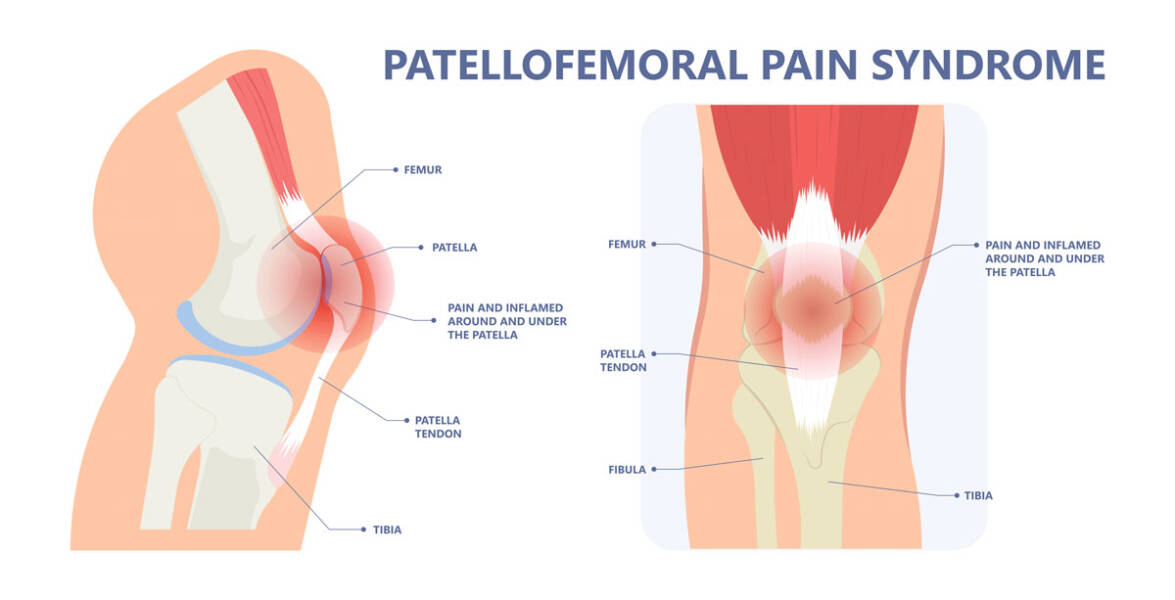
Runner’s knee, also called patellofemoral pain syndrome, causes pain around or behind your patella (kneecap) where it meets your femur (thighbone). Running, squatting, and climbing stairs put pressure on this area and can make it hurt.
Sometimes the issue is simply that the knee is being asked to handle more than it has adapted to. Increasing your training, changes in strength, and the mechanics of how your leg moves can each influence how much stress reaches the area around the kneecap.
The name can be misleading: runner’s knee is not limited to runners in Winchester, MO. You may notice the same type of pain while taking the stairs, lowering into a squat, getting up from a low seat, or doing other activities that repeatedly bend and load the knee. Getting the knee evaluated can help you focus on the right problem from the start.
Runner’s Knee Symptoms
Symptoms of runner’s knee can be inconsistent in the beginning. One day you may only feel discomfort after a longer run, while another day your knee may start aching sooner or during activities outside of running. That change in pattern is often what prompts people to have the knee evaluated.
Common symptoms include:
- An ache around or behind the kneecap
- Pain when running, climbing stairs, going downhill, or squatting
- Aching after sitting for a while with the knee bent
- Tenderness around the kneecap
- Grinding or popping sensations when you bend or straighten your knee
Why Does Runner’s Knee Develop?
Sometimes runner’s knee begins after a jump in mileage, pace, hills, or overall training load. Other factors, including muscle strength, mobility, and movement patterns, can affect how your knee handles that added demand.
Factors that may contribute include:
- Training too much, too quickly. Your knee may struggle to keep up when mileage, pace, hills, or jumping volume all increase over a short period of time.
- Limited recovery between workouts. If you are increasing your training while also stacking difficult sessions close together, your knee may not get enough time to recover.
- Weakness in the hips or thighs. Your quadriceps and hip muscles help control your leg during each step. If those muscles are not providing enough support, your knee may have to absorb more of the workload.
- Limited flexibility or mobility. Tightness in the calves, hamstrings, hips, or nearby joints can affect the way your body moves and where stress is distributed through the leg. See more about mobility.
- Foot mechanics and support. Flat feet, excessive inward rolling of the foot, or unsuitable footwear may contribute to symptoms for some people. Your therapist can consider these alongside your running mechanics.
- How your leg is aligned. The relationship between your hip, knee, kneecap, and foot can affect how pressure is distributed through the joint.
- Previous injury or surgery. A past kneecap dislocation, cartilage injury, or certain knee surgeries may increase your risk of patellofemoral pain.
Physical Therapy for Runner’s Knee Pain in Winchester, MO
Your first visit starts with a conversation about your symptoms, medical history, and activities. Tell your Winchester, MO physical therapist when the pain began, whether it changes your stride, and how your knee feels later that day or the following morning. Bring up any race plans or training deadlines, too.
Part of the evaluation involves watching you move. Your Winchester, MO physical therapist will test strength and flexibility and may ask you to squat, balance on one leg, step down, or perform similar movements. These tasks can show us where you are moving well and where your knee may need more support.
Then we’ll walk through the plan together. You should leave knowing what to work on, what to change for now, and what to watch for between visits. We’ll also coordinate with your Winchester, MO doctor when appropriate and help arrange further evaluation if your symptoms call for it.
Hip and Quadriceps Strengthening
The muscles around your hips and thighs help guide your leg every time you land, push off, or support yourself on one side. Strengthening these areas can improve how your leg handles the repeated demands that contribute to runner’s knee.
Your program may include:
- Banded side steps or side-lying leg lifts to target the muscles that help stabilize your hip
- Bridges to strengthen your gluteal muscles
- Squatting variations or repeated sit-to-stands to build strength through a controlled knee bend
- Controlled stepping exercises that challenge your ability to support and lower your body on one leg
- Exercises that straighten the knee against resistance to build strength in the quadriceps
The goal is not to force your knee through an exercise it is not ready for. If a deep squat increases your pain, we may shorten the range. If stepping down from a standard height is too demanding, we can lower the step and build from there.
Your exercises should evolve as your strength and control improve. Our Winchester, MO physical therapists can increase resistance, add repetitions, or make the movement more challenging over time. We’ll also help you understand what normal effort feels like and when discomfort means the exercise needs to be changed.
Improving Flexibility and Mobility
Mobility is part of the evaluation, too. Your physical therapist in Winchester, MO may check your calves, hamstrings, hips, and ankle movement to see whether stiffness in one area is affecting the way the rest of your leg moves.
We’ll guide you through stretches that target the areas that need attention while avoiding positions that unnecessarily aggravate your knee. In some cases, manual physical therapy techniques may also be used alongside your exercises to address stiffness.
Running Mechanics and Movement Retraining
Part of treatment may involve looking at the way your body handles each step. Your Winchester, MO physical therapist can assess your running form and may use video motion analysis to identify patterns that are difficult to see in real time.
If your movement assessment points to something worth changing, we may experiment with your stride length, cadence, or other aspects of your running form and see whether your knee feels different. We can also practice better control during everyday tasks like stairs, squatting, or lowering yourself onto one leg.
Movement changes usually work better when they are introduced gradually. We’ll give you a manageable place to start, help you practice it, and add more speed, distance, or complexity only when you are ready.
Taping, Footwear, and Orthotic Support
Patellar taping or shoe inserts may help make exercise more comfortable for some people. Your therapist can test whether a support changes how your knee feels during a movement that usually hurts.
Your running shoes are worth discussing, particularly if your symptoms began soon after switching to a different pair. We can look at how the shoes fit, how they feel when you run, and whether they may be affecting your movement. Having runner’s knee does not automatically mean you need to replace your shoes or buy custom orthotics.
If a support makes movement more comfortable, we may use it temporarily while you work through your exercise program and build back toward your usual activities.
Training Adjustments and a Gradual Return to Running
You may not need to stop all activity, but you may need to change how you train for a while. We’ll look at what your knee is tolerating and help you adjust things like distance, pace, terrain, or workout type. For some people, that means shorter runs or flatter routes; for others, it may mean temporarily swapping a run for a lower-impact activity.
As your knee improves, we can help you ease back into running with a distance and pace that make sense for where you are now. You might begin with shorter runs or intervals that alternate walking and running. How your knee feels later in the day and the following morning can help guide when it is time to add more.
The first successful run back does not need to match your old mileage. Give your knee time to handle shorter runs consistently before asking it to take on more.
What Can You Do at Home in Winchester, MO for Runner’s Knee Pain?
Between physical therapy visits, a few simple steps may help you manage symptoms:
- Scale back activities that aggravate your knee. You may need to reduce your running temporarily or avoid the workouts that consistently flare your symptoms. If it feels comfortable, swimming or another lower-impact activity can help you keep moving.
- Use ice if it helps with short-term comfort. Place a towel between your skin and the cold pack and leave it on for about 15–20 minutes at a time.
- Compression or elevating the leg may be useful in some cases. Ask whether either approach is appropriate for you, especially if swelling is part of your symptoms. Significant or unexplained swelling should be evaluated.
- Check before taking pain medication. Your doctor or pharmacist can help you choose an appropriate option based on your health and other medications.
You may get some symptom relief from rest, ice, compression, or elevation. At the same time, keep up with the exercises and activity changes your Winchester, MO physical therapist has recommended. Temporary relief does not necessarily mean the knee is ready to take on more training.
Your home exercises should fit into your day. If the plan doesn’t fit your schedule, you don’t have the equipment, or an exercise keeps hurting, tell us. We can work through those problems with you.
How Long Does Runner’s Knee Take to Improve?
It’s reasonable to want a date when you can run normally again. We’ll give you our best guidance after evaluating your knee, but there isn’t a reliable shortcut or one recovery schedule that fits everyone.
Reducing the load on your knee may help calm the pain before you are actually ready to resume your previous running routine. The longer symptoms have been present, the more time it may take to rebuild strength, movement tolerance, and confidence through consistent rehabilitation.
Small changes can tell us a lot about how your knee is responding. Maybe stairs are easier, you can perform an exercise that gave you trouble a few weeks ago, or you finish a short run without a flare-up afterward. Those are useful signs that your knee may be ready for more.
If you’re putting in the work and not improving, we’ll revisit the plan and involve your Winchester, MO doctor if further evaluation is needed. Before you finish therapy, we’ll also discuss which exercises to continue and how to approach future increases in training.
Frequently Asked Questions About Runner’s Knee in Winchester, MO
Should I Stop Running if I Have Runner’s Knee?
Whether you should keep running depends on how your knee responds. Some people in Winchester, MO can stay active with shorter, lower-intensity runs, while others benefit from taking a temporary break. Increasing pain, limping, or feeling noticeably worse afterward are signs that your routine needs to change.
Can Rest Fix Runner’s Knee?
Rest can help the pain settle, but it may return when you start running again. If you keep repeating that cycle, an evaluation can help identify what else needs attention, such as strength, movement, or your training volume.
Are There Exercises I Should Avoid With Runner’s Knee?
Rather than creating a permanent list of forbidden exercises, we look at which movements your knee can tolerate right now. If deep squats, jumping, or repeated stair work aggravate your symptoms, those activities may need to be modified for a while. Your therapist can help you work toward them again as your knee improves.
Do I Need to See a Doctor Before Starting Physical Therapy?
In many cases, people in Winchester, MO can start physical therapy for runner’s knee through Direct Access without first obtaining a referral. If you are unsure what your insurance requires, call Axes. We can help you sort out the details and determine the quickest appropriate way to get started.
Runner’s Knee Pain Treatment in Winchester, MO at Axes Physical Therapy
When knee pain keeps interrupting your runs or everyday activity, getting evaluated can help you stop guessing about what to do next. We’ll listen to your concerns, look at what may be contributing to the problem, and work with you and your doctor toward the activities that matter to you.
You can often get started quickly. Axes can usually schedule an initial appointment within 24–48 hours after you reach out, and if your knee needs another type of evaluation first, we can help connect you with an appropriate provider in our network.
Contact the Axes location nearest you, request an appointment online, or visit us for a free injury screening.