Shoulder Pain Treatment House Springs, MO. With shoulder pain, everyday motion can go from automatic to aggravating quickly. One day it may be reaching overhead or carrying groceries; the next, it may be sleeping on your side, getting dressed, lifting at work, or throwing a ball without wincing.
At Axes Physical Therapy in House Springs, MO, we help you understand what may be causing your shoulder pain and what to do next. Our House Springs, MO licensed physical therapists build science-backed, personalized shoulder pain treatment around your symptoms, your goals, and the movements you need to regain.
Before shoulder pain turns into weeks of guessing, many people in House Springs, MO use Axes as an early first step. Many patients can start physical therapy without a physician referral through direct access, many patients can begin physical therapy without waiting on a physician referral, and Axes can typically get visits scheduled within 24 to 48 hours of first contact.
You can take the next step when you request an appointment online, call the location nearest you, or stop in at any location for a free injury screening.
Seek medical evaluation promptly if shoulder pain begins suddenly after trauma, if you notice visible deformity, or if numbness/tingling or significant weakness is present.
This page covers:
- Signs you may need shoulder pain treatment
- Common shoulder injuries and causes of pain
- Activities that can lead to shoulder pain
- Problems shoulder pain treatment is designed to address
- Physical therapy treatments Axes may use for shoulder pain
- How direct access physical therapy can help patients start treatment faster
- Common shoulder pain treatment FAQs
Shoulder Pain Symptoms Worth Taking Seriously
Shoulder pain often starts quietly: a pinch during one movement, stiffness after activity, or soreness that keeps returning. Common warning signs include pain, stiffness, weakness, clicking, limited range of motion, or symptoms that flare with specific movements.
You may benefit from shoulder pain treatment in House Springs, MO if pain affects your ability to:
- Reach into cabinets or overhead spaces
- Lift, push, pull, or carry
- Sleep without shoulder pain waking you up
- Throw, swing, swim, or serve
- Wash your hair or get dressed
- Work, exercise, or complete daily tasks
Mild shoulder pain sometimes settles down with rest, ice, heat, small activity changes, and gentle movement. But if pain lasts more than a few days, limits motion, affects sleep, or keeps coming back, it may be time to find out what is causing it.
Why Shoulder Pain Happens
The right shoulder pain treatment in House Springs, MO starts with the reason your shoulder hurts in the first place. Pain may come from muscles, tendons, joints, posture, sports mechanics, repetitive job demands, arthritis, instability, or pain referred from the neck.
Shoulder pain is often linked to conditions such as:
- Rotator cuff injuries: Often felt during lifting, reaching, overhead movement, or sleeping on the affected side.
- Shoulder impingement: Pain from irritated soft tissue during reaching or overhead movement.
- Tendonitis and bursitis: Often tied to repeated motion, workload changes, sports demands, or soft tissue irritation.
- Frozen shoulder: Shoulder stiffness and pain that make normal arm movement difficult.
- Arthritis: Joint pain, stiffness, weakness, or reduced range of motion.
- Shoulder instability: A sense that the shoulder may slip, shift, or fail to support the arm.
- Labral injuries: Often linked with catching, clicking, weakness, pain, or an unstable feeling in the shoulder.
- Sports-related shoulder pain: Pain from throwing, swimming, tennis, golf, volleyball, weightlifting, or other athletic movements.
- Work-related shoulder pain: Job demands such as lifting, carrying, tool use, pushing, pulling, repetition, or overhead work can irritate the shoulder.
- Post-surgical shoulder rehab: Care after rotator cuff repair, labral repair, shoulder replacement, or another shoulder surgery.
Shoulder pain can also develop from the specific ways you use your body. That can involve:
- Sports and recreation: Overhead sports, throwing, swimming, golf, tennis, pickleball, volleyball, climbing, gymnastics, weightlifting, wrestling, or contact sports.
- Work demands: Jobs that require lifting, carrying, pushing, pulling, tool use, overhead work, long desk posture, or repeated upper-body effort.
- Falls or sudden injuries: Shoulder pain may start after a slip, fall, collision, hard landing, sudden pull, or heavy lift that catches you off guard.
- Repetitive daily movements: Everyday repetition can add up through chores, yardwork, childcare, cleaning, home projects, shoveling, and reaching.
- Pre- and Post-surgical recovery: Stiffness, weakness, or shoulder pain before or after procedures such as rotator cuff repair, labral repair, shoulder replacement, or other shoulder surgeries.
With so many possible causes, effective treatment starts by looking at your motion, your limitations, your symptoms, and the activities you need to get back.
House Springs, MO Physical Therapy for Shoulder Pain
Physical therapy for shoulder pain in House Springs, MO is built around how your shoulder moves, how it feels, and what it needs to do again. That means easing pain where possible while rebuilding the motion and strength your daily life requires.
A physical therapist in House Springs, MO can help address issues such as:
- Reduced ability to move the shoulder through its normal range
- Weakness around the rotator cuff, shoulder blade, or upper back
- Poor shoulder mechanics during lifting, reaching, or throwing
- Stiffness in the shoulder, neck, or upper back
- Symptoms that flare during work, sports, chores, or repeated motion
- Loss of strength or mobility after surgery or injury
- Movement habits that may be contributing to irritation
Your shoulder pain treatment plan in House Springs, MO should match your symptoms, your body, your goals, and the level of activity you want to return to.
Axes Shoulder Pain Treatment in House Springs, MO
At Axes, shoulder pain treatment in House Springs, MO starts with the person attached to the shoulder: your goals, routine, job, sport, and daily limits.
Your evaluation may include:
- Range of motion and strength testing
- Looking at shoulder blade control, posture, and upper-body positioning
- Joint mobility and flexibility assessment
- Movement, lifting, sport, or work-specific analysis
- Discussing pain patterns and what you need to get back to
Your Axes plan may pull from treatments such as:
- Therapeutic exercise chosen for your shoulder and goals
- Manual therapy and joint mobilization
- Mobility and flexibility work
- Rotator cuff and shoulder blade strengthening
- Posture and upper-body movement work involving the neck, upper back, and shoulder blade
- Activity modification and ergonomic guidance
- Home exercises and self-management strategies
- Trigger point dry needling for muscle tension, trigger points, or pain that limits movement
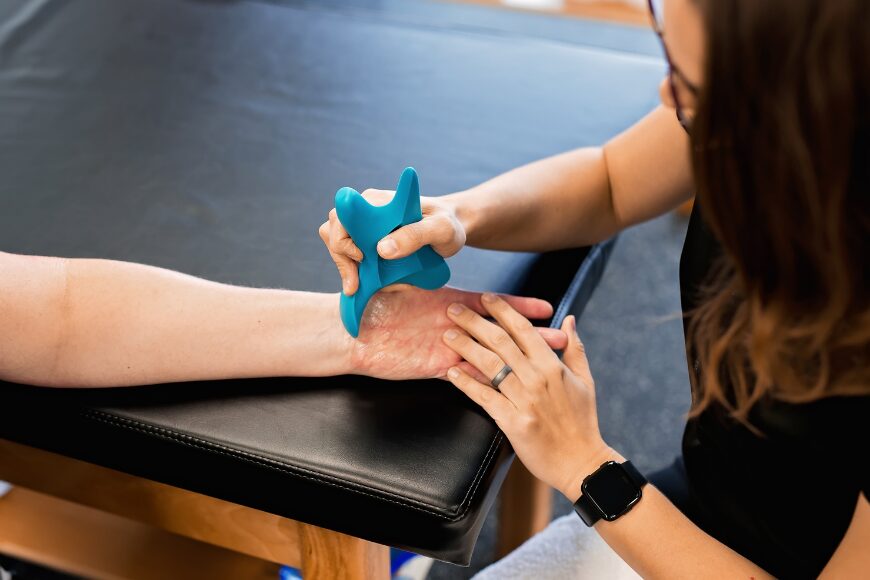
- Instrument-assisted soft tissue mobilization for soft tissue restrictions, scar tissue, or mobility limitations
- Kinesio Taping® for short-term support, positioning, or movement feedback
- Return-to-work, return-to-sport, or post-surgical shoulder rehab planning
- Communication with House Springs, MO physicians, surgeons, or specialists if additional care is needed
Your House Springs, MO Axes physical therapist will choose the right tools based on your evaluation, symptoms, goals, and how your shoulder responds as you progress.
For someone who plays sports, progress may mean rebuilding a pain-free throw. For others, the target is more everyday: a full work shift, a golf swing, lifting on the job, holding a child, or reaching overhead without planning around pain.
Axes combines movement assessment, progressive exercise, hands-on care, and clinical decision-making to help restore strength, mobility, and normal function.
Is Physical Therapy a Good First Step for Shoulder Pain?
Direct access allows many House Springs, MO patients to start physical therapy without waiting weeks for a physician referral. With Axes typically able to schedule patients within 24 to 48 hours of initial outreach, you can spend less time in limbo and more time getting answers.
If your symptoms suggest that imaging, medication, orthopedic evaluation, or another provider may be needed, your Axes clinician can help guide that referral. Many patients in House Springs, MO who need additional medical evaluation still return to physical therapy as part of the recovery process.
Trying to Decide What to Do About Shoulder Pain in House Springs, MO?
If the next step is not obvious, Axes offers free injury screenings to help you decide whether shoulder pain may need PT, self-care, imaging, or a physician visit. You can explain what happened, have your shoulder movement reviewed, and leave with a clearer idea of whether PT, self-care, or another provider is the right direction.
Get Help for Shoulder Pain in House Springs, MO
Shoulder pain can affect nearly every part of your day, but you do not have to wait until it gets worse to get help.
Axes Physical Therapy offers shoulder pain treatment in House Springs, MO that starts with how you move, what hurts, and what you need to do again. With direct access options, Axes helps turn uncertainty into a clear plan.
When shoulder pain is getting in the way, request an appointment or contact your nearest Axes location to start moving toward a plan.
Shoulder Pain Treatment FAQs for House Springs, MO
What is the best treatment for shoulder pain?
The best treatment for shoulder pain depends on the cause. Mild shoulder pain may improve with rest, ice or heat, activity changes, and gentle movement. Physical therapy or medical evaluation may be needed when pain persists, limits movement, affects sleep, or keeps coming back.
Is physical therapy useful for shoulder pain?
Yes. For many types of shoulder pain, physical therapy can improve motion, strength, posture, shoulder mechanics, stability, and movement patterns. It is commonly used for rotator cuff injuries, shoulder impingement, frozen shoulder, arthritis, post-surgical rehab, and sports or work-related shoulder pain.
How do I know if shoulder pain is serious?
Shoulder pain may be more serious if it is sudden, severe, caused by trauma, or comes with major swelling, visible deformity, numbness, tingling, weakness, chest pain, shortness of breath, or inability to lift or move your arm. A medical professional should evaluate those symptoms promptly.
When should I see a physical therapist for shoulder pain?
Consider seeing a physical therapist when shoulder pain is not settling down, is changing your sleep, is limiting reaching or lifting, or keeps coming back when you return to normal activity. An evaluation can show how your shoulder is moving, where it is limited, and whether PT makes sense.
Why does shoulder pain happen?
Common causes of shoulder pain include rotator cuff injuries, shoulder impingement, tendinitis, bursitis, frozen shoulder, arthritis, labral injuries, instability, overuse, sports injuries, work-related strain, and pain referred from the neck or upper back.
What kind of exercises may help shoulder pain?
The right exercises depend on the cause of your pain. Some people benefit from gentle range of motion, shoulder blade strengthening, rotator cuff strengthening, posture work, and mobility exercises. Exercises should not be forced through sharp pain or repeated if they consistently make symptoms worse.
Will shoulder pain resolve without treatment?
Some shoulder pain settles with time, rest, activity changes, and gentle movement. Shoulder pain that keeps coming back, limits motion, affects sleep, or worsens over time may need a clearer plan than waiting it out.