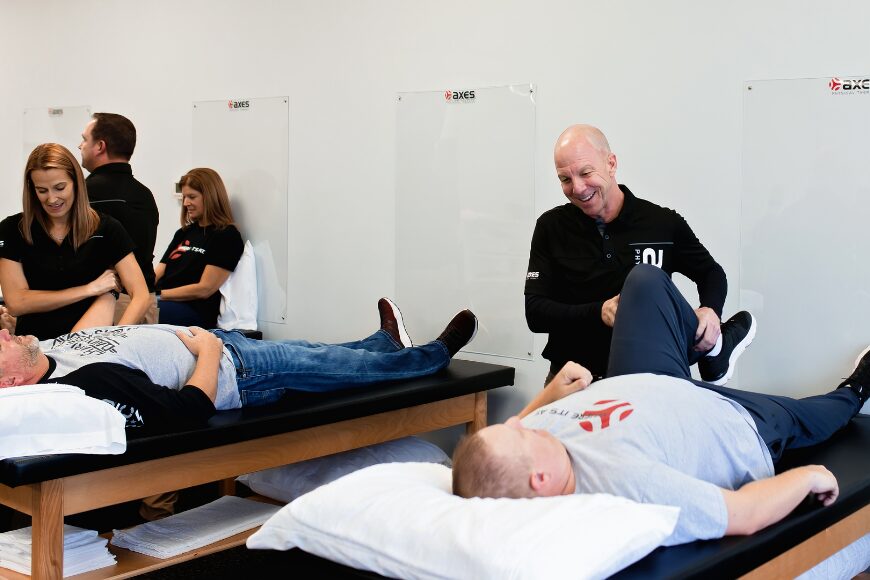
Shoulder Pain Treatment Ashland, MO. With shoulder pain, everyday motion can go from automatic to aggravating quickly. Reaching overhead, lifting at work, sleeping on your side, getting dressed, throwing a ball, or carrying groceries can suddenly become painful or frustrating.
At Axes Physical Therapy in Ashland, MO, the first goal is to sort out why your shoulder pain is happening and what a sensible next step looks like. Our Ashland, MO licensed physical therapists use individualized, science-backed care to help shoulder pain patients move better, reduce pain, and work back toward the activities they miss.
When the question is “Do I wait, call a doctor, or get this looked at?”, Axes can give many Ashland, MO patients a practical first step. Many patients can start physical therapy without a physician referral through direct access, and Axes can typically schedule patients within 24 to 48 hours of initial outreach.
To get started, you can request an appointment online, reach out to the location nearest you, or visit any Axes location for a free injury screening.
Sudden shoulder pain after trauma, visible deformity, numbness/tingling, or significant weakness should be evaluated promptly by a medical professional.
This page covers:
- Signs you may need shoulder pain treatment
- Common reasons shoulder pain develops
- Daily, work, and sport activities that can irritate the shoulder
- Problems shoulder pain treatment is designed to address
- How Axes may treat shoulder pain with physical therapy
- How direct access physical therapy can help patients start treatment faster
- Answers to common questions about shoulder pain treatment
Shoulder Pain Symptoms That May Need Treatment
Shoulder pain often starts quietly: a pinch during one movement, stiffness after activity, or soreness that keeps returning. Common warning signs include pain, stiffness, weakness, clicking, limited range of motion, or symptoms that flare with specific movements.
Shoulder pain treatment in Ashland, MO may help if shoulder pain is interfering with your ability to:
- Reach overhead
- Handle lifting, carrying, pushing, or pulling
- Sleep on the affected side
- Throw, swing, swim, or serve
- Get dressed or wash your hair
- Work, exercise, or complete daily tasks
When symptoms are minor, rest, ice or heat, modified activity, and gentle movement may be enough. Pain that lingers for more than a few days, limits motion, interrupts sleep, or keeps returning deserves a closer look.
Common Causes Behind Shoulder Pain
The right shoulder pain treatment in Ashland, MO starts with the reason your shoulder hurts in the first place. Shoulder pain may involve muscles, tendons, joints, arthritis, instability, overuse, sport mechanics, work habits, posture, or the neck.
Some of the most common causes of shoulder pain include:
- Rotator cuff injuries: Pain with lifting, reaching, sleeping on one side, or using the affected arm overhead.
- Shoulder impingement: Often creates a painful pinch when the arm moves overhead or away from the body.
- Tendonitis and bursitis: Tendon or bursa irritation may build after repetitive work, sports, overuse, or a quick jump in activity.
- Frozen shoulder: Shoulder stiffness and pain that make normal arm movement difficult.
- Arthritis: Can cause aching, stiffness, limited motion, and difficulty using the shoulder normally.
- Shoulder instability: May feel like looseness, slipping, weakness, or poor control in the shoulder joint.
- Labral injuries: Can cause clicking, catching, pain, weakness, or instability, especially after trauma or repeated overhead activity.
- Sports-related shoulder pain: Shoulder pain tied to throwing, swimming, racquet sports, golf, volleyball, weightlifting, or training demands.
- Work-related shoulder pain: Often connected to repeated work tasks, heavy lifting, carrying, pushing, pulling, or sustained overhead positions.
- Post-surgical shoulder rehab: Rehabilitation after procedures such as rotator cuff repair, labral repair, shoulder replacement, or other shoulder surgeries.
Shoulder pain can also come from the demands placed on the joint day after day. Common contributors include:
- Sports and recreation: Overhead sports, throwing, swimming, golf, tennis, pickleball, volleyball, climbing, gymnastics, weightlifting, wrestling, or contact sports.
- Work demands: Physical work, repetitive tasks, tool use, overhead reaching, desk posture, and job duties that load the shoulder again and again.
- Falls or sudden injuries: A fall, collision, awkward landing, bracing with the arm, or one unexpectedly heavy lift can overload the shoulder quickly.
- Repetitive daily movements: Carrying kids, reaching into the back seat, yardwork, home projects, cleaning, shoveling, or repeated overhead tasks.
- Pre- and Post-surgical recovery: Stiffness, weakness, or shoulder pain before or after procedures such as rotator cuff repair, labral repair, shoulder replacement, or other shoulder surgeries.
With so many possible causes, effective treatment starts by looking at your motion, your limitations, your symptoms, and the activities you need to get back.
How Physical Therapy Helps Shoulder Pain in Ashland, MO
In Ashland, MO, physical therapy for shoulder pain looks at the shoulder as a moving system, not just a painful spot. The goal is to reduce symptoms while restoring strength, mobility, control, and usable function.
A physical therapist in Ashland, MO can help address issues such as:
- Shoulder motion that feels restricted, stiff, or painful
- Rotator cuff or shoulder blade weakness that affects control
- Poor shoulder mechanics during lifting, reaching, or throwing
- Mobility limits in the shoulder, neck, or upper back
- Pain linked to job demands, training, hobbies, or repeated daily tasks
- Post-injury or post-surgical limits that make the shoulder harder to use
- Movement habits that keep irritating the shoulder
Your shoulder pain treatment plan in Ashland, MO should match your symptoms, your body, your goals, and the level of activity you want to return to.
How Axes Treats Shoulder Pain in Ashland, MO
Before building a plan, Axes looks at what shoulder pain is keeping you from doing in Ashland, MO, not only where it hurts.
Your first visit may involve:
- Range of motion and strength testing
- Shoulder blade and posture assessment
- Assessing stiffness, mobility, and flexibility around the shoulder
- Reviewing movement patterns tied to lifting, work, sport, or daily tasks
- Connecting symptom patterns with your functional goals
Your shoulder pain treatment plan in Ashland, MO may include:
- Therapeutic exercise chosen for your shoulder and goals
- Manual therapy and joint mobilization
- Mobility and flexibility work
- Rotator cuff and shoulder blade strengthening
- Movement retraining for posture, neck motion, and upper back mechanics
- Practical activity changes with ergonomic guidance
- Home exercises and self-management strategies
- Trigger point dry needling when muscle tension, trigger points, or pain are limiting movement
- Instrument-assisted soft tissue mobilization for soft tissue restrictions, scar tissue, or mobility limitations
- Kinesio Taping® when short-term support or movement feedback may help
- Return-to-work, return-to-sport, or post-surgical shoulder rehab planning
- Communication with Ashland, MO physicians, surgeons, or specialists if additional care is needed
Your Ashland, MO Axes physical therapist will choose the right tools based on your evaluation, symptoms, goals, and how your shoulder responds as you progress.
For one patient, the win may be getting back to throwing. For others, the target is more everyday: a full work shift, a golf swing, lifting on the job, holding a child, or reaching overhead without planning around pain.
With clinical reasoning, movement assessment, progressive exercise, and hands-on care, Axes helps patients build strength, restore mobility, and restore normal function.
Is Physical Therapy a Good First Step for Shoulder Pain?
Through direct access, many Ashland, MO patients can begin physical therapy without having to wait weeks for a physician referral. Axes can typically schedule patients within 24 to 48 hours of initial outreach, helping you spend less time waiting and more time moving toward recovery.
If your symptoms suggest that imaging, medication, orthopedic evaluation, or another provider may be needed, your Axes clinician can help guide that referral. Many Ashland, MO patients who need additional medical evaluation are later referred back to physical therapy as part of their recovery.
Trying to Decide What to Do About Shoulder Pain in Ashland, MO?
When you are not sure whether shoulder pain needs physical therapy, rest, imaging, or a physician visit, Axes offers free injury screenings. A licensed professional can listen to what is going on, look at how your shoulder is moving, and help you determine whether PT, self-care, or another provider may be appropriate.
Contact Axes for Shoulder Pain Treatment in Ashland, MO
When shoulder pain starts shaping your routine, waiting for it to “just go away” can keep you stuck longer than necessary.
Axes Physical Therapy provides shoulder pain treatment in Ashland, MO built around your symptoms, your movement, and your goals. With direct access options, Axes helps turn uncertainty into a clear plan.
If shoulder pain is limiting your life, request an appointment today or contact your nearest Axes location to get started.
Shoulder Pain Treatment FAQs for Ashland, MO
What shoulder pain treatment works best?
The best treatment for shoulder pain depends on the cause. Some mild cases improve with rest, modified activity, gentle movement, and ice or heat. Pain that lasts more than a few days, limits motion, affects sleep, or keeps coming back may need physical therapy or medical evaluation.
Is physical therapy useful for shoulder pain?
Yes. For many types of shoulder pain, physical therapy can improve motion, strength, posture, shoulder mechanics, stability, and movement patterns. It may be used for conditions such as rotator cuff injuries, shoulder impingement, frozen shoulder, arthritis, post-surgical rehab, and shoulder pain tied to sports or work.
When is shoulder pain more serious?
Shoulder pain should be taken seriously when it is sudden or severe, follows trauma, or includes major swelling, visible deformity, numbness, tingling, weakness, chest pain, shortness of breath, or inability to lift or move the arm. These symptoms should be evaluated by a medical professional promptly.
When is it time to see a physical therapist for shoulder pain?
Consider seeing a physical therapist when shoulder pain is not settling down, is changing your sleep, is limiting reaching or lifting, or keeps coming back when you return to normal activity. An evaluation can show how your shoulder is moving, where it is limited, and whether PT makes sense.
Why does shoulder pain happen?
Common sources include rotator cuff injuries, shoulder impingement, tendinitis, bursitis, frozen shoulder, arthritis, labral injuries, instability, overuse, sports injuries, work-related strain, and referred pain from the neck or upper back.
What kind of exercises may help shoulder pain?
The best exercises depend on what is causing your shoulder pain. Some people benefit from gentle range of motion, shoulder blade strengthening, rotator cuff strengthening, posture work, and mobility exercises. Do not force painful movements or push through exercises that clearly worsen symptoms.
Will shoulder pain resolve without treatment?
Mild shoulder pain can sometimes improve with rest, modified activity, and gentle movement. When pain persists, worsens, limits motion, interrupts sleep, or keeps returning, a more specific treatment plan may be needed.