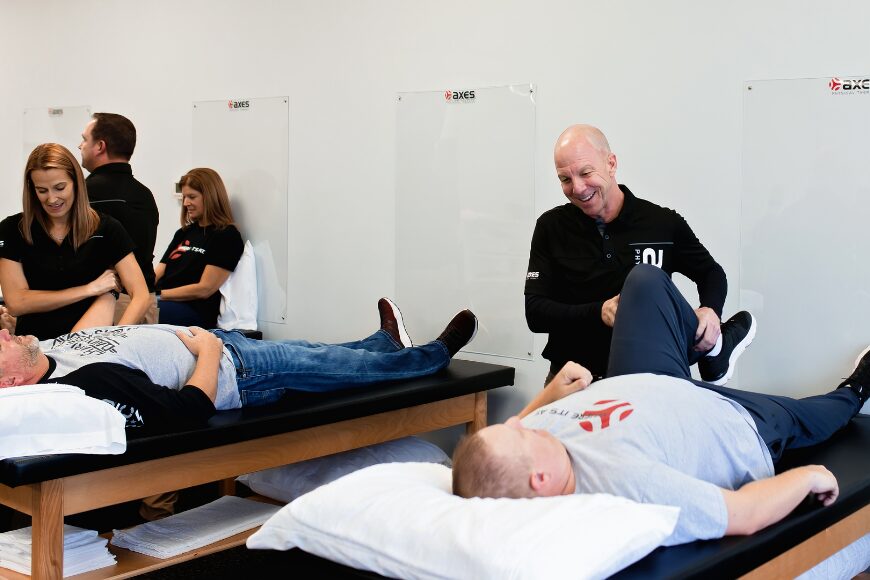
Trigger finger treatment in Ashland, MO can help you address the pain, stiffness, catching, and locking that make it harder to use your finger or thumb confidently.
It does not take much for one irritated finger to throw off your day. Typing, cooking, carrying bags, opening a door, handling tools, working out, or playing music can all feel harder when your finger catches or locks.
Your Ashland, MO hand therapy team at Axes Physical Therapy will assess what is happening with your finger or thumb, how your tendon is moving, and what steps may help you get back to easier hand use.
You may be able to skip the referral bottleneck. Many patients can begin physical therapy through Direct Access Physical Therapy, and Axes can typically schedule an appointment within 24 to 48 hours of your initial outreach.
Start with the option that is easiest for you: request an appointment, call the location nearest you, or schedule a free injury screening with Axes Physical Therapy.
This page covers:
- What trigger finger is, how it feels, and the symptoms that tend to show up first
- How your finger, thumb, and hand function may be assessed
- Common causes, risk factors, and daily activities that may contribute to trigger finger
- What your options may look like if your finger keeps catching or locking
- Ways hand therapy can help with stiffness, tendon glide, strength, and daily hand use
- How Axes helps patients understand their symptoms and start the right next step
If your finger or thumb locks suddenly after an injury, appears visibly deformed, becomes severely swollen, or you develop numbness, tingling, or significant weakness, seek medical evaluation promptly.
What Is Trigger Finger?
Trigger finger, also known as stenosing tenosynovitis, affects the tendons that help your finger or thumb bend. As the tendon or nearby tissue becomes irritated, swollen, or thickened, the tendon can have a harder time gliding the way it should.
The motion can feel like your finger is hitting a speed bump. It may catch, click, pop, or lock when you try to bend or straighten it, and while any finger can be involved, the thumb and ring finger are affected most often.
Trigger finger symptoms may include:
- Finger stiffness (especially in the morning)
- A finger that catches briefly before it straightens or bends
- A sore spot where the finger or thumb meets the palm
- Thickened tissue or a small raised area in the palm
- Episodes where the finger bends but does not straighten easily
- Trouble using your hand for work, cooking, sports, instruments, tools, or phone use
Trigger finger does not always announce itself loudly. It may begin as mild catching, occasional clicking, or morning stiffness, then become harder to brush off once gripping, typing, lifting, or other daily tasks start to bother it.
How Trigger Finger Is Diagnosed
A trigger finger diagnosis usually starts with your symptoms and a hands-on exam. Your healthcare provider in Ashland, MO may have you bend and straighten the finger, point out where it hurts, describe when it catches, and explain which daily tasks have become harder.
At Axes, your Ashland, MO hand therapist may assess:
- Finger and thumb movement, including stiffness, catching, or limited motion
- Grip tolerance with tasks like holding tools, lifting objects, or carrying bags
- How well you can pinch without pain, weakness, or catching
- Tenderness
- How your hand performs during work, home, sports, hobby, or self-care tasks
- Wrist mobility
- The specific activities that make symptoms flare, such as typing, lifting, tool use, cooking, sports, or phone use
Most trigger finger evaluations do not require imaging right away. If your pain, weakness, swelling, numbness, injury history, or movement pattern suggests another issue, your Axes physical therapist in Ashland, MO can help you understand what needs further evaluation.
Why Your Finger May Be Catching or Locking
Trigger finger happens when the flexor tendon or the surrounding tendon sheath becomes irritated, swollen, or narrowed. That irritation can make it harder for the tendon to slide smoothly when the finger bends and straightens.
There is not always one clean reason trigger finger starts. It may come from a mix of hand use, tissue irritation, health factors, or swelling, including:
- Work that involves repeated gripping, squeezing, or tool handling, including construction, mechanic work, landscaping, cleaning, cooking, healthcare, factory work, or warehouse tasks
- Hobbies that put repeated stress on the fingers or thumb, such as gardening, golf, tennis, pickleball, crocheting, woodworking, painting, crafting, or playing music
- Small daily motions repeated often, such as pinching, scrolling, typing, twisting lids, holding utensils, pushing buttons, or grasping household items
- Medical conditions linked with stiffness, swelling, or slower tissue recovery, including diabetes and rheumatoid arthritis
- A cycle of irritation, guarding, and stiffness, where the finger hurts, moves less, stiffens more, and becomes harder to use comfortably
- Previous hand or tendon irritation, even when there was no major injury
That is why context matters. A finger that catches after yard work or tool use may call for different recommendations than one that locks first thing in the morning or flares during phone, desk, or household tasks.
How Trigger Finger Treatment Works in Ashland, MO
The right trigger finger treatment plan depends on how painful the finger is, how often it catches or locks, how long symptoms have been present, and what you need your hand to do day to day. Early or milder symptoms may respond well to conservative care, while symptoms that keep returning or significantly limit hand use may need additional medical options.
Common trigger finger treatment options in Ashland, MO include:
- Activity modification: Taking pressure off the irritated tendon by modifying repetitive gripping, strong pinching, long periods of hand use, or specific work and hobby demands
- Splinting: Using the right type of brace or splint, at the right times, so the finger can rest without becoming unnecessarily stiff
- Physical therapy, occupational therapy, or hand therapy: Hands-on and exercise-based care that may address stiffness, grip tolerance, movement patterns, splint use, pain management, and return to normal hand use
- Anti-inflammatory medication: Medication may help calm discomfort while other parts of the treatment plan address motion, irritation, and daily hand use
- Corticosteroid injection: An injection may be considered when catching, pain, or locking is not improving enough with activity changes, splinting, or therapy
- Percutaneous release: A minimally invasive procedure used to release the restricted area affecting tendon glide
- Open surgical release: A procedure a physician may recommend when symptoms are advanced, the finger keeps locking, or other treatment options have not worked well enough
Your Axes care plan may involve physical therapy, occupational therapy, or hand therapy focused on helping your hand work more comfortably. Hand therapy is often a smart first step when symptoms are not severe, the finger still has usable motion, and daily activities are contributing to tendon irritation.
How Hand Therapy Helps Trigger Finger in Ashland, MO
With trigger finger, physical therapy, hand therapy, or occupational therapy can help turn the vague “what do I do with this finger?” problem into a practical plan for movement, symptom control, and better hand use.
At Axes, your trigger finger treatment in Ashland, MO may include:
- Trigger finger evaluation: Your therapist checks the moving parts, including finger motion, thumb motion, grip, pinch, tenderness, swelling, joint stiffness, and the mechanics you rely on for work, hobbies, and daily tasks.
- Tendon-gliding exercises: Gentle, controlled finger movements designed to help the tendon move more smoothly without cranking through pain or locking.
- Range-of-motion exercises: Exercises that help your finger bend, straighten, and move through usable ranges without forcing the hand into more irritation.
- Splinting recommendations: Practical guidance on using a splint to calm symptoms without over-resting the finger or making the hand unnecessarily stiff.
- Manual therapy: Skilled hands-on work to help the hand, wrist, and forearm move more comfortably during daily tasks like typing, lifting, cooking, or tool use.
- Soft tissue mobilization: Targeted work on muscles, tendons, and surrounding tissue to reduce restriction, tenderness, and irritation around the palm, finger, wrist, or forearm.
- Dry needling (if appropriate): A possible add-on treatment when tightness, tenderness, or soft tissue restriction is making the hand and forearm feel harder to use comfortably.
- Grip and pinch strengthening: Gradual exercises to rebuild strength for tasks like opening jars, carrying bags, holding tools, writing, cooking, or lifting objects.
- Wrist and forearm strengthening: A way to improve control through the whole chain, not just the sore finger, especially when grip-heavy tasks keep symptoms active.
- Activity modification: Practical changes to the tasks that aggravate symptoms, from tool grips and typing setup to cooking, phone use, workouts, yard work, crafts, or sports.
- Pre- and post-surgical rehabilitation: Therapy to help prepare the hand for a procedure or recover afterward through mobility work, scar care, strengthening, and activity progression.
- Home exercise program: Clear instructions for stretches, tendon-gliding work, strengthening, splint timing, and daily activity adjustments.
Hand therapy is not just about exercises. It is about helping you understand what to do, what to avoid, and how to get back to the tasks that matter at home, at work, and everywhere your hand has to show up.
Why Choose Axes for Ashland, MO Trigger Finger Treatment?
Axes helps Ashland, MO patients understand what is happening with their hand and what to do next. A catching or locking finger can leave you guessing: rest it, stretch it, brace it, see a specialist, or start therapy? Our hand therapist team can assess your symptoms, begin treatment when therapy is appropriate, and help connect you with another provider if your care needs to go a different direction.
Patients choose Axes for trigger finger treatment in Ashland, MO because we offer:
- Fast access to care: You do not have to sit around waiting while your finger keeps catching, locking, or getting in the way. Axes can typically schedule patients within 24 to 48 hours of initial outreach.
- Direct access options: Many patients can start physical therapy sooner through direct access, without letting the referral process become a roadblock.
- Evidence-backed treatment: Your therapist uses clinical reasoning to match treatment to your pain, stiffness, catching, locking, strength, motion, and day-to-day hand demands.
- Collaborative care: If your finger needs additional evaluation, imaging, an injection discussion, or surgical input, we can help coordinate care with the right provider.
- Patient-centered care: The goal is not just a better-looking exam. It is helping you use your hand with less pain and more confidence during work, hobbies, sports, household tasks, and the activities you care about most.
A free injury screening is a good starting point if your finger is stiff, painful, catching, or locking and you are unsure what to do next.
Additional services available in Ashland, MO include:
- Runner's Knee Pain Treatment
- Frozen Shoulder Treatment
- Golfer's Elbow Treatment
- Shoulder Pain Treatment
- Back Pain Treatment
Ashland, MO Trigger Finger FAQ
What is usually recommended for trigger finger?
The best treatment depends on how much pain, stiffness, catching, or locking you have and how long it has been affecting your hand. Mild to moderate cases often start with activity changes, splinting, gentle motion, and hand therapy, while more persistent symptoms may require an injection or release procedure.
Can therapy help a catching or locking finger?
Hand therapy can be a strong starting point for trigger finger when the finger still moves, symptoms are not severe, and daily activities are part of what keeps the tendon irritated.
Do I need a doctor’s referral for trigger finger treatment?
Many patients can begin care through Direct Access Physical Therapy without first getting a prescription. Your specific requirements may depend on your condition, insurance plan, and treatment needs.
When should I suspect trigger finger?
You may suspect trigger finger if your finger or thumb gets stuck, clicks during movement, locks in a bent position, or feels stiff and sore when you try to use it. A qualified medical provider or hand therapy specialist can confirm what is going on.
Can trigger finger go away on its own?
Trigger finger does not always need aggressive treatment, but it should not be ignored if it is getting worse, affecting daily tasks, or causing the finger or thumb to lock.
How soon should I schedule care for trigger finger symptoms?
Schedule an evaluation if your finger or thumb catches, locks, clicks painfully, feels stiff in the morning, or limits daily activities.
Find Trigger Finger Treatment in Ashland, MO at Axes Physical Therapy
If your finger or thumb is catching, clicking, stiff, painful, or harder to use during daily tasks, Axes Physical Therapy can help you understand what is happening and what to do next.
Ready to have your finger or thumb looked at? Request an appointment online, call the Axes location nearest you, or schedule a free injury screening today.