Treatment for Golfer’s Elbow in Foley, MO. Maybe it started while using tools. Maybe after a round of golf or another repetitive activity. However it began, inner-elbow pain can quickly turn gripping, lifting, and other ordinary movements into a problem.
Surgery and injections are not the starting point for most cases. At Axes Physical Therapy in Foley, MO, care is built around what you need to do again, then works backward to address pain, weakness, and the factors placing stress on your elbow.
Elbow pain does not always require a referral and a long wait before treatment begins. Thanks to Missouri’s direct access law, many people in Foley, MO can begin physical therapy directly, and Axes can usually schedule an initial visit within 24 to 48 hours.
Choose the easiest way to begin: request an appointment online, contact the Axes location closest to you, or stop by for a free injury screening.
If your elbow pain begins after an acute injury, causes severe swelling or deformity, limits movement, or is accompanied by numbness, tingling, or weakness, seek medical evaluation promptly.
What you will find on this page:
- Why repeated gripping, lifting, swinging, and wrist motion can overload the inner elbow
- What providers look for during an exam and movement-based testing
- How treatment prepares the elbow to handle work, sports, and everyday activity again
- How better technique, gradual activity changes, and strengthening may help prevent it from returning
What Is Golfer’s Elbow?
Golfer’s elbow, medically known as medial epicondylitis, is an overuse injury affecting the tendons that connect your forearm muscles to the bony prominence on the inside of your elbow. These muscles are responsible for gripping objects, bending your wrist, and rotating your forearm.
The problem builds when tendon stress keeps arriving faster than the tissue can recover. Small areas of damage may accumulate, and the result can be weakness, reduced function, and pain centered at the inner elbow or extending into the forearm.
Golf is only one possible trigger. Any job, sport, or hobby that repeatedly asks you to grip, throw, lift, swing, or move the wrist can place the same tendons under strain.
Symptoms of Golfer’s Elbow
Golfer’s elbow often arrives quietly. A low-level ache may appear first, then become more frequent or intense over the following weeks or months as the same stress continues.
The condition may show up as:
- A sore spot where the forearm meets the inside of the elbow
- Symptoms that flare when you grip, lift, or rotate an object
- Weak grip strength
- An elbow that feels stiff after sitting still
- Discomfort with wrist flexion or closing the hand tightly
- Everyday hand tasks, from jars to shopping bags, become difficult
- If nearby nerves are involved, tingling or numbness may reach the little and ring fingers
Inner-elbow pain is not unique to golfer’s elbow. A proper evaluation in Foley, MO helps determine what is actually causing your symptoms before treatment is selected.
What Causes Golfer’s Elbow?
With golfer’s elbow, the issue is not one isolated movement. It is the repeated gap between what the tendon is asked to do and what it has recovered enough to tolerate.
Recreation and Athletic Demands
The same forces found in a golf swing appear in plenty of other activities. Sports that repeatedly load the forearm and inner elbow include:
- Baseball and softball
- Tennis and other racquet sports
- Weightlifting
- Rock climbing
- Bowling
Poor technique, using equipment that is not properly fitted, or suddenly increasing the intensity or frequency of activity may place even more strain on the tendons.
Repetitive Demands on the Job
Many occupations require repetitive gripping or forceful wrist movements throughout the day, increasing the likelihood of developing golfer’s elbow.
People working in construction, plumbing, electrical work, manufacturing, landscaping, carpentry, automotive repair, and warehouse jobs commonly experience this type of overuse injury.
A sudden jump in job demands can matter too. Even familiar movements may cause trouble when the hours, weight, or pace increase before the body has adapted.
Golfer’s Elbow Outside Work and Sports
You do not have to be an athlete or perform manual labor to develop golfer’s elbow. Repetitive activities such as gardening, home improvement projects, carrying heavy bags, knitting, playing musical instruments, or spending long periods performing repetitive hand motions can all contribute.
Often there is no single culprit. Work, exercise, chores, and hobbies may each add a little stress until the combined workload becomes too much.
Who Has a Higher Risk of Golfer’s Elbow in Foley, MO?
The condition can affect almost anyone, but your risk rises when the tendon faces more stress or has less support. Common factors include:
- A sharp increase in training, work, or recreational demands
- Inefficient form during lifting or athletic movement
- Not enough shoulder or forearm strength and mobility to share the load
- Previous elbow injuries
- Using tools or equipment that are too heavy or poorly fitted
- Long stretches of repetitive activity without recovery breaks
- Being over 40, when tendons may be less forgiving of sudden overload
These factors are not just clues about how the injury started. Improving them can also make recovery more durable and reduce the odds of repeating the same cycle.
How Is Golfer’s Elbow Diagnosed in Foley, MO?
Diagnosing golfer’s elbow usually starts with a physical examination and a discussion of your symptoms, activities, and medical history.
To identify golfer’s elbow, your Foley, MO provider may ask you to perform certain wrist and forearm movements. The results, along with your grip strength, range of motion, and the location of your pain, help guide the diagnosis.
X-rays or MRI scans are not always necessary. However, your Foley, MO provider may recommend additional testing if they suspect another condition, such as a ligament injury, arthritis, nerve compression, fracture, or tendon tear.
Diagnosis identifies the injury. A thorough evaluation goes farther by uncovering the movement patterns and activity habits that may keep feeding it, giving your treatment plan more useful targets.
How Physical Therapy in Foley, MO Treats Golfer’s Elbow
The first move is often subtraction. Reducing or pausing the activity that keeps provoking the inner elbow gives the tendon room to settle instead of asking it to absorb the same stress every day.
Rest can lower the volume of the symptoms, but it does not automatically rebuild the tendon for real-life demands. Physical therapy bridges that gap by restoring movement, increasing strength, and preparing the arm for work, exercise, sports, and daily tasks.
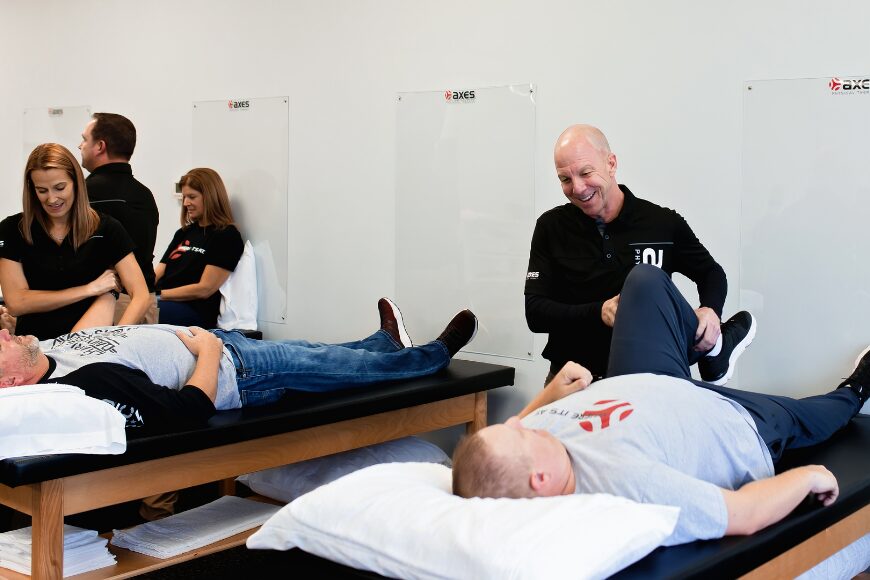
At Axes, your personalized treatment plan is based on your symptoms, goals, occupation, hobbies, and activity level. Rather than following a one-size-fits-all program, your Foley, MO physical therapist will adjust treatment as your elbow’s function and comfort improve.
Reducing Pain and Restoring Movement
The opening phase is not about doing nothing. Your therapist may use manual therapy, controlled motion, and practical activity adjustments to reduce irritation without allowing the arm to become unnecessarily stiff or inactive.
Small changes can create a large drop in tendon load. Your Foley, MO physical therapist may modify how you hold, lift, sit, work, or use equipment so you can stay active without repeatedly poking the same sore spot.
If appropriate, treatment may also include dry needling to address muscle tension and improve function.
A stiff wrist or shoulder can make the forearm work overtime. Your therapist may use stretching and mobility exercises throughout the arm so the load is distributed more evenly instead of concentrating at the injured tendon.
Rebuilding Strength
Progressive strengthening is one of the most important parts of golfer’s elbow rehabilitation. Even after the pain begins to fade, the tendon may still be too weak to tolerate repetitive gripping, lifting, swinging, or throwing.
Your rehabilitation program may include:
- Grip-strengthening exercises
- Forearm and wrist strengthening
- Isometric exercises
- Eccentric exercises that challenge the tendon under control
- Stronger shoulders and upper-back support
- Functional exercises that recreate the tasks your job, sport, or routine requires
Your Foley, MO physical therapist will gradually increase the resistance and difficulty of these exercises as your elbow becomes stronger. This helps the tendon adapt without being overloaded again.
Your therapist may send you home with a short list of exercises matched to your stage of recovery. Consistent follow-through can preserve gains, build strength, and keep momentum moving between visits.
Looking Above and Below the Painful Spot
Treating only the sore spot can miss part of the story. The wrist, hand, shoulder, and upper back all influence how much work reaches the inside of the elbow.
If the shoulder cannot stabilize well or the wrist does not move freely, the forearm may compensate during lifting and gripping. Your therapist evaluates the hand, wrist, shoulder, and upper back to find those hidden workload shifts.
Better coordination is a form of protection. Strengthening the arm as a system can reduce repeated strain at the elbow while helping you move with more control.
Making Technique Work for Your Elbow
Your Foley, MO physical therapist may help modify your golf swing, throwing mechanics, lifting form, tool use, workstation, or the way you carry and grip objects.
How much you do matters, but how you do it can matter just as much. An overly tight grip, excessive wrist bend, poorly matched equipment, or inefficient lifting may turn every repetition into a larger tendon load.
By evaluating the activities that matter most to you, your Foley, MO physical therapist can recommend practical adjustments that reduce strain and make your return safer.
Preparing for Work, Sports, and Daily Life
As your strength and mobility improve, treatment becomes more specific to the activities you want to resume.
A return plan may include controlled versions of lifting, pulling, carrying, gripping, swinging, throwing, or tool use. The demand is increased gradually until it more closely matches life outside therapy.
The goal is to help you return to the activities you need and enjoy with enough strength and confidence to reduce the risk of another flare-up.
Supportive tools may also have a place during the transition. Your therapist may use Kinesio taping® to provide movement feedback, improve comfort, or temporarily reduce strain as activity increases.
How Long Does It Take to Recover from Golfer’s Elbow?
There is no universal recovery clock. A newer, milder problem may respond faster than one that has been repeatedly aggravated for months, and consistency with the plan can change the pace.
Some people notice meaningful change within a few weeks. Others need several months to rebuild enough capacity, especially when symptoms are severe, longstanding, or tied to demanding work or sports.
Factors that may affect recovery include:
- Whether treatment began early or after the problem became established
- Your ability to temporarily work around the movement that keeps provoking symptoms
- How heavily your job or sport depends on gripping, lifting, throwing, or swinging
- How deconditioned or weakened the involved tissue has become
- Whether other areas of the arm are contributing
- How consistently you complete your exercises
- How soon you ask the tendon to handle its previous workload
Returning to repetitive activities before the tendon is ready can delay healing. That is why following your therapist’s recommendations throughout the recovery process is so important.
Ways to Prevent Golfer’s Elbow in Foley, MO
While not every case can be prevented, reducing repetitive stress and improving overall strength can significantly lower your risk of future problems.
Useful habits include:
- Give the tendon time to adapt before making a major activity jump
- Refine technique so each repetition places less unnecessary force on the elbow
- Prepare the arm with a warm-up before heavy or repetitive use
- Break up long blocks of repetitive work with short recovery periods
- Avoid squeezing harder than necessary during tools, sports, or carrying
- Build support through the forearm, shoulder, and upper back
- Improving flexibility and mobility
- Choose equipment that matches your size, task, and ability
- Avoid stacking intense arm activity faster than the tendon can rebound
- Addressing minor aches before they become chronic injuries
If you have already experienced golfer’s elbow, continuing with a maintenance strengthening program may help reduce the risk of future flare-ups.
Support for Your Golfer’s Elbow Recovery in Foley, MO
At Axes, we understand that no two injuries or patients are exactly alike. Benefits of choosing Axes include:
- Personalized treatment plans: The program is shaped around the symptoms you feel, the goals you set, and the demands of your work and lifestyle.
- Fast scheduling: We can typically schedule new patients within 24 to 48 hours.
- Direct Access: Many Missouri patients can begin physical therapy without waiting weeks for a physician referral.
- Coordinated referrals: If physical therapy is not the right first step, we can help connect you with the appropriate healthcare provider.
- Clarity before committing: When you are unsure where to begin, use a free injury screening to learn more about your symptoms and possible next steps.
You can also find these treatments in Foley, MO:
- Runner's Knee Pain Treatment
- Frozen Shoulder Treatment
- Trigger Finger Treatment
- Shoulder Pain Treatment
- Back Pain Treatment
- Neck Pain Treatment
- Physical Therapy Clinic
- Carpal Tunnel Syndrome Treatment
- Sciatica Treatment
Golfer’s Elbow Treatment Questions From Patients in Foley, MO
Will golfer’s elbow improve without professional treatment?
Mild cases may improve with rest and activity changes. If pain lasts more than a few weeks or affects daily life, physical therapy can help restore strength and function.
How long does golfer’s elbow take to heal?
Some people improve within a few weeks, while chronic cases may take several months. Recovery depends on severity, activity level, and consistency with treatment.
Can I keep working with golfer’s elbow?
The answer depends on what your job asks the arm to do. Instead of stopping work completely, you may be able to reduce the most irritating demands and rebuild tolerance in stages with guidance from your therapist.
What can heat and ice actually do for golfer’s elbow?
Use them for different jobs: ice may ease soreness after an aggravating activity, while heat can make tight muscles feel more comfortable before movement. Neither one restores tendon strength or replaces rehabilitation.
When is a brace useful for golfer’s elbow?
A brace may make selected activities more comfortable by changing how force reaches the tendon. It does not rebuild strength or correct mechanics, so your therapist can help decide whether it adds value to the rest of your plan.
What should I scale back when golfer’s elbow flares?
Use symptoms as a guide. If a task reliably makes the elbow worse, reduce its weight, repetition, speed, or grip demand until your therapist helps you build a safer way back to it.
Can rehabilitation reduce the chance that I need surgery?
Often. A plan that restores motion, rebuilds strength, and changes the mechanics behind the irritation may allow the tendon to recover without an operation.
Do I need a doctor’s referral for physical therapy?
Many Missouri patients can begin physical therapy without a physician referral. Axes can also help coordinate additional care if needed.
How long should I wait before seeing a physical therapist?
Do not wait for the elbow to become unusable. Ongoing pain or lost function is enough reason to schedule physical therapy, while post-injury pain, swelling, numbness, and weakness warrant earlier attention.
Take the Next Step for Inner-Elbow Pain in Foley, MO
You do not have to live with persistent elbow pain or give up the activities you enjoy.
The setting may have been a golf course, jobsite, gym, workshop, or ordinary day at home. Wherever the symptoms began, Axes Physical Therapy can help you rebuild the arm for a safer, more confident return.
Take the first step toward lasting relief by scheduling a visit today. You can also contact the closest location, or begin with a free injury screening.