Shoulder Pain in Hillsboro, MO. If you live with shoulder pain, you know how debilitating it can be. It can make any daily task from brushing your teeth to diving for a softball painful and, for certain people, impossible. But pain and limited shoulder movement does not have to be a part of your everyday life. At Axes Physical Therapy in Hillsboro, MO, our licensed physical therapists specialize in personalized treatment modalities, based on evidence, to get you back to the activities you love most. Trust in us to make your shoulder pain an ancient memory. Make an appointment through our website or reach out to the location most convenient for you.
The Anatomy of the Shoulder | Shoulder Pain in Hillsboro, MO
The shoulder is one of the the largest and most complex joints we have. In reality, what we call the shoulder joint is made up of four different joints:
- The glenohumeral (GH) joint is a ball and socket joint where the humerus (upper arm bone) fits into the socket of the glenoid. As the ball is 3-4 times larger than the socket, it is the most mobile joint in the body.
- The acromioclavicular (AC) joint is formed by the junction of the collarbone the acromion, the part of the shoulder blade that is the highest part of the shoulder. A gliding joint, it helps extend the upper extremity from the trunk.
- The sternoclavicular (SC) joint is a gliding joint located where the collarbone meets the sternum at the bottom of the neck. As the only joint that connects the arm to the body, it links the movement of the upper limb with the core of your body.
- The scapulothoracic (ST) “joint” is not a true anatomical joint as it does not have does not have union by fibrous, cartilaginous or synovial tissues. It attaches and allows movement between the shoulder blade and the thoracic cage.
In order to support those four joints, the shoulder is made up of:
- the four muscles of the rotator cup that surround the head of the humerus, which allow for movement movement and stabilize and protect the GH joint
- the shoulder capsule, a a fluid-filled sac that surrounds and lubricates the joints in the shoulder
- the four shoulder ligaments which attach bones together and help reinforce the capsule
- the tendons in the biceps and shoulder which affix muscle to bone
- the brachial plexus nerves that send motor messages from the brain to muscles and sensory information (like pain) from the joints back to the brain
- the arteries that supply nutritious blood to the muscles, ligaments, and tendons
Optimal shoulder and movement health depends on every part of the system functioning well. Blood must be allowed to reach the shoulder maintain healthy soft tissue and repair minor damage. The muscles must have adequate strength and flexibility, the tendons attaching bone and muscle must be intact and strong, the ligaments connecting bones need to help support proper structure, and the nerves need to have a strong and secure connection to the brain. When any of these functions are not being carried out in a healthy way, it often causes shoulder pain and movement problems. If if shoulder pain or poor shoulder movement is part of your daily life, contact Axes’ physical therapists for a free injury screening.

What’s Behind My Shoulder Pain?
As the shoulder is complex, shoulder pain can have any of a number of root causes, from sports injuries to falls, a work injury from overuse to our bodies just getting weaker as we get older. The following are common causes of shoulder pain that our team see in Hillsboro, MO:
- Bursitis — The bursae are small, fluid-filled sacs that work as a cushion and gliding surface between muscles, bones, tendons, and skin. Bursitis the result of the bursae becoming swollen after repeated activities, often occurs at the same time as irritation of the rotator cuff, and can make basic activities like brushing your teeth tremendously difficult.
- Tendinitis — Tendinitis generally occurs because of inflammation or irritation of a tendon. It typically falls into one of two categories:
- Acute: This can happen because of a sudden blow, excessive overhead motions, or other overhead activities common in some competitive and activities and fields of employment, such as tennis or lifting and lowering boxes.
- Chronic: This can happen because of wear and tear or the body becoming weaker as we age.
The condition causes pain and tenderness just outside the joint.
- Rotator Cuff Tear — These can also be acute, such a blow to the shoulder, or more chronic in nature. They usually start with fraying and then tear. A partial thickness tear often goes unnoticed. Full-thickness tears, where the tendon is completely detached from the bone, often require surgery. Common symptoms are having difficulty raising your arm or lifting things you normally can, pain when lying on the side of the affected shoulder, and a clicking feeling with certain movements.
- Shoulder Impingement — Impingement is the result of the rotator cuff and bursae rubbing against your shoulder blade. It is often the result of rotator cuff swellings after an injury. Shoulder impingement occurs the most in people who play sports or are otherwise active.
- Shoulder Instability — This occurs when the ball of the upper arm bone is allowed to move out of the socket when the capsule or ligaments become stretched, torn, or detached, and also can happen suddenly or from overuse. A dislocation can be partial, coming in and out of the socket, or complete when the bone completely comes out of the socket. It often happens in combination with injury to the surrounding areas of the shoulder. Chronic instability will result in shoulder pain and unsteadiness when performing certain motions.
- Arthritis — While there are at least six types of arthritis, osteoarthritis is the form that typically affects the shoulder. Osteoarthritis is the degeneration of joint cartilage and the underlying bones. Common causes include tissue weakening as we become older, repeated injuries, and overuse. Arthritis cannot be cured, but effective pain management can be found with Hillsboro, MO physical therapists.
- Shoulder Fractures — The upper arm bone, collarbone, and scapula are the bones in the shoulder most susceptible to fracture. They are often the result of falling a significant distance or onto a hard surface or high-impact collisions such as being tackles in a football game. The shoulder pain is immediate and obvious, and the shoulder will experience substantial inflammation and contusions.
- Axillary Nerve Injuries or Brachial Plexus Injuries — Nerve damage in the shoulder is the result of when nerves are stretched, when scar tissue blocks signals between the brain and shoulder, or the nerves rupture. These injuries can cause shoulder pain, stingers, numbness, and loss of feeling in your shoulder, arm, or hand. They are usually the result of a sudden blow but can also happen because of degenerative conditions.
Sometimes, injuries are connected, such as a fracture causing damage to the nerves. If you’re currently suffering from shoulder pain, one of our no-risk, free injury screenings in Hillsboro, MO may help determine why you’re experiencing the pain. To diagnose shoulder pain a physician in Hillsboro, MO may use a physical examination, an X-Ray, an MRI, a CT scan, arthrogram, and/or arthroscopy. For most injuries or conditions that cause shoulder pain, a tailored treatment plan with experienced physical therapists and movement health specialists in Hillsboro, MO can be a great way to return to optimal movement health.
Treating Your Shoulder Pain in Hillsboro, MO
Your personalized and proven physical therapy may include any one or a variety of different treatment plans:
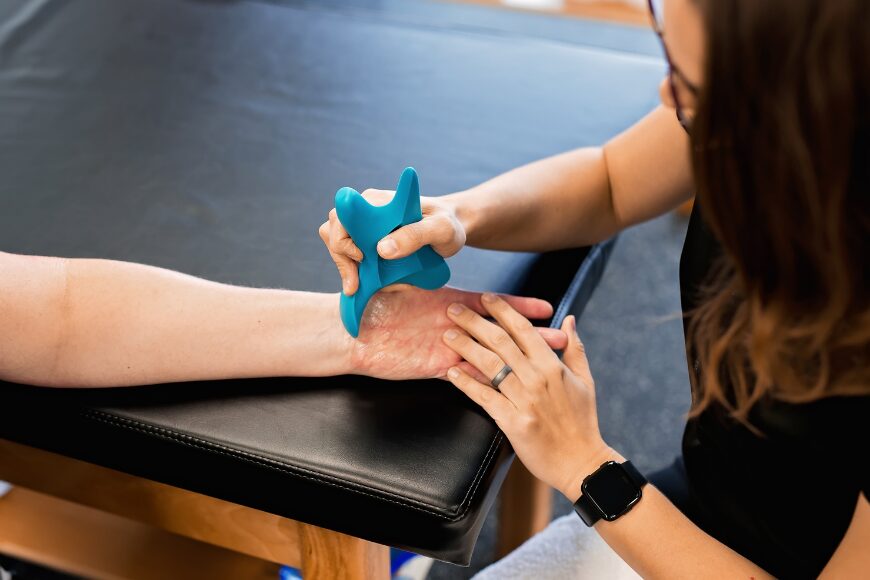
- Instrument-assisted soft tissue mobilization to detect and treat any soft tissue disorders
- Pre- and post-surgical rehabilitation, based on a plan with come up with alongside your physician, if you need surgery to relieve your shoulder pain
- Kinesio Taping® to reduce pain and inflammation and allow you to participate in sports or work while your body heals
- Blood flow restriction training to improve strength while reducing overall stress on the shoulder
- Trigger point dry needling to target harder-to-reach irritated soft tissue to encourage the body’s natural healing processes
- Posture correction to make sure you are not inadvertently causing your shoulder pain or heal improperly
- Injury prevention so you do not lose your active lifestyle in the future
- Other safe, effective exercises to increase and maintain your mobility
Missouri Law requires a prescription to attend physical therapy appointments, so you need to reach out to your Hillsboro, MO physician to see if physical therapy is rights for your shoulder pain. Our knowledgeable physical and occupational therapists form a team with your primary care physician to ensure your treatment plan fits into your overall treatment plan.
Other services we offer in Hillsboro, MO include:
- Runner's Knee Pain Treatment
- Frozen Shoulder Treatment
- Golfer's Elbow Treatment
- Trigger Finger Treatment
- Shoulder Pain Treatment
- Back Pain Treatment
- Neck Pain Treatment
- Physical Therapy Clinic
- Carpal Tunnel Syndrome Treatment
- Sciatica Treatment

Hillsboro, MO Shoulder Pain | Axes Physical Therapy
A well-functioning shoulder is important to not only living our every day life, but to keeping up the active lifestyles we desire. At Axes, we focus on positive outcomes for Hillsboro, MO residents by creating evidence-backed treatment plans catered to your injury, pain level, age, and the activities you want to get back to. Do not wait to get back to the things you love doing most and a pain-free life. Make an appointment online or call the location nearest you.